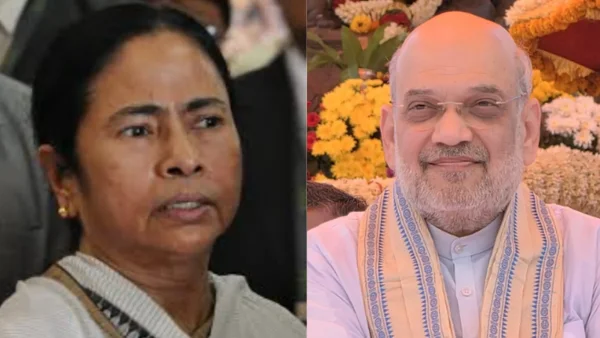
Banerjee has said she will file a lawsuit against Shah regarding what she considers violent language, and this is making the tensions worse as April 29th, the date of the second phase of the election, approaches. She specifically mentioned Shah’s threat to “hang them upside down” as something a Home Minister should not say.
Mamata announces legal move in Hooghly
Speaking at a rally in Hooghly on Saturday, Banerjee said she’s going to take Shah to court for his violent words, and as Home Minister, he has no right to say things like that. She says the issue isn’t just about what’s allowed by the constitution, but also how someone in his position should act in public.
Banerjee also criticized the BJP's forceful style of doing things, saying it won’t be popular with people in West Bengal. She asked what kind of language a Home Minister is using, and said threatening to hang people upside down after the election is unacceptable. She insisted that with that kind of thinking, they will never win in Bengal.
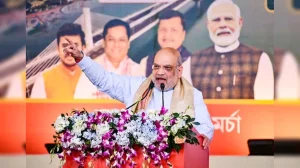
Amit Shah’s warning at Arambagh
On Friday in Arambagh, Shah warned that “Didi’s goons” (referring to Banerjee’s supporters) would be dealt with severely. He said that after the voting on the 29th, the authorities would take strong action if people in Arambagh were bothered during the election.
Shah said, “I am telling Didi’s thugs to stay in their homes on the 29th. If the people of Arambagh are troubled after the 5th, we’ll hang them upside down and set them right.” Banerjee immediately responded to these comments.
Shah also complimented the voters for the incredibly high number of people who voted in the first phase, and he said the Election Commission of India and the security forces did a good job of making the first voting day peaceful.
Turnout and schedule set the stage
The first phase of voting finished at 6pm on Thursday. The Election Commission of India says West Bengal had a much higher voter turnout than usual, with 91.78% of eligible voters casting a ballot. Security was increased throughout the areas where voting happened as soon as the polls closed.
The second phase of the election will be on April 29th. Votes will be counted on May 4th, which is a fairly quick turnaround for the parties to finish their campaigning.
Clash of narratives before Phase II
This argument shows how different the two sides’ campaigns are. Banerjee is objecting to how Shah is speaking, and Shah is making the election about law and order and making sure things are done correctly after the voting.
Both sides are trying to get their supporters excited as the election gets closer, and they’re using strong language to tell voters what’s at stake, particularly in important areas.
Key statements so far
The public positions from both leaders have been unambiguous in tone and intent. Here are the most direct statements cited by each camp:
– ‘We are going to file a legal case against Amit Shah’
– ‘As Home Minister, he cannot make such comments’
– ‘To say you will hang people upside down is unacceptable’
– ‘I am warning Didi’s goons not to step out’
– ‘After the 5th, we’ll hang them upside down’
What the confrontation means for voters
This disagreement is adding to the already volatile atmosphere of an election with a very high turnout. With the second phase so close, both parties are trying out messages to get people to vote while also claiming they will be the ones to maintain order and make sure everyone is held responsible.
More than 90% of people voting in the first phase shows how interested people are in this election all over the state. The next few days will reveal whether the things politicians are saying will change the minds of voters who haven’t decided, or if they will just strengthen the feelings of those who have.
What comes next
All attention is now on April 29th, and the second phase of voting which will be heavily protected. Banerjee’s legal threat, and Shah’s plan for enforcing the law, are likely to be the main topics of discussion immediately after the election.
We’ll get a first indication of whether either of these strategies worked with voters in West Bengal when the votes are counted on May 4th.