Europe is trying to quickly get funding for Middle Eastern energy projects that avoid conflict areas. This is after the fighting with Iran caused fuel costs to jump and stopped the usual flow of fuel through the Strait of Hormuz. Ursula von der Leyen, the President of the European Commission, stated that the EU is prepared to work with Gulf nations on secure ways to export energy.
Von der Leyen said in Nicosia, “What happened in the last month has really shown us something important.” She explained that Europe’s safety isn’t just connected to what happens elsewhere, it’s completely tied to it. She used the example of a threat to a ship in the Strait of Hormuz being a threat to a factory in Belgium.
EU backs alternative routes and repairs
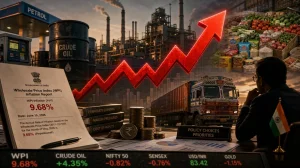
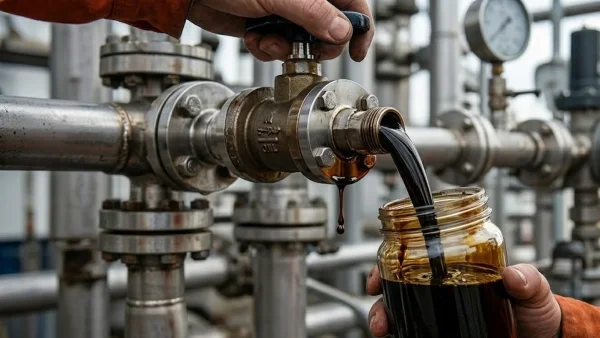
Von der Leyen said the EU will help to create more ways to export energy that don’t rely on the Strait of Hormuz (which is a narrow and therefore vulnerable point), and will give money to fix energy facilities in the Gulf countries that were damaged in the conflict. Usually, around one-fifth of the world’s oil and gas goes through the Strait, but the fighting has mostly closed it, and as a result, prices have risen sharply.
On Friday morning, Brent crude oil cost $100.33 a barrel, and US oil cost $96.66. Von der Leyen said that because of these higher prices, the EU’s energy costs have gone up by 25 billion euros in the last 43 days, showing how important it is to make sure energy supplies are safe.
The Commission also suggested that the EU’s mission to provide security for ships in the Red Sea could be used as a model for providing security for ships in the Persian Gulf. However, Von der Leyen mostly spoke about the EU helping to rebuild and construct energy facilities all over the region.
No project list yet, corridor flagged
Neither Von der Leyen nor Antonio Costa, the President of the European Council, said exactly what new projects would involve or when they would happen. But Von der Leyen mentioned the India-Middle East-Europe Economic Corridor as something to use as a guide for working with what she called the world’s largest democracy.
Key takeaways from the EU’s stance include:
– Funding alternative Middle East energy routes
– Helping repair Gulf energy infrastructure
– Exploring maritime security options in the Gulf
– Absorbing a 25 billion euro energy cost surge
Cyprus pushes regional ties amid security fears
Cyprus currently leads the EU and is near Lebanon, Syria, Israel and Turkey. They are trying to strengthen relationships with their neighbours to help their economies and improve safety. President Nikos Christodoulides had leaders from the region at a meeting in Nicosia to agree on what’s most important.
Those at the meeting included Ahmed Al-Sharaa, the President of Syria, Abdel-Fattah El Sissi, the President of Egypt, Joseph Aoun, the President of Lebanon, Hussein, the Crown Prince of Jordan, and Jasem Mohamed AlBudaiwi, the Secretary-General of the Gulf Cooperation Council. Al-Sharaa said, “We know that Europe needs Syria as much as Syria needs Europe.” And Aoun asked the EU to give help to rebuild Lebanon.
EU signals on Iran, Hezbollah and rights pressure
Costa said Aoun had done the right thing by stopping Hezbollah from having a military, saying that Hezbollah is a danger to Lebanon itself. He promised the EU would help Hezbollah to give up its weapons, and said, “The European Union is not involved in this conflict, but we will be involved in the solution.”
Groups that look at human rights have criticized EU leaders for not doing more to put pressure on Israel about its military operations. EU leaders, including Friedrich Merz, the Chancellor of Germany, said they won’t lower sanctions on Iran until many issues are dealt with, including Iran's missile program and its support for groups it controls. Costa said, “It’s too soon to talk about easing sanctions.”
Rising costs and defence posture
The increase in fuel costs is already affecting people and businesses in Europe, and the Commission estimates the energy bill has gone up by 25 billion euros in only 43 days. Leaders have warned that if things continue to be disrupted for a long time, it could make inflation worse and reduce production in industry.
Cyprus was also affected by the war. On March 2nd, a Shahed drone from Lebanon hit a British base on the south coast, damaging a plane hangar. Greece, France, Italy, Spain and the Netherlands sent warships that could deal with drones, and this has restarted the discussion about Article 42 of the EU treaty, which says that if one member is attacked, the others should help.
Christodoulides said leaders had agreed to start creating a proper system for responding together, as making arrangements each time something happens isn’t reliable. He said it’s part of a wider rethink of security, to protect important energy routes and facilities.
What comes next
A summit between the EU and the Gulf Cooperation Council later this year will be a place to discuss particular projects and how to pay for them. For now, Brussels says it’s ready to fund repairs, find different ways to export energy, and think about providing security for ships. They are waiting for the countries in the region to suggest ways of doing this that will work.