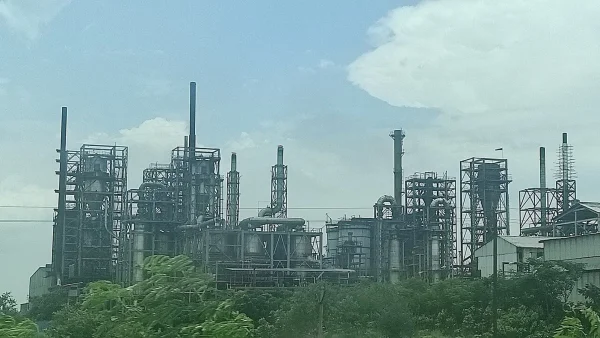
After Tata Motors left Singur, the empty land where the Nano factory was supposed to be is again at the center of the West Bengal election. As April tth nears, voters are faced with the reality of fields that don’t grow anything anymore, and a factory that was never built. The big question now is, who is going to fix the situation?
Alongside all of this political tension, men are digging up rusty metal bars from the land to sell as scrap metal. This happens every day, and is a continual reminder of a project that hugely changed West Bengal. Ninety-three-year-old Rabindranath Bhattacharya, a former TMC politician known as Mastermoshai in the area, says simply, “Neither farming nor industry happened.”
A factory that left, a politics that changed
In 2006, the then-ruling Left Front government took about 1,000 acres of land in Singur for a factory to make a small, inexpensive car. Mamata Banerjee led a large protest, saying this good farmland was being taken from farmers who didn’t want to give it up. This protest completely changed the political situation.
When Ratan Tata said in October and 2008 that the Nano factory would be built in Sanand, Gujarat instead, it wasn’t just a business decision. It signaled the beginning of the end for the Left’s 34 years in power. In 2011, Banerjee went to Writers’ Buildings (the state government headquarters) after leading protests in Singur and Nandigram.
Key milestones in Singur’s saga:
– 2006: Around 1,000 acres acquired for a small-car plant.
– 2008: Ratan Tata shifts Nano project to Sanand, Gujarat.
– 2011: Mamata Banerjee wins power after land agitations.
– 2016: Supreme Court orders land back to ‘unwilling’ farmers.
– 2024: TMC leads in the constituency in Lok Sabha polls.
Land returned, livelihoods lost
In 2016, the Supreme Court said the land should go back to the farmers who hadn’t wanted to give it up; the TMC party said this proved they were right. Officially, they had won. But in reality, large areas of land are still full of broken concrete, metal sticking out of the ground, and weeds. In many places, the top layer of soil, which was removed for the factory, has not been put back.
Farmer Ashish Bera says, “I spent 150,000 rupees just to clear my three bighas.” (A bigha is a unit of land measurement.) “We used to grow rice, jute, potatoes, and vegetables. The land was really good. Now it almost doesn’t grow anything at all.” It’s a painful situation in the Hooghly basin, close to the Damodar and Saraswati rivers, where farming used to be very successful.
For a lot of people, the land they got back is more about what they remember than about making a living. Mahadev Das, who was a key figure in the protests against losing the land, now sits at a tea stall overlooking empty land. “I had 12 bighas, tractors, tillers and water pumps. I built a whole business around that land. Now I have nothing,” he explains.
Regret and a generation in transit
What’s really striking is how many people openly say they regret what happened. Bikas Das, who used to be a prominent protester and is now a car driver, says, “We were told that factories shouldn’t be built on farmland that produces multiple crops. We believed that. Now, we’ve lost everything. If the factory had stayed, I would have a job.”
This regret is strongest among young people. Sathi Das, who has a postgraduate degree and works at a call center in Kolkata, says her father was one of the farmers who didn’t want to give up their land. “My father got the land back, but it’s not good enough to grow anything. If the factory had stayed, we wouldn’t have had to leave Singur.”
Many of those who were trained for jobs at the Nano factory now drive app-based taxis, work in places that make fake jewelry, or have moved away from West Bengal. The idea of a local area of industry disappeared, and farming hasn’t really recovered. For families in this area, fields that aren’t being used and the lack of factories are central to their everyday decisions.
Elections reopen an old wound
As the second stage of the election on April 29th gets closer, Singur is once again a major area of political fighting. The area has 242,087 voters, down from 251,585 in 2024. Over 15 percent of voters are from Scheduled Castes, and about 11.5 percent are Muslim. Almost two-thirds of voters live in the countryside.
Despite the anger, Singur is still one of the TMC’s safest areas to win. The party has won here five times in a row. In 2021, Becharam Manna (the current MLA) beat Bhattacharya (who was with the BJP at the time) by 25,923 votes. The TMC was also ahead in this area in the 2024 election for the Lok Sabha (the lower house of the Indian Parliament), which shows how strongly they are in control.
Manna says, “The people of Singur know who was with them when their land was being taken.” He adds, “Some problems are still there, but roads, social programs and money have reached every family.” The BJP says that people’s feelings are changing, moving from being about the land to being about getting work, and that votes will be decided by jobs.
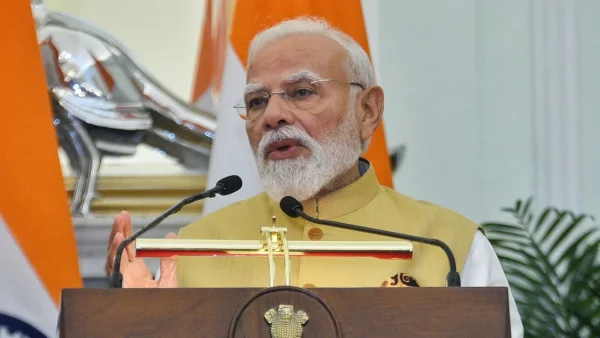
A local BJP leader says, “Singur used to vote to protect the land. Now people will vote for jobs. The TMC used Singur to get into power and then abandoned the people.” In February, the Prime Minister held a meeting here, saying the TMC had forced industry to leave. A few days later, the Chief Minister held her meeting.
Bhattacharya says, “The Prime Minister came and left. The Chief Minister came and left. Neither of them said anything about what will happen to this land.” This lack of progress means every visit just reminds people of the issue, instead of finding a solution. The immediate challenge is the election; the long-term challenge is whether any politician can come up with a practical plan.
Where the main contenders stand now:
– TMC cites roads, social schemes and compensation reaching families.
– BJP says voters now prioritise jobs over saving land.
– PM accused TMC of driving industry out of Bengal.
– Bhattacharya says neither leader offered a land roadmap.
The political trap of Singur
Singur presents a difficult situation for both the main competing parties. For the TMC, talking about new factories could bring back the issues that helped them come to power. For the BJP, saying they want investment means dealing with the same land question that once defeated the Left.
Political experts say people’s feelings in Singur are split into three groups. Older farmers are still worried about losing their land again. People in middle age feel let down by both the protest and by politics. Young people are asking a simple question: who will bring jobs back, and when?
Right now, weeds are growing faster at the old Nano site. Metal is disappearing into the scrap metal market, bit by bit. In every election, the “ghost” of the factory returns to influence the vote, not based on which party people support, but on a promise that was never kept, and which continues to shape politics in West Bengal.