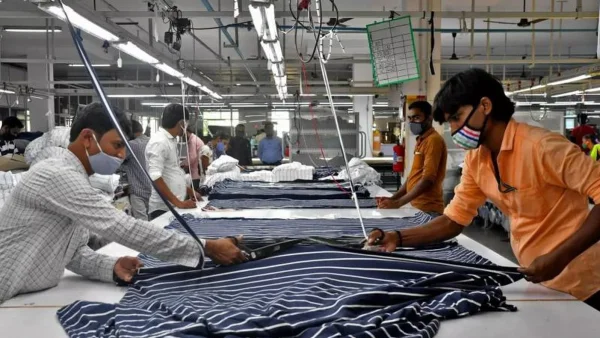
India’s clothing and fabric exports totalled $35.8 billion in and 2025-26, a fall of 2.2 percent, and GTRI points out this decline happened across many types of products. They also warn that the rupee looking stronger isn’t really hiding the fact that the dollar is weakening. The organization is pushing for quick government action because the industries that need a lot of workers are losing their position.
Exports slip despite policy push
In the last year, exports valued in rupees also decreased by 2.1 percent (says the Global Trade Research Initiative). This is happening at the same time as improvements and incentives are being implemented, which makes you wonder if those improvements are actually doing anything.
Ajay Srivastava, who co-founded GTRI, says the numbers show that the main parts of the industry are not growing, or are even shrinking, even though there are more and more policies to help them. He points out that the production-linked incentives, better logistics, and making trade easier haven’t yet led to more exports.
Segments under pressure, few bright spots
The decrease happened in most areas: cotton fabrics went down 3.9%, finished clothing 1.4%, and carpets 5.3%. Only handmade items (crafts) had a small increase of 1.5% over the year.
Here is how key categories performed, as cited by GTRI:
– Cotton textiles down 3.9 per cent
– Ready-made garments down 1.4 per cent
– Carpets down 5.3 per cent
– Handicrafts up 1.5 per cent
Rupee-dollar divergence clouds competitiveness
GTRI says the difference between how the rupee and the dollar are doing shows a more serious, fundamental issue. India might be reporting higher prices for things sold within the country because of the currency situation, but actually getting less money in dollars from sales to other countries.
As an example of this problem, Srivastava said that man-made fabrics went up 3.6% when measured in rupees, but actually went down 0.8% when measured in dollars. Clothing sales increased 2.9% in rupees, but dollar earnings from clothing fell 1.4%.
These patterns mean that the apparent growth is because of the rupee losing value, not because India is actually becoming more competitive. In reality, India is either losing sales in key markets or isn’t increasing sales in places where cheaper, labor-intensive goods should be doing well.
To underscore the divergence, GTRI shared these datapoints:
– Man-made textiles: +3.6 per cent INR, -0.8 per cent USD
– Garments: +2.9 per cent INR, -1.4 per cent USD
GTRI calls for urgent bottleneck audit
Srivastava asks a really important policy question: “Why aren’t the improvements that are happening actually leading to more exports?” He also adds that even though there are production-linked incentives, better logistics, and easier trade, the main parts of the industry are either stuck or going down.
GTRI is urging the government to quickly find the obstructions and where things are going wrong with putting plans into action. They say a focused review is needed to figure out if problems with the supply chain, the cost of meeting rules, getting money, or getting into markets are stopping improvements.
A lot is at stake for industries that employ many people. Because the main types of clothing and fabric are losing ground, the industry risks losing business in markets where being fast, good quality, and keeping costs down are what get the orders.
What comes next
GTRI believes the most important thing to do right now is get exports moving again and make sure improvements actually lead to results. Policies should be about turning incentives into orders, rather than just making the value of sales look higher.
Because clothing and fabric exports are falling when measured in dollars, GTRI says the most important thing is to become more competitive again. This means dealing with the basic issues so that when the rupee goes up, it’s because India is actually selling more and earning more money worldwide.