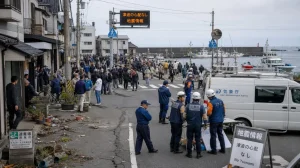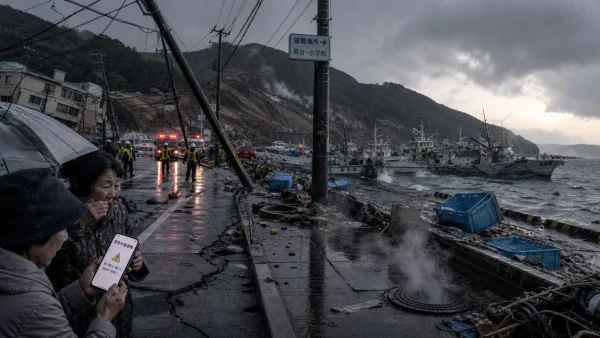
It was a 6.1 that jolted the north of the country early in the day, and it’s only the latest in a string of tremors that have had the country on edge for days. No one was hurt and there was no call for a tsunami, but the JMA says don’t be surprised if we see more as this sequence plays out.
This one was offshore, with its epicentre some 40 kilometres down near Iwate Prefecture. In Hachinohe, over in Aomori, they felt it at a 5 on the intensity scale. As for major damage, officials say there’s nothing to report so far.
Why the new quake matters
You have to put it in context: there has been a lot of ground moving in the north and centre of Japan. And with the rain from the typhoons, there is a heightened fear of mudslides and other trouble in the wetter parts of the country. They are bracing for some strong aftershocks.
In the wake of a bigger one late last week, the agency put out word for residents to be ready. They were blunt about it: for the next week or so, you could be in for something in the upper 6 range on the local scale.
If you are in the area and wondering what to do, here is the line from the agency and those in charge:
– Be in a position to handle upper 6 shaking for at least a week
– Don’t let your guard down; check for official word
– Tread carefully in spots where you might see some collateral damage
Some of the recent hotspots in Japan
Then there was Friday night. At 10:29 p.m., a 5.6 hit Yamanashi and the surrounding region. It was 20 km deep and registered as a lower 6 in Fujikawaguchiko Town and an Upper 5 in Otsuki City, per the numbers.
Word on the street is 10 people in Yamanashi were a little the worse for wear. It’s a place defined by Mount Fuji, and the last time they saw a lower 6 was way back in 1924, so some have been asking about the volcano. The agency has put those fears to rest, saying the mechanism of the quake makes an eruption a non-starter.
More of the same near Tokyo
The capital had its share of movement on Friday too. A 5.8 made itself known in Chiba Prefecture, with the epicentre at 35.7 N, 140.6 E.
Before the hour was up, a 4.1 rattled southern Ibaraki at 11:49 a.m. and you could feel it in Tokyo. The European-Mediterranean Seismological Centre also put down a 5.8 near eastern Honshu at 20 km down.
The big one from a few days back
Thursday brought the heaviest blow of the week: a 7.2 in the northeast. They had it at 6.9 at first, but the 7:30 a.m. temblor off Iwate’s coast was revised up. It was 40 km in the ground.
Four were left with injuries. In Hashikami Town and Hachinohe City, the shaking was an upper 6, which is as high as you can get on the 7-point scale before the top. The agency has been clear: there will be more.
What to make of it
Being on the Ring of Fire means you live with it. The infrastructure is built for it, but when you have a cluster of quakes and some heavy rain to boot, it puts a strain on things. There was no tsunami warning for the 6.1 on Sunday, for what it’s worth.
The message from the top is the same as ever: have your plans in order and expect the unexpected. For the communities that have been through it, they are being told to be on their toes and look for any tell-tale signs of damage on the old buildings and bridges.
Here is the list from the officials for the next few days:
– More aftershocks in the north and centre
– Watch for mudslides where the ground is soft
– No tsunami to worry about after Sunday’s event
Sunday’s 6.1 didn’t claim any lives, but in a week like this, it’s part of a pattern. With the ground still unsteady, the priority for the authorities is to get the word out. Households are being told to go over their emergency gear and know their way out. The goal is to make it through the week in one piece.