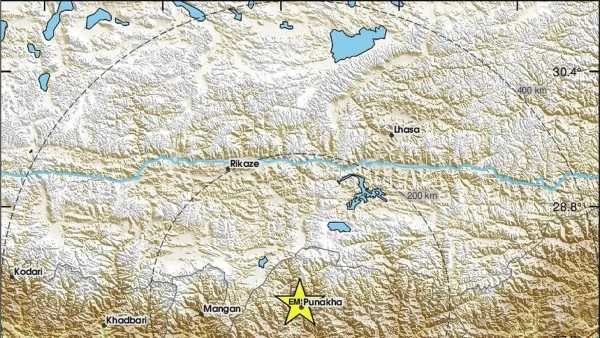
It was a moderate 5.7, but one that was felt by many. Late on 7 June 2026, tremors from the epicentre near Bhutan rippled through to several parts of Northeast India, as well as Assam and North Bengal. So far, we haven’t seen any major damage or hurt, but officials are being cautious while they put in their numbers through the night to see what’s what.
Regional tremors and immediate response
In Guwahati, Shillong and Siliguri, people will tell you it was a short, hard jolt, more so if you were up high. A lot of folks made for the outdoors on the strength of a phone alert or a word from a neighbour; in this part of the country, you don’t want to be inside when a late-night one comes through.
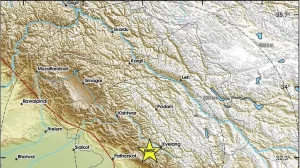
The Android Earthquake Alerts System has it at 5.7, with the strike time at 11:06 PM on June 7. The epicentre was in the vicinity of Bhutan, some 252 km from bits of Assam, which put a few of our larger towns in the line of fire for some solid shaking.
Over in Bhutan, they say the buildings in Thimphu and Paro, as well as in a number of dzongkhags, were swaying and furniture was rattling for a good few seconds before people made a run for it. One account even put a 5.3 down near Punakha on Sunday night, which is why you’ll see some variance in the early figures.
What officials know so far
There’s nothing to suggest any major structural issues or injuries on the Indian side, but field teams have been put in motion to check on the important districts. Word is the quakes were also a bit of a sensation in Nepal, Bangladesh and other corners of the northeast.
This is what we have from the authorities:
– No reports of any major harm or damage
– We’re in the process of assessing the affected areas
– Some safety advice for the public
– Stay on your toes for aftershocks
Why the region shakes often
You have to remember that Bhutan and the Northeast are in the Himalayan seismic belt, one of the most active on the planet. The Indian and Eurasian plates are in a constant push-and-pull, and that stress has to come out in the form of an earthquake now and then.
So these are a fact of life in the eastern Himalaya. Even if the first reports are all clear, experts will be the first to say you can count on some moderate activity and should be ready for it.
Aftershocks: what to expect next
After a mainshock, you don’t get all the release in one go. You may have smaller ones in the minutes or hours that follow, or even over the coming weeks. There’s no way to put a finger on when or where, so do as the officials say and stay put on any verified info.
What to do during an earthquake
When the floor starts to move, it pays to act fast and smart. Here is how to make sure you’re safe:
– Get down, under something solid like a table, and hold on
– Don’t let the panic set in and run for the door
– Give windows and heavy stuff a wide berth
– Leave the lift alone
– Out in the open is best if you’re outside
– If you’re behind the wheel, stop and wait it out in the car
Areas that felt the tremors
We’ve had accounts from across Assam – Guwahati, Dibrugarh, Nagaon, Morigaon – and in Shillong and Tura in Meghalaya. In West Bengal, it was felt in Siliguri and around North Bengal. Some in Arunachal Pradesh were in on it as well.
Now that the scare of the night is over and we have no word of anything serious, the focus is on keeping an eye on the situation. Local administrations will be putting out more on what they find and any need for support. Have your emergency contacts to hand and for the final word, stick to the official sources.