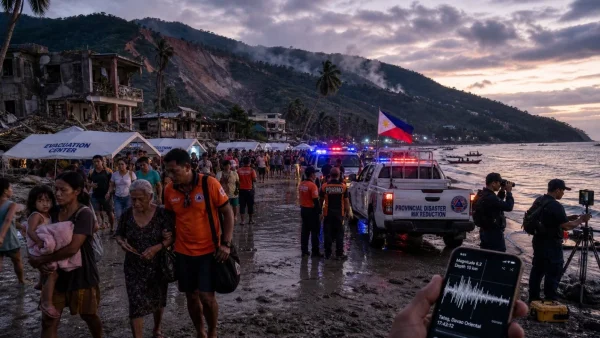
It was Monday when the South was put through it again: a 6.2 rumbled off Davao Oriental. It comes hard on the heels of the 7.8 that took at least 65 lives. We haven’t heard of any major damage or a need for a tsunami alert, but you can feel the unease in Mindanao after one thing after another.
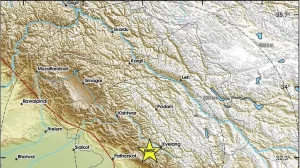
The U.S. Geological Survey puts the time of the tremor at 5:18 pm (0918 GMT) and the depth at 112 kilometres. The European-Mediterranean Seismological Centre has the same figures.
Today’s quake at a glance
Some in Davao Oriental have been out doing initial sweeps and don’t report any casualties, though they have put more resources into coastal watch. People in bits of Mindanao say the ground moved hard if only for a moment; a few places even had to set off their evacuation alarms for a while.
Here is what the agencies are saying:
– 6.2 magnitude, off Mindanao
– 5:18 pm local (0918 GMT)
– 112 km down
– No call for a tsunami
Still feeling the June 8
You could say this is the latest in a string of bad news for those still tallying up what they’ve lost since the 7.8 on June 8. The national disaster agency has put the body count from that one at 65, and 36 are unaccounted for.
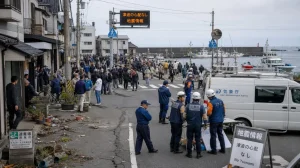
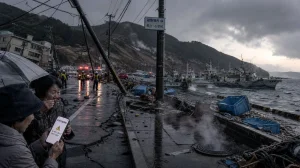
That earlier one did a number on the place – buildings came down, there were landslides, and thousands in the south were uprooted. In all, 630 were hurt and 3,100 homes were in some state of disrepair, not to mention the roads and public works. Even General Santos International Airport had to shut its doors and schools in a few provinces were put on hold.
If you look at where most of the dead were, it’s in and around General Santos, Sarangani, South Cotabato and Davao Occidental, where the earth gave way and structures failed. They had to put out tsunami warnings in parts of the region and we’ve seen over 2,100 aftershocks since, some of them 6 or higher.
What they are up to
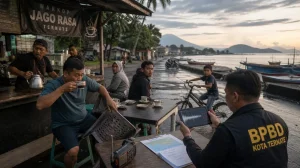
In Davao Oriental, the first order of business is to keep a close watch on the coast. “We’re looking for any water to pull back,” Kaiser Cadiz from the provincial office told us. “We haven’t seen it.”
Those on the ground on Monday will tell you the shaking was forceful, if short. Some buildings had to be cleared as a matter of course, but the word from the top is there is nothing too serious to report.
Quakes in the Philippines: why so often?
You have to remember the country is right on the Pacific Ring of Fire, that long line of trouble from the Far East of Russia to South America. The tectonic plates here make for a lot of strong activity, especially of late in the Mindanao area.
Then there was last October in Eastern Mindanao, with 7.4 and 6.7 quakes that left eight people dead. These new ones are a reminder of how much of a strain it is on the infrastructure and our ability to be prepared.
In the coming days
Since Monday’s didn’t do any great harm, it’s a case of wait and see. The officials are on it, checking in on the coasts and in the field as the aftershocks from June 8 go on.
As for the people living here, the message is simple: if you get an alert, you move. Pay attention to what the local offices say. With 2,100 aftershocks under our belt since the 8th, you can’t be too careful with the information you have.