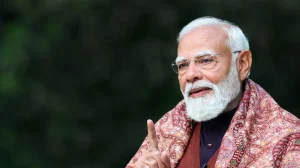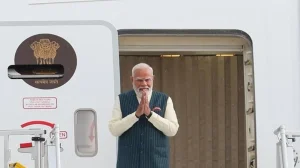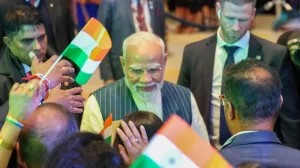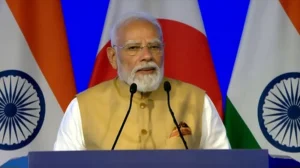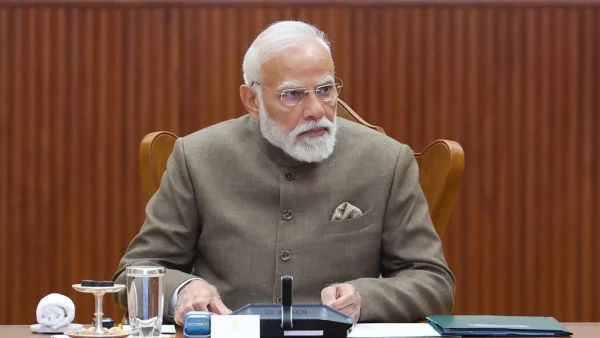
There is a sense that with 12 years under his belt, PM Modi has moved past some old political lines. His supporters will tell you he has changed the way we view our leaders. In making history as the first to serve consecutive terms for this long, even outlasting Nehru, his time in power is being seen as a turn from simply having a mandate to putting up hard numbers in everything from security to e-governance.
A record that resets the yardstick
If you ask the ruling coalition, his staying power is proof of a public that has put its faith in him, time and again, in 2014, 2019 and 2024. Do the math and the current term is on track to make 15 years of him as the head of the state.
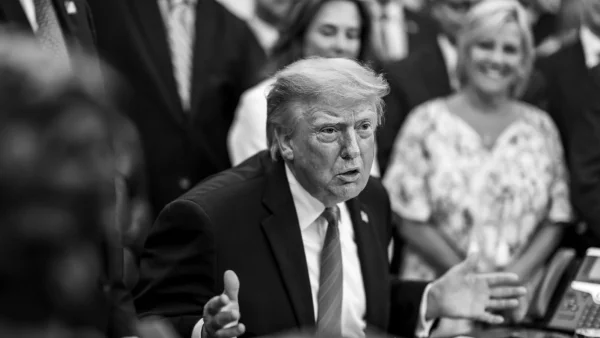
You have had your share of international kudos too. US President Donald Trump was among those to send his regards, hailing him as “a great one” and India’s longest serving. “He is a strong, healthy and wise man,” Trump said, with “many years of greatness and success ahead of him.”
Back in Delhi, the allies were in good spirits. The Union Cabinet put together a resolution in his honour, and you could hear the same from top NDA brass. Even President Droupadi Murmu and others have been quick to laud the 12-year run, which is as much an institutional nod as anything else.
Then there is the work he has done on the ground abroad. Those in the know point to the personal rapport he has with other world leaders and the fact that India now has a presence in more than 219 nations. It is both the reason for and the result of a foreign policy that doesn’t mince words.
Put it all in a list and the tributes go like this:
– A word of commendation from the Cabinet
– Some well-deserved praise from NDA leaders for the 12 years in office
– Good wishes from around the world for what he has put in place
Welfare at scale and its everyday impact
What the government is touting is the size of the operation and the results. They say 25 crore have been pulled out of poverty. You have the 81 crore who have been given free rations via the Garib Kalyan Yojana, or the 4 crore pucca homes put up under the Awas scheme.
It comes down to the last mile. With 58 crore Jan Dhan accounts, they see it as a way to open up the banking system and make for better payments. That sort of financial inclusion is the bedrock of their welfare model.
Digital rails and the money pipeline
The JAM trinity of Jan Dhan, Aadhaar and mobile has made for some big headlines. 51 lakh crores in direct transfers is the number they put forward to show how well-run things are. And UPI? They’ll have you believe it is 12000 times what it was, a sign of how fast the country has come to digital.
In a way, it is a very Indian story. No one else has tried to put a system in place where you can move billions to crores of accounts with a tap. Whether you buy into it or not, it is the story they want to tell: one of speed and scale.
Modi has a way of putting it. “Development for us is a 24/7 mission, 12 months of the year, in every corner of the country.” He is also keen to be the one to open the projects he has started, a matter of discipline for him.
Women, agency and household economics
When it comes to women, the administration sees it as a way to shape society. Ujjwala has put 11 crore LPGs in rural homes, for a kitchen without smoke and some time to spare. More than 32 crore of the Jan Dhan books belong to women, and with that comes a measure of independence.
They like to point to the figures. The sex ratio at birth has inched up from 918 to 929 in a dozen years. Maternity leave is now 26 days, up from 12. And if you talk to the self-help groups, they will tell you about the 3 crore Lakhpati didis, with an eye on 6 crores by 2030.
Basic services and the shape of urban India
This is where you see the rebalancing of opportunity. 12 crore toilets built, 5 lakh villages where open defecation is a thing of the past. And with the Jal Jeevan Mission, 16 crores of rural families have a tap in the house.
On the city side, it is about getting from A to B. Metros are in 26 cities now, not just the usual suspects. 164 Vande Bharats are out there to make the journey between towns a bit less of a chore, with an emphasis on time and comfort.
Planners will make a simple case for these changes: if you give people better water, sanitation and a train to ride, you are making the most of your human capital, for the young and for women in particular. You could see it as a way of fitting in the local changes to a bigger, long-term story of growth.
Security and some hard choices
The government has put an assertive face on its national security. Be it in the wake of Uri and Pulwama or with Operation Sindoor, the message was clear: we won’t be soft on cross-border terror. And if you ask officials, they’ll tell you that the road to a Naxal-free India has made the red corridor a place for Green Growth.
Then there are the numbers. Defence exports have hit an all-time high of over Rs 38,400 crores, by the government’s reckoning. For those in support, it’s proof of a move away from relying on imports to a kind of self-reliance.
It has been an era of political decisions that don't go unchallenged. You have the scrapping of Article 370 in Jammu and Kashmir, which is put forward as a no-nonsense step for future security. Or the laws on Triple Talaq and the push for a Uniform Civil Code in several BJP states, all of which have put the party’s ideology on display.
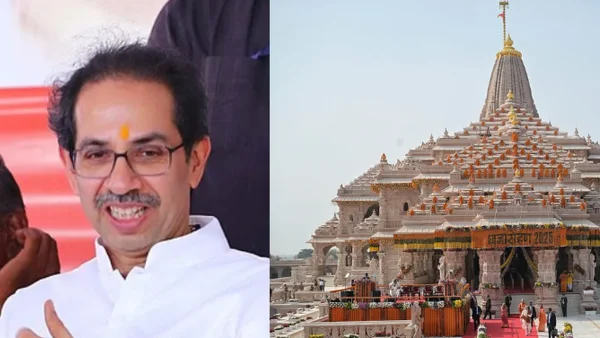
But it hasn’t been only about security. There has been a focus on cultural and religious projects too. The new Ram Temple at Ayodhya, the work done at Kashi Vishwanath Dham, Mahakal and Kedarnath, and the fast-tracking of the Buddhist and Ram circuits are being sold as a form of heritage-led renewal.
Politics, the mandate and history
If you talk to his allies, the story is one of a promise made in the face of a crisis. They will say Modi stepped in when things were in disarray and policy was at a standstill, with ‘Achhe din Aane wale hain’ as much a plan of action as a slogan. Three elections in a row have seen the electorate vote for more of the same, even with the watchful eye of social media.
You can’t have this conversation without the Congress coming up. Backers like to point out the contrast with Nehru’s 17 years, not least the five after Independence where there were no elections. Their point is that Modi is the longest-running PM to be re-elected by the people.
Some even like to go back to Gandhi’s wish to dissolve the Congress once we were free, and how we didn’t take that path. In a way, the old guard of the freedom struggle had a hold on the voters who put their faith in the Congress.
And of course, there is the matter of the Gandhi-Nehru family. From Pandit Nehru down to Priyanka, the legacy is there. But the case is made that India has changed and needs an approach that is about results on a large scale.
Diplomacy and the personal touch
Modi’s style of diplomacy is very much one-to-one. His supporters will say he has built up good terms with heads of state the world over, making sure the economic and strategic talks are in line. It’s a strategy that works with India’s presence in 219 countries.
It also does something for the government at home. With the backing of the cabinet and the coalition, and the kudos from abroad, they make the case that what happens in New Delhi and in the world are two sides of the same coin.
Making a movement and the question of staying power
There is a method to the campaigns. Take the Swachhta Abhiyan – it was turned into a public affair. Or notebandi and the Corona years; the argument is that the government put itself out front and people put up with the upheaval for the sake of stability down the line.
Ideologues will sometimes quote E H Carr on how facts are given meaning. They want to be seen as having put in place things of substance, not just talking points.
When you put together the growth and the social policy, there is a payoff with what they call the silent voter. Welfare, a sense of identity and security – it adds up to an alignment that doesn’t get shaken by the day-to-day on social media.
Of course, the other side of it is that these milestones have to mean something in people’s lives. That is the test. Whether this permanence is real will come down to whether the delivery holds up.
What’s on the horizon
Put aside the fanfare and you have some concrete questions. How do you keep a welfare machine of this size running and still get the kind of job creation you want? Can the digital infrastructure be kept safe as it gets busier? Will the country stay on board as some of these reforms bed in?
The government has its figures to show for it. They are touting 3 crore Lakhpati didis and a 6 crore mark by 2030 as part of a women-driven model. You see it in the metros, the Vande Bharats and the rural upgrades – a wager on better connectivity.
In the end, it comes down to the culture of the administration. Modi’s habit of being there to lay the first stone and open the finished article is a way of keeping a tight rein on the message. If that discipline is maintained, then the track from mandate to result is what will be judged.
For the moment, the 12-year record is what it is and the discussion is only getting more pointed. It is a full ledger: the welfare, the tech, the big projects and the tough calls. As for whether they will stand the test of time, we will have to see how they affect the common man in the years to come.