When you put all your eggs in the education basket, you might be missing the one investment that truly has your kids’ back. Look at your retirement as an investment in them and you move the risk off the next generation and into some hard-nosed saving now. You’ll see the difference: they get to have independent parents, not a monthly bill to pay.
The kind of risk most don’t put a number on
In many Indian homes, not having a proper retirement plan is a quiet way of passing the buck to your grown-up children. The money you were putting aside for a house or a new venture ends up in the hands of your parents, and before you know it, you’re under more strain than you planned for.
Put it in terms of an investor: this isn’t about being a good parent, it’s about the numbers. Pay for your own old age so your children’s balance sheets are in good shape when they no longer have to worry about tuition.
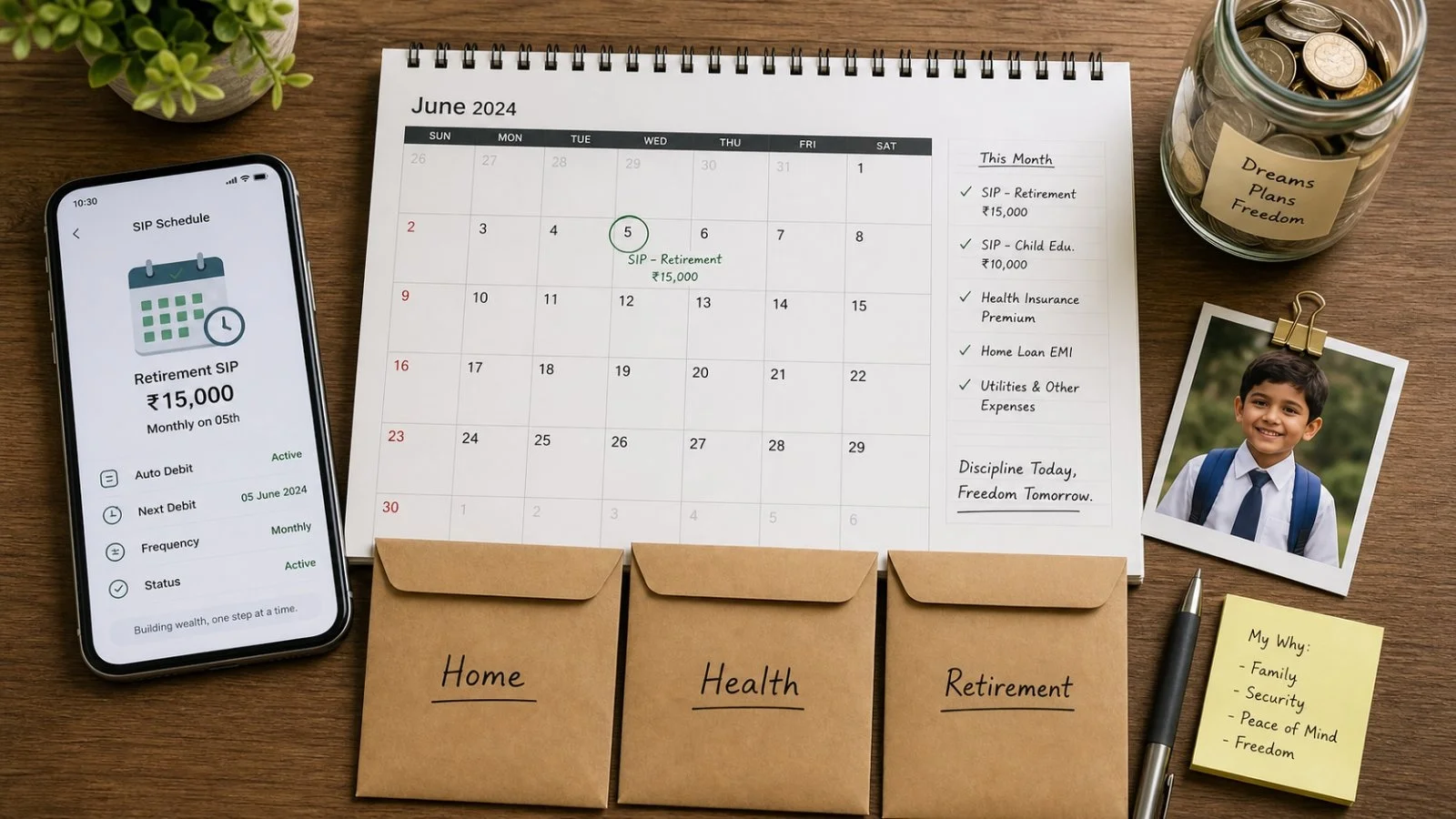
Think of it: you are your own dependent
You can picture what a child will need without much trouble. The you of 20 years from now? That feels like a concept. But he or she is real. At 65, there is no salary, medical bills are up, and inflation is a fact of life.
Of everyone who could be on your payroll, your future self is a sure thing. Once you see him as a dependent, making a start makes sense.
Why it is better to do it now than to do more later
You’ll see a lot of parents put money away for a kid from day one and put off their own plans. Funny enough, retirement is usually a longer game than a child’s schooling. With more time for compounding, the SIP you need to build a retirement fund can be less than what you put toward an 18- or 20-year goal.
Your child is only going to need you for a while. Your retired self, and your spouse, might for a long time. Let retirement fall in the pecking order and the price of waiting will add up in ways you don’t want to think about.
Put retirement on the same footing as a child plan
Act as though you are putting some cash aside every month for someone who is going to be fully on you down the line. Every SIP is for your housing, your health, and your peace of mind. From that vantage point, it is no longer a “nice to have” but something you owe your children.
The product is just the means to an end. Be it a mutual fund, NPS, EPF or whatever, it is the regularity that does the work. It is not a matter of which one, but of whether you are putting money in for this dependent each and every month.
A few rules of thumb to go by:
– Get the ball rolling with your first pay cheque
– Have a SIP in place for the things you will need
– Be as consistent with this as you are with school fees
– See NPS, EPF and the like as what they are: tools
Take Ravi, for instance
Ravi is 35 and a dad. His daughter is born and he is right in with 20,000 a month for her. Then the rest of life happens – fees, a home loan, the idea of a bigger place. His own plans for when he is done working are always for “next year”.
Make it 25 years and his daughter is on her own. Ravi is in his late fifties and his nest egg is not what it should be. He made sure of his daughter, a dependent in his eyes. He didn’t show the same foresight for the man he was bound to be.
The one milestone that eludes most parents
You have the big two for any family: education and then marriage. There is a third, and it is the one that underpins everything else. It is to make sure your kids don’t have to pick up the tab for you.
You have the discipline for a child plan; you should have it for retirement too, since your old age is a given. Every year you put it off is a year you leave that unseen dependent short, and it will be a harder road to catch up.
What an investor should do
It comes down to risk and what you can do with it. If you don’t fund your retirement, you are asking for a drag on the whole family. Do it and you have a way to make a future cost manageable over time.
So here is the practical side. Make up your mind that with your first salary, you had a “retirement child”. Put some money in for him every month. You can look at the products another time; get the habit down first.
And if you are left with one question, let it be this: what are you leaving behind? A parent who is his own master, or an EMI in all but name? Your answer is in the investments you make for the one dependent you can count on.