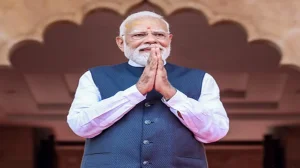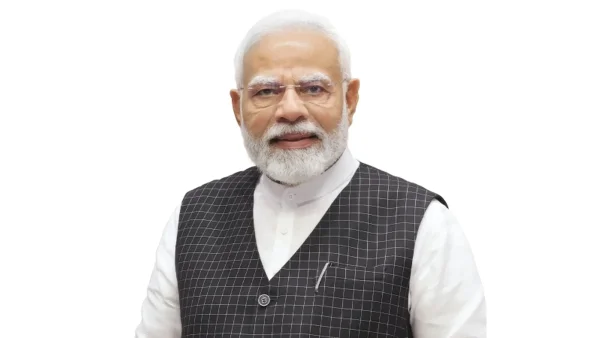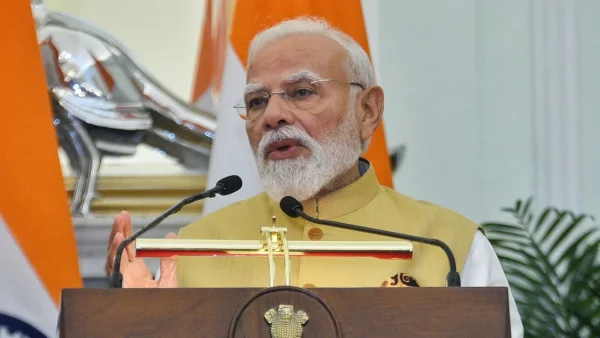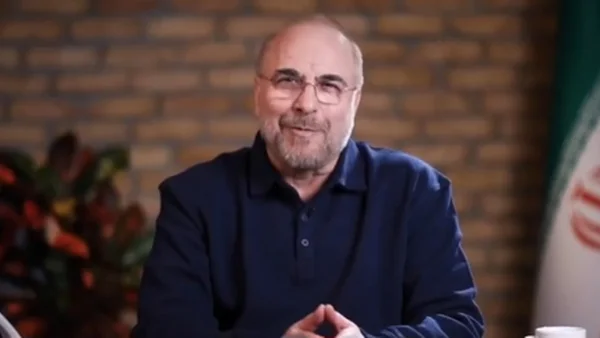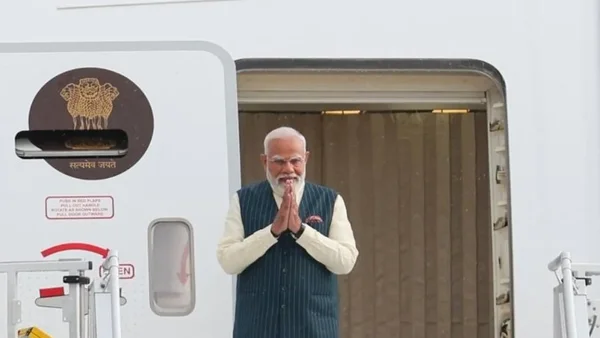
It started with a lighthearted query over a no-frills street snack. “Has jhalmuri made it to the Netherlands?” the Prime Minister asked. It was a good-natured way to break the ice with the crowd as he moved on to the more serious business of turnout, trade and what India can do for Europe.
You could hear the room with the laughter and clapping. It was a line that had some bite to it. In Bengal, jhalmuri is not just puffed rice with a kick; it is part of the fabric of the day, and in this election cycle, part of the show as well.
From roadside stop to rallying shorthand
Some might remember from April when the PM put in an unannounced stop at a Jhargram roadside stand for some. That simple detour was all anyone in the BJP and the Trinamool Congress could talk about, each side trying to make something of it in their sparring over who has the people’s ear.
So when he made the same reference in the Netherlands, it was like a throwback. He was able to bring a piece of home into the room and use it as a kind of soft power. For those in the audience, it was as much news as it was a fond memory.
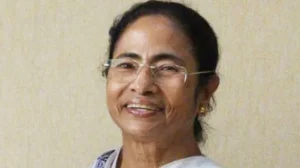
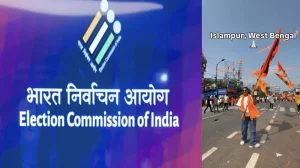
Then there is the matter of West Bengal. The 2026 Assembly elections were a turning point. The BJP put down the All India Trinamool Congress and for the first time put together a government in the state. They put up more than 200 in a 294-seat house, and Suvendu Adhikari was sworn in as chief minister, putting an end to 15 years of Mamata Banerjee.
Record turnout, bigger message
Modi put some numbers to it. “Every year we see record breaking voting in India,” he said, pointing to the 2024 Lok Sabha polls where over 64 crore people went to the booth. “That is more than the EU’s population.”
Diaspora, identity and a warning
The reaction when he brought up West Bengal told you how attuned the diaspora is to what is happening back home. It was his way of making the case that our democracy is as much of an export as our culture.
He then turned to the Indians here, calling them a ‘trusted bridge’ to Europe. He spoke of the hard work and faith that has defined their path. “Our ancestors left a lot behind but they took with them the smell of the earth, the songs of devotion, the values of the family,” he put it. “Many a culture has been lost to time, but in India, ours is still very much alive.”
Here are the key takeaways he underscored for Europe and the diaspora:
– India’s turnout scale is a point of national pride
– The diaspora is a ‘trusted bridge’ to Europe
– Trade with the EU is pitched as a mutual gain
He was also blunt about the times we are in. “This is a decade of calamities,” he warned. “If we don’t get our act together, we will see the gains of years go up in smoke and millions will be pushed back into poverty.”
Trade stakes and what to watch
But he did not let it remain a mood piece. When it came to the India-EU trade deal, he made it clear the Netherlands would be a winner. He linked that to the work the community does in building ties and networks.
The jhalmuri story has been making the rounds for a reason: a little culture can go a long way. But the real work is in the policy. If the talks hold up, the Dutch will be right in the middle of it.
For most in the hall, the message was plain enough by the time he was done. You can have your campaign, but the symbols are what stick. One question about a snack in The Hague was all it took to set the tone for what the PM had to say on identity and where we are headed.