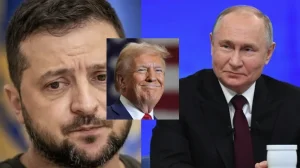
Russia and the United States missed the opportunity to come up with a Ukraine peace agreement in Moscow. The Kremlin assistant Yuri Ushakov said that the talks were very lengthy yet they still could not overcome their differences. He added that the meeting was positive but they did not meet in the middle on a very sensitive issue –land fights.
The Issues
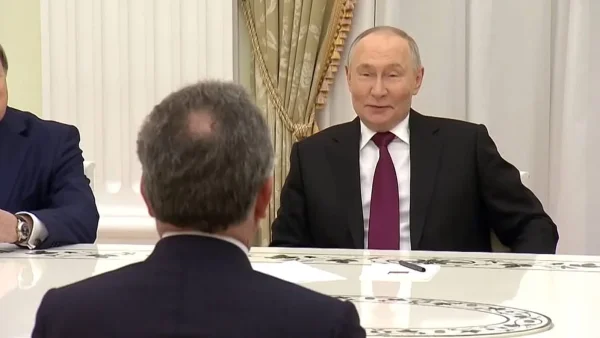
The President of Russia Vladimir Putin came into contact with a delegation from the US consisting of special envoy Steve Witkoff and senior adviser Jared Kushner. The meeting, which lasted for almost five hours, addressed the content of the peace deal rather than debating details, as Ushakov stated. The latter added that some propositions, made by the US, were okay for Russia while others were not.
The US administration has presented a 28-point peace plan which was reworked after negative feedback from Kyiv and European major cities. The new version of the document is meant to respond to the criticism that the earlier versions were too much in Russia’s favor. Nevertheless, the key differences were still very present during the Moscow talks.
“Both sides see the potential for cooperation, and have agreed to keep silent about the content of the talks”, that is what Ushakov wanted to stress. He further mentioned that the talks were extremely extensive and the most elaborated ones between Washington and Moscow after the conflict escalated, however, no major advances were achieved.
Blockages: Territory and NATO
The toughest question still parting both sides is believed to be territory. Ushakov maintained that they could not agree on the territorial part providing the deadlock that will not let any Ukraine settlement happen. Also, he brought up that Ukraine’s wish to join NATO came up among the key questions, indicating old and very well known lines of each party.
For Kyiv NATO is the most important issue in its security and future deterrence perspectives. The Kremlin, meanwhile, insists on the issue of never coming into the alliance the calling of which is a matter of security of the highest importance. It is most likely that one to make a bridge among them will need to come up with new security terms or a well-prepared sequence.
Moscow and European signs
Speaking earlier at an investment forum, Putin accused European governments of stalling diplomacy and cautioned that Russia would respond if things escalated. ‘Our intention is not to be against Europe in a war, but if Europe wants it and starts it, we are ready right now, he emphasized, representing Europe as ‘the war side.’
Kremlin’s investment representative Kirill Dmitriev affirmed that the internal session was fruitful, however Ushakov’s \ extremely precise phrasing depicted a tense situation wherein an agreement on peace cannot be found without being even further apart. This evaluation indicates both cautiousness and a wish to maintain open communication lines in the face of rigid attitudes.
Kyiv and Washington take sides
Meanwhile, US Secretary of State Marco Rubio held talks with a Ukrainian group led by the security head Rustem Umerov to analyze the American peace plan. He stated the meetings were productive but said that there was still much work to be done, confirming the Moscow information as well.
According to US President Donald Trump, the team’s meetings in Moscow were ‘quite good’ while pointing out the complexity. Ushakov signified that Putin requested Witkoff to bring a couple of political messages straight to Trump and further contacts will take place to try out if the new propositions will be congruent to anyone.
If Kyiv will have it the way the Ukrainian President Volodymyr Zelenskyy said, Ukraine will closely examine the results of the talks and there will be ‘no backstabbing’ of Ukraine through secret deals according to him. Zelenskyy made it clear that among the arguments of those who are challenging ceasefire terms, security guarantees, and the fate of the political future of the occupied areas, the aspects of fairness and transparency are still important.
What’s at stake in this round of talks
The most recent negotiations put a spotlight on three inviolable issues obstructing a peace agreement for Ukraine: the disputed land, the NATO membership for Ukraine, and the security scheme around a possible ceasefire. The 28-point proposal tries to find the middle ground, but there is no indication that any of the parties involved are ready to compromise on the essentials.
The situation is straight for both the markets and the European security. If no consensus is reached on the issue of territorial control and alliance commitments, the chances of further escalation will still be quite high. Nevertheless, the mere continuation of dialogue by both parties would decrease the likelihood of an abrupt error, although by a little, yet it would be significant.
What happens thereafter
Ushakov reported that the process of diplomacy remains and the confidential nature of it was confirmed. The American representatives will brief the President while also coordinating with the Ukraine and the European partners, Moscow, on the other hand, will select the U. S. pieces he could bear. The resolution of the conflict over territory and NATO will probably be through small steps in the near future.
At present, the war in Ukraine has not gone anywhere diplomatically: negotiations are moving ahead, but the pressure is also mounting, and the route to a lasting peace settlement still goes through the stubborn queries that stopped the last round.