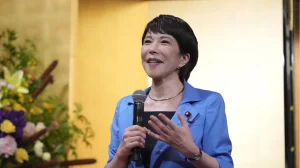
Japan has entered a significant chapter, with the crowning of Sanae Takaichi as Japan’s first female prime minister, a political milestone decades in the making. The 64-year-old conservative and admirer of the late Margaret Thatcher of Britain-now maintains the highest political office in Japan-Presiding with a mix of ideology, muscle on economics, and cultural conservatism. Her election thus becomes the moment of personal triumph after several attempts but now turns into a road test for Japan’s political establishment during a social and economic upheaval.
A Historic Victory for Japan’s First Woman Prime Minister
The decision came after some hard-fought elections in the ruling Liberal Democratic Party, where she defeated Shinjiro Koizumi in the runoff. The LDP having lost some footing in the parliament, the prime minister was then appointed through a parliamentary vote, symbolically representing gender issues in Japanese politics. The ascension is a reward for years of dogged advancement through Japan’s traditionally male-dominated political ranks-from her humble origin in Nara to being entrusted with cabinet portfolios ranging from economic security to internal affairs.Takaichi, born in 1961, teaches that she graduated in business management from Kobe University and was once appointed a congressional fellow in the US. Early exposure to American policymaking and networking with bureaucracy somehow in her career further consolidated her pragmatism with serious governance.
From Heavy Metal Drums to Political Leadership
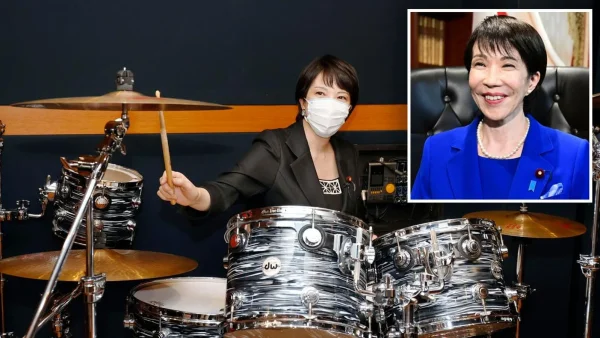
Takaichi’s life story is quite different from stereotype. As a lifelong heavy metal aficionado, she played drums in her college band and has fondly reminisced about her days of following Iron Maiden and Deep Purple. She maintains that the focus and endurance she learned through heavy metal were skills that would help her later in negotiations and politics. Behind that shiny public persona is a strong-willed leader with great work ethics: she is fastidious and brutally upfront all at once.
Economic Vision and Policy Challenges
Contrary to acts of fiscal austerity under Margaret Thatcher, in light of ‘Abenomics’ initiated by the late Shinzo Abe, Takaichi champions governmental high spending and injecting money into the economy. She favors the bills for more government spending, dropping taxes, and the loosest kind of monetary policy in the hope of reviving Japan’s ailing economy. But investors, somehow, continue on their cautious path, concerning public debt and sustainability of these policies. Her forming a good alliance with the reformist Japan Innovation Party (JIP) since the LDP’s traditional partner, Komeito, withdrew shows how adaptable she is. The coalition plans to provide relief from taxes on basic necessities, political transparency through reforms in political donations, and reduction in the size of parliament. Those initiatives-if ever implemented-will actually constitute a significant step forward from the current status quo of unaccountability.
Conservative Leanings and Foreign Policy Outlook
Takaichi’s conservative worldview has oftentimes split opinion. She is well-known for making visits to the Yasukuni Shrine commemorating the war dead of Japan, an act which has previously been condemned by China and South Korea. Though at a recent turn her rhetoric toward Beijing has become more moderated, the fact that she encourages stronger security cooperation with Taiwan indicates that her stance with respect to regional defense has only been hardened.From a social perspective, Takaichi holds the traditional, orthodox view. She opposes same-sex marriage and continues her support of the law requiring married couples to share a common surname. Even if public sentiments are undermining her stance in that regard, she still wants to push for female representation with her promise of ‘Nordic-level’ gender inclusion in her cabinet.
The Modern Conundrum of Balancing with Tradition
Takaichi’s leadership thus arrives on a knife-edge. Jurisdictional population decline, stagnant wages, and the widening gender gap are all being held as pressing issues for some strong reforms. Given that Japan holds the 118th rank in the 2025 Global Gender Gap Report, there are high expectations that her government will promote the advancement of women in politics, business, and social welfare.Her own personal history, such as being bacteria-free on menopause and women’s health, hints at there being a leader aware of the issues that women face in an otherwise still conservative society. People back home in Nara say they are cautiously optimistic about the prospect of more inclusive measures around childcare, equality in the workplace, and support for healthcare during her tenure.
The Road Ahead
Sanae Takaichi’s tenure as Japan’s first female prime minister is its Icarian breakthrough as well as a balancing act. She inherits a fragile coalition, unfurling economy, and the problem of restoring faith in the LDP, haunted by corruption scandals and voter fatigue. Her ability to balance economic pragmatism with conservative ideology while managing relations with global powers will be the bar against which she will be measured.To date, Takaichi has already changed the face of Japanese politics; whether or not the political idol of Margaret Thatcher could be as transformative will be measured by how she navigates through this predicament.