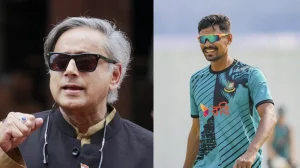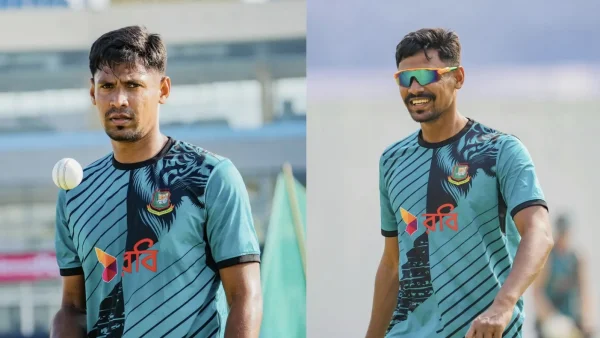
KKR got Mustafizur at a time when there were news reports of attacks on Hindus who were a minority in Bangladesh, and demonstrations where people were supposedly shouting things against India. Some people think an Indian team shouldn’t be getting players from a country where Hindus are being harmed.
Others say that IPL teams pick players based on the rules of the league and what the government allows, not what they themselves feel or want. They also believe that if a ban is needed, it should be a rule for everyone and made at a higher level.
The political reaction
A number of BJP leaders spoke against KKR getting Mustafizur, and even went after Shah Rukh Khan directly. One of them called him a ‘traitor’ and said the bowler wouldn’t be allowed off the plane if he showed up for the 2026 season.
Another BJP person agreed with the attack, and connected the actor to old claims about the film business, as well as saying his films weren’t doing well with audiences anymore. The things people were saying went from being about cricket to being personal attacks.
Religious leaders also spoke up. Devkinandan Thakur questioned the signing, because of Hindus being killed in Bangladesh. Jagadguru Swami Rambhadracharya said the decision was ‘bad’ and accused the actor of going ‘against the country’. Groups of people in some parts of India even threatened to mess up the IPL fields if Mustafizur played.
On the other hand, leaders from the Congress party defended Shah Rukh Khan. They said calling him a ‘traitor’ was an attack on India’s acceptance of different groups, and that who a team picks is based on what the cricket board lets happen and rules for international sports.
A leading Imam questioned KKR’s selection and asked the actor to say he was sorry and to condemn the bad things happening to Hindus in Bangladesh. Political expert Tehseen Poonawalla said that only the IPL people in charge, the BCCI, or the government should decide if players from Bangladesh could be in the IPL.
What the BCCI says
Someone important at the BCCI said that they hadn’t gotten any orders from the government to keep players from Bangladesh out of the IPL. Without an order like that, the BCCI can't stop them from playing on their own.
This shows an important thing: whether players from different countries can be in leagues often depends on what the government says. If there isn’t a clear rule, teams have to follow the normal rules of the league, and the permission a player gets from his home country’s cricket board.
Could KKR not use Mustafizur? What the contract means
Once a player is bought at auction and the contract is registered with the BCCI, teams are usually supposed to pay the amount they agreed to, as long as the player can play. IPL deals aren’t ‘pay-as-you-play’; they usually promise the whole auction price if the player is able to play.
If KKR doesn’t use Mustafizur for reasons that aren’t about cricket, they would still probably have to pay him his salary. Players usually get 15-25% of the money before the season starts, so there’s money already gone even before the first game.
Ending the contract on their own is dangerous. Unless something unexpected happens, or the government clearly bans players from Bangladesh, cancelling the contract to make protesters happy could get the team into legal trouble, or make them have to pay a lot of money to settle it.
There is one thing, though. If the Bangladesh Cricket Board doesn’t give, or takes back, the player’s permission to play because of his country needing him, or because he isn’t fit to play, the payment would be for how much he was able to play. There are reports that Bangladesh might have a series in mid-April; if that happens at the same time, KKR would only pay for the days Mustafizur could play.
The connection to Bangladesh and how people feel
Why is everyone so upset? The trouble inside Bangladesh, and the attacks on Hindu minorities, have really hit home in India. People who don’t like the signing think it’s a bad thing to do, both morally and strategically, and that cricket should show what the country feels and support the people who have been hurt.
But running sports depends on clear rules, not making up what’s right or wrong as you go. In the past, whether players from certain countries could play has depended on official rules, making sure they were safe, and how the two countries got along. Without a rule from the government, teams are supposed to follow the rules the league has and the contract.
Safety, what it looks like, and the IPL’s name
This issue brings up practical questions. If the protests get worse, security groups and the people in charge in the states will have to figure out how much danger there is on the ground. The IPL’s name is about being safe and predictable; if there’s a threat to the places where games are played or to the players, the team, the league, and the police will quickly work together.
Teams also think about how things look. Not using a player to make people in the street happy could set an example and allow people to target players in the future. Using him even though people are complaining could cause problems with getting to the games. Either way, the league’s good name depends on making decisions that are the same, and based on rules.
What will happen now
Right now, Shah Rukh Khan is getting a hard time because KKR’s plan at the auction happened at the same time as a time of trouble in the world, with countries against each other. The connection to Bangladesh has made a normal cricket decision into a question of being a nationalist, safety, and rules. The clearest answer will come not from what people say, but from official rules that say who can play – and under what conditions – in the IPL.
Three things to watch will decide what happens:
– If the government makes a rule about players from Bangladesh for the IPL in 2026.
– If the BCB lets Mustafizur play for the whole season, or calls him back for his country’s team.
– If KKR, the IPL, and the local authorities can make sure the games are safe and don’t get stopped.