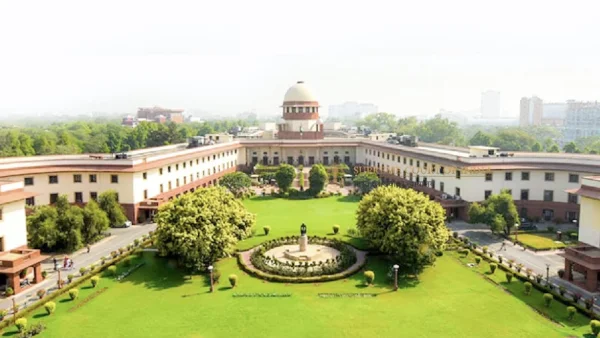
India’s Supreme Court has advised the government to put into place more transparent and stronger rules concerning user-generated content on social media, cautioning that the absence of accountability is putting millions at risk of mistreatment and losing their good names. The court also mentioned the possibility of an independent regulator to manage the harmful online content.
A push for accountability in user-generated content
A Bench chaired by Chief Justice Surya Kant and Justice Joymalya Bagchi remarked that the existing system is not sufficient to cover the rapidity and magnitude of the dissemination of malpractice online. The judges pointed out that harmful posts attain notoriety quicker than even the authorities or the platforms can react.
The court declared that the right to free expression is a fundamental right; however, it often comes covered with seedy exemption of that can be used for objectionableness, targeting of harassing and humiliating already vulnerable groups. The Bench required the Ministry of Information and Broadcasting to come up with appropriate guidelines to fill these gaps and to make the guidelines public for consultation.
Why the court intervened
The court hearings were triggered by several lawsuits connected to the contentious online show ‘India’s Got Latent’. The show was under fire for jokes made by some comedians (Samay Raina and Ranveer Allahbadia) which included making fun of disabled individuals. The complainants asserted that the damaging material surpasses the online confines as it might actually hurt the disabled communities.
The Cure SMA Foundation representatives testified in court, speaking of their members’ ridicule. The court said the issue at stake is dignity, not money. It ordered Raina and three other artists to highlight the abilities of disabled persons in their performances as a way of assisting in the collection of funds for the medical treatment of those with disabilities.
What the court proposed
The Bench put forward a ‘neutral, independent, and autonomous’ regulator who would evaluate the content that is prima facie allowable and impose preventive checks. The Bench strongly affirmed that if the users open channels and broadcast to masses without any regulation then there should be someone accountable.
The court debated about age-gating and identity verification, pointing out that a couple of seconds of warning about ‘adult content’ is far from satisfactory. It brought up about the technological interventions such as AI that platforms could utilize to track and control the content preemptively.
Free speech, but with guardrails
The Solicitor General Tushar Mehta informed the court that the situation was not only about the problematic humor but also about the regulatory hole it created. He proposed the view that this way of thinking is in line with the requirements of the constitution: that speech is priceless but cannot be turned into a vice or become the means of inflicting pain without repercussions.
Simultaneously, the court made it clear that it is not trying to ‘fiddle’ with free speech. It pointed out legitimate limits under Article 19(2) and the need to uphold the rights and dignity of the online victims.
Concerns about overreach and process
Senior lawyers warned against using terms like ‘anti-national’ in the draft guidelines because they are ambiguous and likely to be misused. They called upon the government to conduct comprehensive public consultations as a way to protect civil liberties and prevent pre-censorship.
One of the submissions cautioned that the expression ‘preventive’ may imply prior restraint. The court acknowledged these fears but stressed that the challenge is really about the timing of the response, since the deletions are usually done after the damage is already done.
Potential legal changes and stronger protections
The judges indicated that the existing legal provisions might need to be revised in order to completely eradicate the harmful content. They advocated for the enactment of a strong penal framework to act as a deterrent for negative representations of differently abled people in the same way as special laws provide protection.
The judiciary characterized prosecuting offenders after the fact as a ‘post-occurrence penalty’ and called for steps that limit the harm and its spreading such as enhanced platform accountability and quicker escalation protocols.
What comes next
The government reported that guidelines for social media content were almost ready for the public to review and asked for more time before making them available for feedback. The criteria will likely include a definition of obscenity, and efforts against technology-assisted gender violence and verification of age requirements and necessary procedures for the platforms.
It is anticipated that the new regulations will try to strike a balance between protecting individuals’ and the community’s dignity while not compromising on freedom of speech. The court made it clear that India has to develop its tech policy to stay in line with the rapid growth of platforms monetizing content and AI usage for speeding up the distribution.
The message to all creators, intermediaries, and consumers of digital content is simple: online freedom is still necessary, but accountability has to be established. The forthcoming set of rules which will be influenced by public consultation will have the potential to reconfigure how India approaches abusive online content and user-generated media regulation.