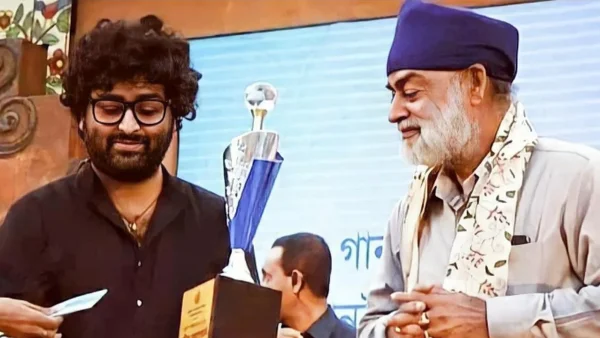
Shortly after Arijit Singh’s January 27, 2026 announcement that he was retiring from playback singing – an announcement which shocked his fans – his father, Surinder Singh, told a very personal story about his family. Surinder told of the journey from Lahore before Partition, to West Bengal, and explained that Arijit first became involved with music singing kirtan at the local gurdwara.
Moving after Partition, and starting a new life in Bengal
Surinder Singh stated that the family’s original home was close to Lahore. Following Partition, his father and three uncles moved to Lalgola, leaving all they owned. They were people who sold cloth, and were made to begin again in a new country, with very little to their name.
The family settled at first in Jiaganj, in the Murshidabad district of West Bengal. In time, some of the family went to live in an area called Panjabipara, where the Sikh people built a gurdwara. The gurdwara became the centre for worship, culture, and rebuilding the community.
To live in West Bengal meant having to make new everyday habits and find new work. Surinder explained that they found a home by the river, and slowly rebuilt their businesses. The story is like the stories of many migrations from the time of Partition, where being able to recover and the strength of community made new lives possible.
First musical lessons: kirtan singing in the gurdwara
Jiaganj was not only a safe place, but became the setting for Arijit Singh’s first steps in music. People in the area remember him as ‘Shomu’ long before he became famous across the country. He went with his mother to the gurdwara and sang kirtan at special times of year.
Singing religious songs gave Arijit an early understanding of tune, rhythm, and religious feeling. This basis in kirtan helped form his understanding of how the voice should be used, and how phrases should be sung – things which people later liked in his playback records.
The gurdwara also acted as a place for the community, where children and adults shared musical traditions. For Arijit, these unofficial times together gave him practice, confidence, and an early audience who liked his skill.
Staying close to Jiaganj, even with fame
Even after becoming famous and working in the big music business, Arijit did not end his links with Jiaganj. Surinder said that the peace of his home town always drew the singer back. He could not live in the city all the time, and chose to return often.
People who live there remember Arijit swimming in the local river, and riding a scooter around the town. These simple events show a life which is based in everyday routines, and not in the constant show business world of fame. His children go to school in Jiaganj, and the family still owns property in the big cities, but remains at home.
This loyalty gives meaning to Arijit’s choices, including his recent leaving of playback singing. For many artists, going back to their home town gives them balance and new ideas for their work.
Giving back to the community, and local development via Tatwamasi
Through his Tatwamasi foundation, Arijit has given help to local schools, health services, and cultural projects in Jiaganj. Surinder said that there were plans to improve schools, build a hospital, and set up a music school. These projects are intended to have a long-term effect on the community.
The idea of a music school is directly linked to Arijit’s roots in kirtan singing. It would create a proper system of training, where the unofficial times at the gurdwara once helped people develop their skill. Investing in the local area helps keep alive cultural memory, while giving new chances to young people.
This charitable work shows how a well-known artist can turn success into real help for people in the local area. It also makes stronger the singer’s continuing links with the place which shaped his early years.
Recent events in his career, and what he will be remembered for
Arijit announced that he was leaving playback singing on January 27, 2026, which was a surprise to many of his fans. Even though he has stepped back, he has recently released the song Raina, showing that he still works on artistic projects when he chooses to.
Surinder said that he was proud, and amused, by questions about what Arijit’s next project would be. The family story, from Lahore to Jiaganj, and the days of kirtan singing at the gurdwara, gives the public a deeper understanding of his artistic origins. That story also shows how a musician’s life and what he will be remembered for is shaped by his personal story and links with the community.