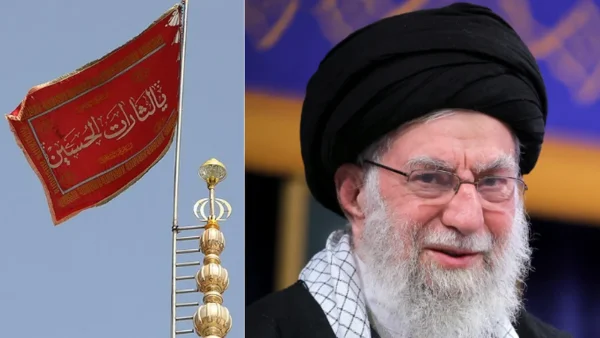
The red ‘revenge’ flag was put up on top of the Jamkaran Mosque’s dome, in Qom, following the reports of the Supreme Leader’s death. It was a clear and official request for justice and revenge, and showed how tense things were in Iran and the area around it.
What the red flag at Jamkaran Mosque means religiously
In Shia Islam, when a red flag is flown over a holy place, it means justice hasn’t been done yet, and that people want revenge for a really bad act. Jamkaran – a very important religious place close to Qom – has a lot of history and means a lot to many Iranians.
Putting up the red flag is both a religious act and a political one; it makes clear the intention to get payback, and presents the killing as an insult to the people and to things they hold sacred.
How Iranians reacted right away, and the security situation
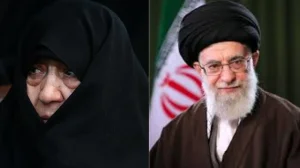
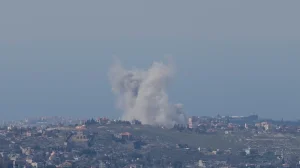
Iranian officials said the Supreme Leader was dead, which caused protests, times of mourning, and strong feelings from the public. In some parts of the capital, people actually cheered when they first heard, even as smoke could be seen near the area where he usually lived.
The Islamic Revolutionary Guard Corps said there would be a strong military answer, and called the attack an act of terror. Officials have said the attack was a declaration of war against the country, and against the millions who are Shia Muslims.
What leaders and allied groups in other countries said
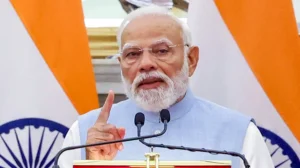
Leaders in the United States and Israel spoke publicly about what was happening, describing the event in strong terms and telling Iranians to think about changing their government. People who spoke for the military said Khamenei was the main person who planned the country’s actions in the region.
Groups that Iran is allied with showed they were sad, and said the United States and Israel were to blame for the attack, and what would happen as a result. This shows how one event can have an effect on the groups and networks Iran already has relationships with, in the area.
Who is in charge for now, and what the political changes are
Tehran quickly formed an interim leadership council to do the Supreme Leader’s work until someone new is selected. This temporary group is made up of the president, the chief justice and a religious expert who was named to the council.
This change in leadership immediately brings up questions about who will be next, if current policies will continue, and how power will be shared inside the country. The Assembly of Experts still has the job, according to the constitution, of choosing the next Supreme Leader – a process which could completely change how the country’s politics work.
What the situation in the region means for security, and what to watch for
Raising the red flag is a symbolic move that might lead to real military or political actions. More aggressive language, showing off military strength, and getting friendly groups ready to act all raise the chance of more fighting in the Middle East.
Important things to watch for are what the interim council decides, what the IRGC does, fighting across borders or attacks to get even, and how the main cities in the area change their security and diplomatic approaches. How stable the country is, the economy, and whether a wider conflict will break out all depend on what Iran and other countries do in response.
In a situation that can change fast, symbols and military actions are closely linked. The red flag over Jamkaran Mosque shows a political determination that could make people less willing to compromise, and affect how countries and other groups think things through. People who are watching should expect to see a mixture of traditional responses, careful planning, and quick changes in how risky the region is seen to be, in the coming days.