Think about being able to stand on the Moon and breathe easily, without having to carry oxygen all the way from Earth. NASA has taken a very big step toward making that possible by testing a solar system that pulls oxygen from the lunar soil. The test shows a sensible way to make oxygen and fuel, using only the sun and the regolith.
What the CaRD project is trying to do
The Carbothermal Reduction Demonstration – CaRD – is aimed at using what is already on the Moon – in-situ resource utilization. Its job is to use the things already on the Moon’s surface to make oxygen and things to power rockets. This means missions won’t need to be so heavy, and people can stay on the Moon for longer.
CaRD works on getting oxygen that is chemically stuck inside minerals on the Moon. Roughly 40 to 45 percent of lunar regolith is oxygen, by weight, but it isn’t oxygen gas that’s free to use. The project needs to break the bonds in the minerals to get that oxygen out, for people to breathe, or to use in fuel.
How the solar-powered system for getting oxygen out works
CaRD uses the sun as its main source of energy. A large group of mirrors catches and focuses sunlight into a very strong beam, which warms a reactor filled with what lunar soil would be like. The very high heat causes chemical reactions to happen.
Carbon is added to the hot regolith inside the reactor. The heat and carbon act with oxygen in the minerals to make carbon monoxide. That carbon monoxide can then be turned into oxygen gas, and used to make fuel – so nothing is wasted.
Testing the model in conditions like those on the Moon
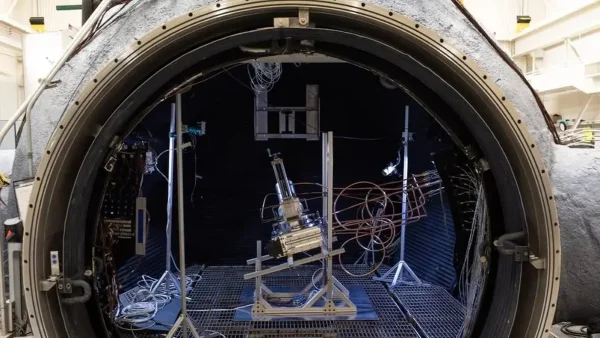
NASA ran the CaRD model in a thermal vacuum chamber at the Johnson Space Center. The chamber makes the really bad conditions on the Moon: almost no air pressure, and big changes in temperature. Running the system for a couple of weeks in these conditions proved the idea would work.
During the tests, the model made carbon monoxide using only sunlight and a substance like lunar soil. The test showed the solar beam-maker and reactor can work together in a space-like setting, proving that making oxygen on the Moon is not just a theory.
Who worked together and what skills they brought
The reactor came from Sierra Space; NASA’s Glenn Research Center made the solar beam-maker. Composite Mirror Applications gave the mirrors, and NASA’s Kennedy Space Center provided support systems. The work put together the knowledge of the government with commercial engineering.
This way of working together shows a bigger trend in space tech: public organisations and private companies working together to make things better. Sharing the risks of development and the knowledge of the hardware makes progress toward actually having the things we need on the Moon faster.
How important this is for Artemis and having people on the Moon for a long time
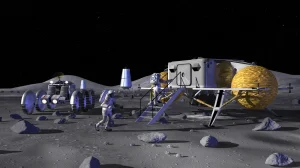
Making oxygen on the Moon really helps NASA's Artemis plans. Oxygen is needed for people to breathe, and it is also what rockets need to burn their fuel. Making it on the Moon means fewer heavy shipments of supplies from Earth, and lower costs for the whole mission.
Oxygen made on the Moon also makes missions more flexible. Crews could fill up landers and make air for homes using oxygen made locally. This makes it more likely that people will be able to live on the Moon for a long time, and sets the scene for going further out into space.
What other countries and companies are doing, and what might happen in the future
Other space organisations and companies are trying similar ways to make oxygen on the Moon. A European project is trying to get out tens of grams of oxygen a day using the sun and melted salts. Partnerships with Australia and private companies are planning missions to collect and process soil.
Private companies have ideas like melting regolith with solar power and using electricity to break oxygen out, and other groups are looking at chemical ways to do it. If these methods are proven to work on a big scale, they could also be used on Mars, where making oxygen and fuel locally will be very important.
Getting oxygen from lunar soil could change everything for people in space. CaRD is a real step forward, making the idea of people living on the Moon for a long time much more real. More tests, bigger tests, and work with other countries will show how quickly these systems can become normal parts of missions to the Moon.