Tere Ishk Mein wants to be a huge, all-encompassing love story, the sort that thinks being in pain makes something deeper and giving something up shows how much you care. It definitely gives you a lot of emotion, but also a lot of confused thoughts. Because of this, you’ll either really like it or not at all, and the strong feelings are more important than any real understanding, and the impressive visuals are more noticeable than the plot.
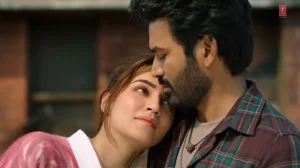
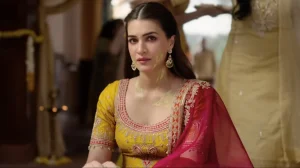
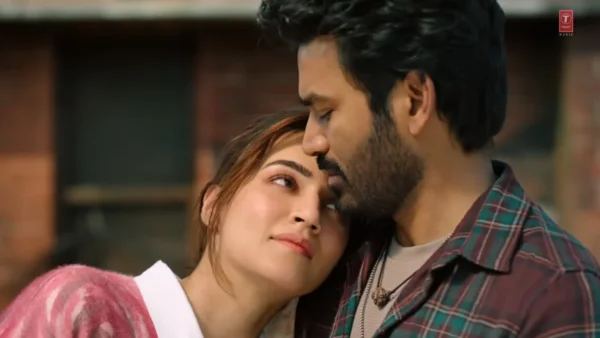
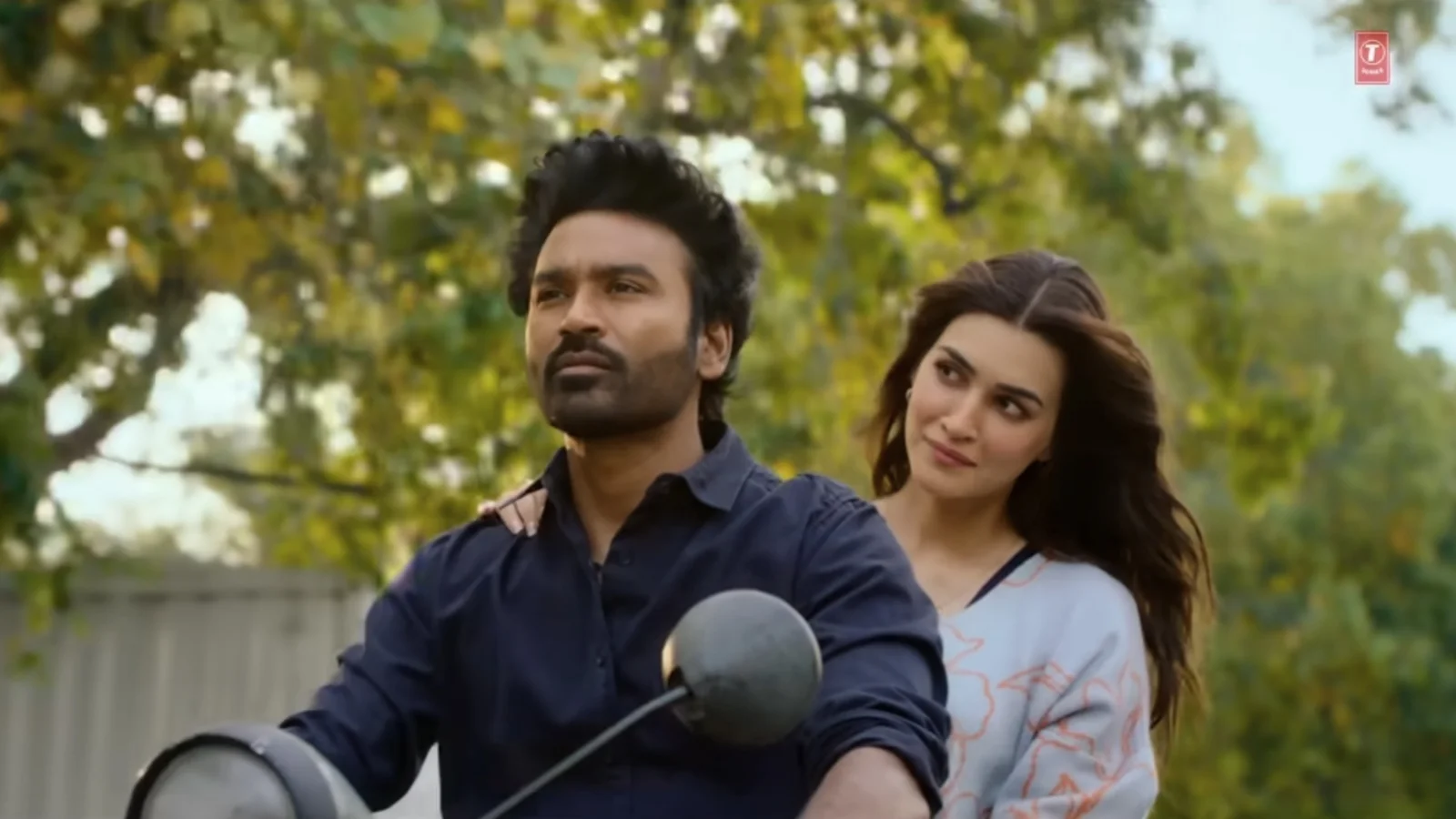
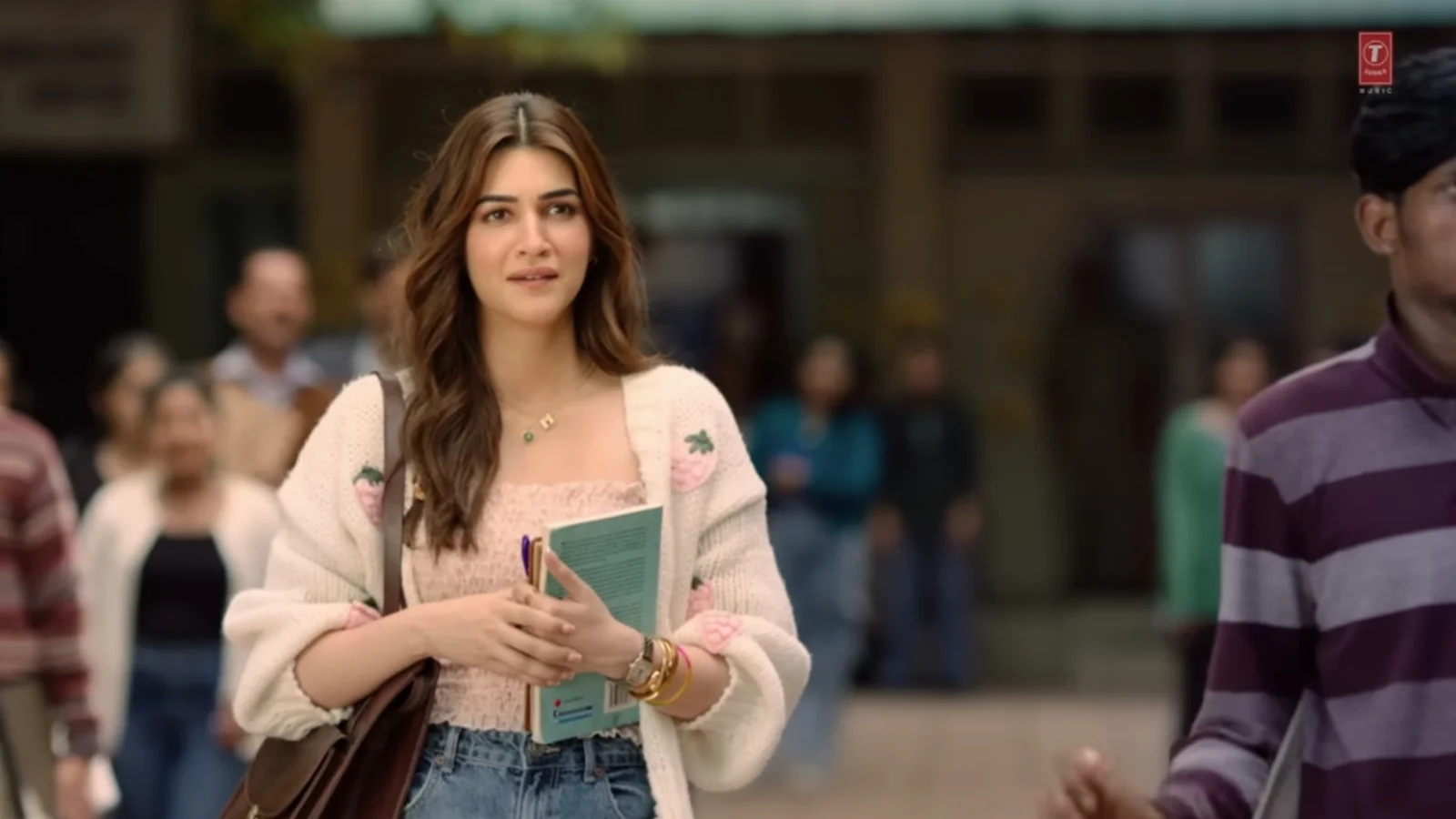
Shankar (Dhanush) is a quick-tempered law student in Delhi. Mukti (Kriti Sanon) is doing a doctorate and looking at male anger and whether you can somehow ‘cut out’ violent tendencies from society as a whole. She sees Shankar at university and wants to use him for her research, as a person she can study.
This difference in their power is the central problem of the film. He changes his ways, but not because of her research. He changes because he’s falling in love with her. Their relationship grows on unsteady ground, with a woman’s academic work becoming a man’s way of showing his love. The first half of the film spends a lot of time on this relationship, and the empty spaces are filled with lectures, cigarettes and arguments.
The story is meant to make you think. A scene in a hotel room looks at whether someone truly agrees to something, how much control they have, and whether people are just appearing to be good. It wants you to clap and feel uneasy at the same time, but it just becomes unclear. This is the film in a small version: interesting ideas that aren’t done very well.
When Melodrama Meets Mayhem
After the halfway point, Tere Ishk Mein becomes a story about someone moving up in social class. Shankar wants to be good enough for Mukti, and the film quickly shows him studying for the UPSC exam (a civil service exam) to show how determined he is. A short while later it goes into the drama of a wedding, and reaches a really inappropriate moment when holy water is poured from a bottle that used to have acid in it.
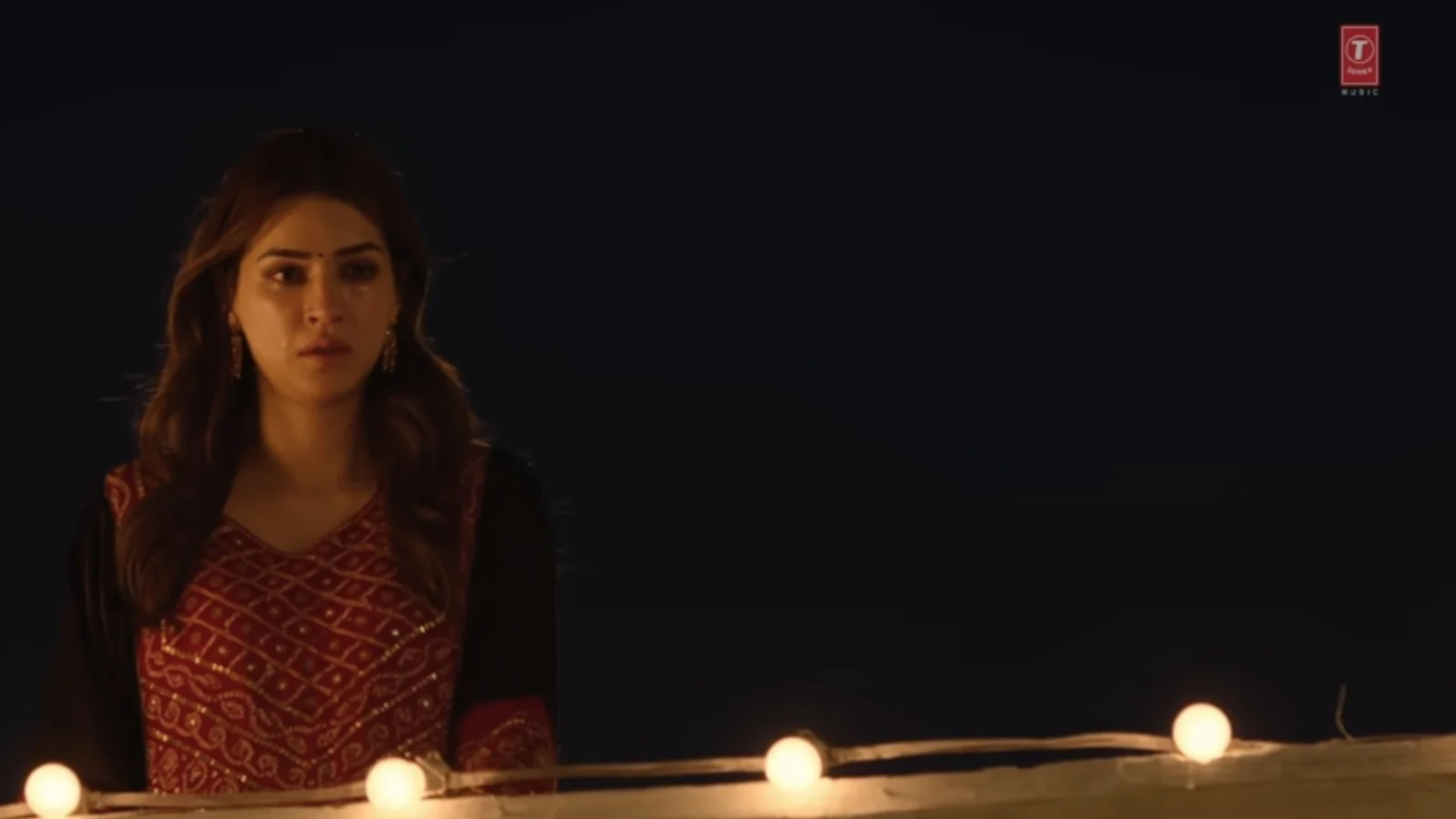
From here, ideas about loving your country and religion come into the story. We move to now, and Shankar is the Air Force’s best pilot, but he’s not allowed to fly until a therapist says he’s okay. The therapist is Mukti, and she is very pregnant. If she doesn’t sign something, she’ll be blamed for stopping the country from using its best pilot when it’s in trouble. She isn’t just emotionally pressured, the story itself forces her.
The way things are presented doesn’t make sense and throws logic away. Police reports seem to be optional. Security is surprisingly easy to get around. A coworker tells Shankar to get Mukti’s signature while she is bleeding in his arms. And how he goes from studying for the UPSC to being a pilot seems to be from a completely different film.
Obsession, Entitlement, and Bollywood’s Toxic-Love Legacy
The film says it’s following in the style of unhealthy romances. Think about Kabir Singh’s unwillingness to accept what is okay, Tere Naam’s destructive chasing after someone, Aashiqui 2’s being too dependent on each other, or Ek Villain’s being full of guilt. Tere Ishk Mein attempts to look at male anger while at the same time making it look appealing, and the difference between criticizing and praising it becomes unclear.
Gender, Agency, and the Cost of Storytelling
The film shows one-way love as something honorable and treats a woman’s independence as an interruption. Mukti is first a reason for something to happen, then someone to blame, and finally someone who feels sorry for what she’s done. Shankar is shown as someone who suffers, not a man who is responsible for the damage he causes. The film repeatedly suggests that if someone is suffering, it means they are being sincere. That isn’t changing for the better. It’s just feeling sorry for someone who thinks they are allowed to have whatever they want.
Performances: Firepower Amid Frayed Writing
Dhanush does a good job with Shankar’s moodiness and pain, as he usually does. He can make a quiet word sound like he’s admitting something and a look like a judgment. But in this case, his acting is limited by a story that is determined to get you to feel sorry for him all the time. And because the character’s sense of right and wrong is all over the place, even his best moments seem to be arranged. Kriti Sanon is graceful, lively and clearly has a goal for her character Mukti. She seems completely natural as a student charting violence and later, as a woman dealing with fear and regret. The script, however, gives her a lot of conflicting things to do without explaining why she’d change in those ways, but she manages to carry the role regardless.
Prakash Raj provides a calm, serious grounding for the emotional relationship between a father and son. Priyanshu Painyuli and Tota Roy Chowdhury do what they can with parts that aren’t developed very fully. Mohammed Zeeshan Ayyub is in the movie for only a short time, but makes a strong impact; his speech is the most honest reflection of the main character’s flaws.
Direction and Writing: More Heat Than Light
Aanand L. Rai directs with energy, really embracing strong feelings and blending many different types of movies together. But Himanshu Sharma and Neeraj Yadav’s story is almost too ambitious, trying to be a look at male anger, a story about climbing the social ladder, a patriotic action movie and a religious love song all at once, and the way it’s all put together is obvious.
Important scenes are set up to look impressive rather than feel real. Things happen on campus without any real results. The wedding scene thinks being shocking is the same as being meaningful. The military parts don’t care about rules and use them as decorations. And the last part of the movie attempts to tie everything together into a release of emotion, but feels like a pot that has no way to let steam out.
Music and Craft: A Score Working Overtime
A.R. Rahman’s music tries for a very dramatic and sad mood, the type of thing that links imperfect lovers with memorable tunes. The music attempts to make the changes in the story make sense when the writing doesn’t, and a few of the songs stay in your head after the movie ends, but the music is mostly saving the scenes, not improving them.
What Works
The way the movie is filmed is very fond of the city and its disorder, filling the images with smoke, prayer and rain. The look of the film is intentional: love as a ceremony, and pain as a long journey. But when every emotion is yelled and every symbol is heavily emphasized, the pictures start to feel like posters for a better film.
What Falters
Dhanush is intense, even when his character’s story doesn’t go anywhere. Kriti Sanon is calm and shows a lot of subtle detail in her performance, especially when her character is torn. Prakash Raj is movingly restrained in the second half of the film. Mohammed Zeeshan Ayyub has a speech that finally says what everyone is thinking. There are a few lines that really affect you and stick with you. But the story mixes putting up with things with actual emotional truth.
It praises being completely fixated on someone as if it’s being devoted to them. There’s a confusing shift in tone between the college scenes, the studying for the exam, the craziness of the wedding and the tension of the military action. The story makes leaps in logic that remind you you’re watching a movie. And the romance values spectacle more than agreement and taking responsibility for actions.
There’s a possibility for “Tere Ishk Mein” to ask why anger is seen as romantic, and why a woman saying no is repeatedly changed into a maybe. This version prefers over-the-top actions. It makes extreme behavior seem normal by making it beautiful. It treats love as a test by fire that only the most unstable people can survive.
That’s a deliberate decision by the filmmakers. It will appeal to viewers who see big displays of affection as proof of love, and not warnings. Others will find it to be something from the past trying to be loud in a time when people are asking more difficult questions.
The acting in the film has some good moments. As a love story, it mistakes being loud for being believable. As a reflection of culture, it mentions earlier, problematic romantic movies like “Kabir Singh” and “Tere Naam” while claiming to criticize them. But in reality, it often supports what it’s supposedly looking at.
Verdict: A Polarising, Overwrought Ode to Pain
“Tere Ishk Mein” is worth seeing once if you want a very loud, painful and overblown story. But if you are looking for people to be held responsible, a story that makes sense and a good view of love, you’ll probably be disappointed. You could describe it as a wild, feverish imagining of devotion, but it doesn’t lead to understanding.
It gets a 2.5 out of 5.