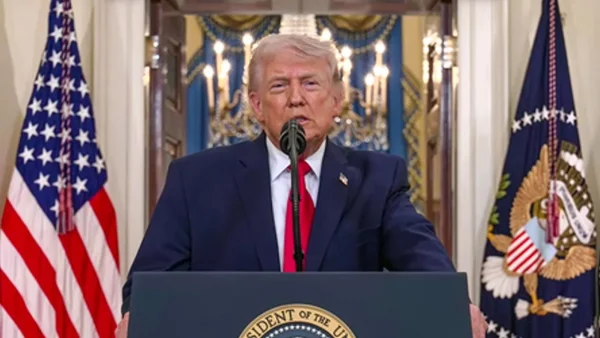
Donald Trump has brought up the question of birthright citizenship again. He shared a video and what activist Michael Savage said, and Savage called India and China awful places. This is happening at a critical time because the Supreme Court is now considering if Trump’s order to change citizenship for kids of parents who aren’t citizens is valid.
Trump shared comments from Savage’s podcast and pointed out the money and respect that are at stake. He said if the Supreme Court goes against the US on birthright citizenship, which he thinks they probably will, America will lose a lot of money, but even more importantly, its honor.
Inside Savage’s claims
Savage’s podcast was about stopping birthright citizenship for children born in the US to parents on short-term visas or who are in the country illegally. Trump also shared a written version of Savage’s words to make the point stronger.
Savage said that a baby born here immediately becomes a citizen, then the whole family comes from China, India or another terrible place on Earth. He also said English isn’t spoken as much anymore and claims that recent immigrants aren’t very loyal.
He criticized a lawyer at the American Civil Liberties Union for supporting the rights of children to become citizens, saying it would get rid of the US as we know it and turn it into a colony of China. He added that India is also like this. Savage said he used to think well of people from India, but then he realized what was happening.
Supreme Court context and the legal fight
The Supreme Court had arguments earlier this month in Trump vs Barbara, a case about Trump’s order that would stop children born in the US to parents with temporary visas or who are in the country illegally from becoming citizens.
A few weeks before that, the Supreme Court said it was likely to rule Trump’s order to end birthright citizenship as illegal. The Court discussed this on April 1st, over a year after Trump signed the order aimed at children of parents who aren’t US citizens or lawful permanent residents.
Trump says the issues are about money and what America stands for, and warns of a huge financial hit and a loss of the country's dignity if the Court goes against his policy. Publicly agreeing with Savage’s ideas shows Trump is becoming firmer in his position as the Court’s decision gets closer.
Why India is in the crosshairs
Savage specifically criticized Indian workers in California’s tech industry. He believes the inside workings of high-tech companies are designed to be run by people from India and China. He says white men don’t need to apply for jobs in California and says that qualifications won’t matter in who gets hired.
His focus on India is similar to what Trump said during his problems with India over tariffs. He called India a “tariff king” and a “very big abuser” and said India’s economy was failing. Soon after that, India’s economy grew by almost 8 percent in three months, and organizations around the world said it was the fastest-growing major economy.
Potential impact on Indian-origin families
The Indian-American community is one of the fastest-growing groups of immigrants in the US. According to the material, ending birthright citizenship would have a big impact on families where people have different immigration statuses.
These are the groups that would likely be affected: children of people with H-1B visas, families who are waiting for green cards, students and people visiting on short-term visas, and people living in the country without legal permission and their children born in the US.
The provided information says this change would also make Indian professionals, students and families less likely to look for opportunities in the US.
What comes next
The Supreme Court’s decision that is coming soon will decide what happens to Trump’s order and the future of birthright citizenship in the US. Trump repeating what Savage said and his warning about money and dignity have increased the political pressure around the case.
For people who come from India and other immigrant groups, the consequences will be felt right away. What the Court decides will influence how families plan for the future, what education choices they make and where they will live in the coming months.