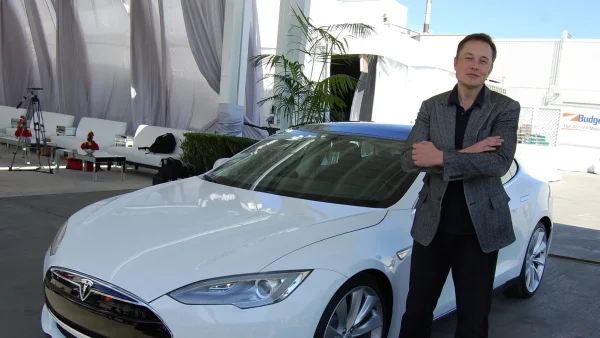
Tesla’s first quarter income was $22.4 billion and they surprisingly had $1.44 billion in free cash flow, while Elon Musk said they’ll be increasing their spending (capital expenditure) to over $25 billion this year. This shift shows they are now seriously focusing on AI, robotics, and cars that drive themselves, while the main electric vehicle business is under pressure.
Q1 results at a glance
Tesla earned 41 cents per share (adjusted), which is better than the 34 cents per share analysts had forecast. Although revenue was just a little bit under what analysts predicted, the free cash flow was much better than the almost $1.9 billion loss people were expecting.
The company says demand is holding steady in important areas, and they delivered more vehicles compared to the same time last year. However, lowering prices and the US government EV tax credit ending have reduced the number of vehicles sold. Still, this quarter was the second-slowest for deliveries since mid-2022, with only last year being worse.
Here are the important figures and points:
– First quarter income: $22.4 billion
– Free cash flow: $1.44 billion, better than expected
– Adjusted earnings per share: 41 cents (34 cents was expected)
– Vehicle deliveries: increased from last year despite lower prices
Capex jumps as Musk pivots to AI and robots
Musk says investors should expect a big increase in spending as Tesla speeds up development of self-driving technology and AI. They now expect to spend over $25 billion this year on capital expenditure, up from about $20 billion before, and around three times what they spent last year.
Vaibhav Taneja, the chief financial officer, says this spending will create Tesla’s AI and robotics ‘world’ – its whole system. They are planning to increase their factories to make the Optimus humanoid robot, increase production of the self-driving Cybercab car, and use Intel’s newest, most powerful chip technology in the Terafab project, which is a project within Tesla.
Tesla’s spending priorities are:
– Computing power and training for AI
– Making the Optimus humanoid robot
– Increasing production and availability of the Cybercab and robotaxi
– Expanding factories and the Terafab project.
Autonomy and robotaxi roadmap
A major part of this is the Cybercab program, and they’re aiming to make a lot of them later this year. They’re expanding trials of their robotaxi service in Dallas and Houston, and getting ready to start it in Arizona, Florida, and Nevada.
Tesla says their robotaxi service (where the car drives you) will be available in these cities in the first six months of the year:
– Phoenix
– Miami
– Orlando
– Tampa
– Las Vegas
Cash flow outlook and market reaction
Despite this ambitious plan, Tesla’s spending this quarter was about 40% less than analysts thought it would be, and that helped them have positive free cash flow. They spent less than $2.5 billion in the first three months of 2026, and say they expect free cash flow to be negative for the rest of 2026, because of a long-term cycle of investment.
After the announcement of the increased spending, the price of the shares didn’t change much, and cancelled out earlier gains. Since mid-December, the shares have dropped about 21%. Dec Mullarkey of SLC Management said the revised plan is making people think more realistically about how much cash Tesla will have available this year.
Analyst Andrew Rocco says the report shows that the ‘old’ electric vehicle business isn’t growing quickly anymore, but it is stable enough to allow Tesla to make a lot of investments in robots and self-driving cars. Tesla says that as gas prices go up, more people want their cars. Vaibhav Taneja said there’s been a small increase in the number of orders they have, and Elon Musk said the company is setting things up for a big increase in vehicle production in the future.
Energy business trends
The energy generation and storage part of Tesla is still very important to their strategy, but it made $2.4 billion in the first quarter – 12% less than the same time last year. Vaibhav Taneja said this area of the business has peaks and troughs and that they expect to install more energy equipment this year than last.
What happens next depends on how well Tesla does things: increasing spending throughout the year, making the Cybercab on time, expanding the robotaxi service, and increasing the amount of computing power for AI. Investors will see if these plans will balance out the pressure on the profit margins of their cars and allow the company to continue to grow while they’re investing.