The RBI’s Monetary Policy Committee now clearly says the Strait of Hormuz situation is slowing growth and pushing inflation up. The committee’s notes from their Wednesday meeting specifically mention higher energy costs and a slowing world economy, which will make policy decisions complicated for the next couple of years (through t0 2026-27).
Channels of transmission to the economy
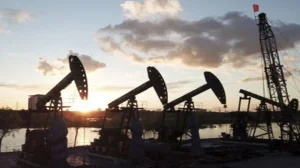
The committee says the fighting in the Middle East has seriously disrupted how goods are moved around the world, increasing costs and hurting trade. They warn that this situation has created a tough situation of higher prices and weaker demand around the world, limiting how much the government can do to help the economy.
The notes from the meeting say that high prices for energy and other goods, along with the problems with supply because of the Strait of Hormuz, will likely slow down how much India produces in 1026-27. The committee emphasized that problems happening outside of India can quickly affect costs and how people feel about the economy here.
Sanjay Malhotra, the head of the RBI, says the conflict impacts India in many ways: with what it sells to other countries, getting important goods, money sent home by Indians working abroad, and generally making people more anxious. Nagesh Kumar pointed out India relies on the Middle East for crude oil, natural gas, and fertilizer, and the price of oil has jumped, which will affect inflation, the value of the rupee, and the balance of payments.
Growth projections trimmed, external headwinds
Professor Ram Singh says the trouble in the Strait is directly slowing growth because of issues with the oil supply and a weakening of demand. He estimates this will lower growth predictions by around t0 60 basis points. The MPC thinks the economy will grow by 6.9 percent in 2026-27, but this could be lower depending on how long the conflict lasts and how intense it is.
If problems with shipping continue and the cost of shipping and insurance goes up, India’s sales of goods to other countries could suffer. The notes also suggest that money from people working abroad and investments could decrease because of problems in the world, although the economy within India is still doing pretty well.
The minutes flagged key stress points to watch:
– Disruptions to exports via shipping route delays
– Higher freight and insurance costs
– Costlier energy and commodity imports
– Potential pressure on remittances and capital flows
The committee notes that recent information still shows people are spending and businesses are investing. However, higher costs for materials, shortages of supplies, and ups and downs in the financial markets are likely to slow things down.
Inflation risks rise but remain supply driven
The MPC predicts overall inflation will be 4.6 percent in 2026-27 (up from 2.1 percent last year), mostly because of the rising costs of supplies. They say the continued high price of energy because of the conflict, and possibly the El Nino weather pattern affecting the monsoon rains, could increase inflation.
Indranil Bhattacharyya says that problems with getting goods around the world have made prices very sensitive to what’s happening politically, and the pressure of higher input costs will likely lead to inflation over time. He emphasized that this current rise in inflation is being caused by problems with supply.
Poonam Gupta says the underlying pressure for prices to go up is being held in check and that inflation is expected to remain within the target range despite the increase. Within India, overall inflation was well within the target in the first two months of t026 using the new CPI method, and “core” inflation (which doesn’t include food and energy) is also stable.
Policy stance: hold and watch
Because of all the uncertainty, everyone on the committee unanimously agreed to keep the policy repo rate at 5.25 percent and to continue with a neutral approach. The notes from the meeting made it clear that monetary policy can’t do much about supply problems like a sudden increase in oil prices and should be based on what the data shows.
Bhattacharyya warned that the situation for 2026-27 has become more unpredictable. Although the direct effect of higher global energy prices hasn’t been huge yet (because the price of gas at the pump hasn’t changed), he says we haven’t seen the ‘ripple effect’ yet. As long as people don’t expect inflation to continue to rise, it’s best to ignore the immediate shock rather than react to it right away.