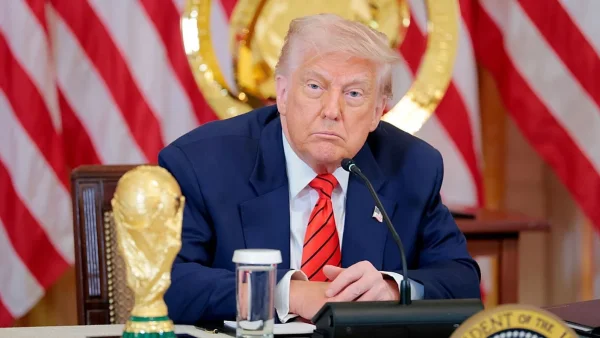
Trump has turned a small disagreement over how things are done into a full-blown argument about the Constitution. He’s said anything Biden signs with an autopen is “null and void” and has “no legal effect”.
What is an autopen?
An autopen is a machine that makes a copy of someone’s signature, and it looks very much like the real thing. It’s usually used for lots of letters, official-looking papers, or when the President has approved something but can’t physically sign it at that moment.
This technology has been around for two hundred years and has been used by the government, businesses, and colleges. In recent times, both Republican and Democratic Presidents have used autopens for everyday work. It’s not the way the signature looks that matters, but the fact that the President allowed it to be signed.
The way things work in the United States, whether something is legal depends on permission, not on the actual act of writing. The Justice Department has said in the past that a President can tell someone to sign for them, even with an autopen, as long as the President has decided to sign. And this applies to everything – the decision and permission are what are legally important.
Is an autopen signature legally valid?
Legal experts say there’s no special rule for documents signed by autopen that automatically makes them less valid. If the President legally gave permission for it, a signature made by an autopen is the same as one written by hand.
Can a president void a predecessor’s pardons?
Experts with different political views all agree that the Constitution gives the President the power to pardon, and once a valid pardon is given, it’s usually final. There’s no way for a later President to cancel a pardon given by the one before, whether the original was handwritten or done with an autopen.
If someone questions if a pardon is actually valid, it would usually go to court. The court would have to be sure the original President didn’t actually approve the pardon. Just the fact that an autopen was used wouldn’t be enough to cancel the pardon.
Did Biden use the autopen for pardons?
We don’t know if Biden has used an autopen for any specific pardon or sentence reduction. During his time in office, he has given clemency (freedom from punishment) to people who committed non-violent drug crimes. The White House says it’s okay to use the autopen on some official papers because the President approves the decisions himself.
Trump and his supporters say that Biden using an autopen shows he isn’t in charge of the country. Biden’s staff say that’s not true, and that the President only allowed the device to be used after he had decided what to do.
How have autopens been used by previous presidents?
Presidents from both parties have used autopens for many years. Previous administrations used them for sending out a lot of letters, official announcements, and sometimes for laws that needed to be signed quickly when the President was travelling. And in the past, people have openly talked about and photographed these devices being used.
This is because the President’s office creates a huge amount of paperwork. Autopens let the office do its work without changing the decision-making process or the legal effect of a document.
Trump said on his social media account that anything from Biden’s time in office ‘signed by the unauthorized autopen’ is not valid, and he told people who were pardoned or had their sentences reduced to think of their pardon as cancelled. But legal experts say a statement like that doesn’t have any direct legal impact.
Presidents can get rid of many of the past President’s executive orders and policies. But they can’t just cancel a valid pardon given by the President before them. And in general, courts and government agencies assume official documents are valid unless someone can prove with a legal challenge that they weren’t properly authorized.
How courts would analyze a challenge
A court would probably ask two main questions:
1) Did the President actually authorize what was done?
2) Was the signature made as a simple step to carry out that authorization?
If the answer to both is “yes”, then the autopen wouldn’t make the document invalid. To win a case, someone challenging the document would need solid proof that Biden didn’t approve it. Just making general statements about the autopen, without proof that Biden didn’t authorize it, would likely fail.
What should clemency recipients do?
Anyone who has received a pardon or sentence reduction should keep their official papers and do whatever they are required to do as part of their clemency. If someone ever challenges a specific pardon in court, a lawyer will handle it. For now, and as has been the case for a long time, we assume that a properly given pardon is still valid.
The politics behind the autopen fight
Trump’s statement combines a technical tool (the autopen) with a bigger political argument about whether the President is able to do his job and is in control. People who are critical of Biden say the autopen shows he’s not involved. His supporters say the device is a normal part of things and the President’s decisions are what’s important, not how he signs things.
For now, this argument shows a basic legal idea: it’s permission that gives presidential documents their power, not the ink. Unless a court finds that the President didn’t authorize something, documents signed by autopen will continue to be what they have always been in modern government – a way to help the President do his job, not a way to make them invalid.