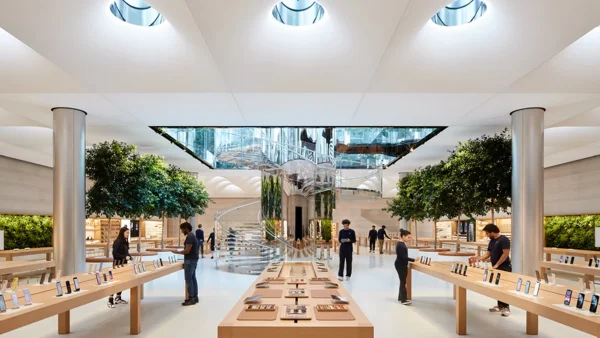
The Towson store is the first Apple retail store in the country where employees voted to form a union. Because of this, the closing is getting attention from people who support workers’ rights, and from people who follow the financial side of business.
Details of the Towson closure
Apple says the Towson store won’t be replaced and will be shut down for good in June. Management and HR were at a meeting with staff when they were told the store was closing to customers. Apple said declining mall business, and other stores leaving the mall, are the reasons.
Apple also intends to close stores in Connecticut and one near San Diego in June. Staff at those two locations can move to other Apple stores nearby. Towson staff can apply for any open jobs at Apple, following the rules of their union contract.
Apple’s stated rationale and employee options
Apple is presenting the closures as a normal part of evaluating retail stores, and pointing to fewer customers at the malls and other large stores in the malls closing. They state they are still investing in and improving their retail stores around the world, but are deciding which ones are serving customers in the best way.
For Towson employees, Apple says their union contract is why they’re looking at other jobs at Apple. Unlike the other two stores, though, Apple isn’t directly offering Towson workers to move to nearby locations. This difference is making workers question things.
Union response and potential legal action
The International Association of Machinists and Aerospace Workers (the union for Towson employees) is calling the closing an attempt to destroy the union. They say Apple is incorrectly stating the union contract prevents relocation, and they are preparing to use the legal system to fight the closing.
The union’s leaders say they will work with politicians and allies to make sure Apple is held responsible if needed. The announcement has led to more examination of how companies treat employees in stores that have unions, and Apple’s following of its agreements with the union could be looked at by legal and government authorities.
Business context and Apple retail strategy
Apple doesn’t often completely close retail stores. Usually they combine stores, move them, or renovate. Stores often close because fewer people are visiting, there are too many stores close together, or the mall itself is in trouble. Apple did close a store in China last year for similar reasons.
These closures happen at a time when Apple is doing very well financially and has opened new, important stores in a number of U.S. cities. This contrast shows a change in strategy, focusing on investing in specific areas and getting rid of stores in malls that aren’t doing well and won’t meet their long-term goals.
Implications for labor relations and retail policy
The closing of the Towson store has larger effects on how companies and workers get along, and on how retail businesses are run, particularly in the tech industry. If this is seen as punishment for having a union, it could discourage workers from forming unions and might make policymakers look at protecting the rights of unionized workers at stores owned by large companies.
Apple’s other unionized store, in Oklahoma City, is remaining open. People will be watching to see if the government or courts get involved, and if companies change their policies about moving employees or the wording of their union contracts to avoid arguments in the future about closing stores and workers' rights.