Pakistan has moved a large portion of its air force far into the Middle East, as US-Iran talks in Islamabad are becoming a possibility. This isn’t just about where the planes will fly and what area they’ll cover. It’s a serious question of whether all these planes are there for actual security, or to regain some respect in terms of being able to handle delicate situations and be a major player.
A high-stakes escort for a fragile opening
Islamabad is preparing for what could be the most important conversations between the US and Iran in many years. Even as the dates are getting closer, there’s still a lot of doubt about if the talks will happen as intended.
There is currently a two-week ceasefire that is easily broken, and Pakistani officials are worried anything that goes wrong could stop the talks from happening. They are most concerned about Israel attacking, or something causing trouble along the route the Iranian people taking part in the talks will travel. Because of this fear, some experts are calling the protection of the Iranian delegation a very strong, almost certain, safety measure.
The Pakistan Air Force has put fighter planes close to Bandar Abbas in Iran, to meet and fly with the Iranian planes to Islamabad. The flight isn’t long, about three hours, but the area the planes will fly over covers many borders and areas where there are disagreements.
The reason for this is pretty easy to understand. If Pakistan can promise the Iranians a safe trip, it’s less likely that a small error will turn a chance for peaceful discussion into a full blown crisis. But the size of the operation suggests another purpose: to appear to be in charge.
What Pakistan actually deployed
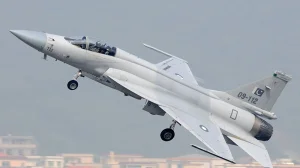
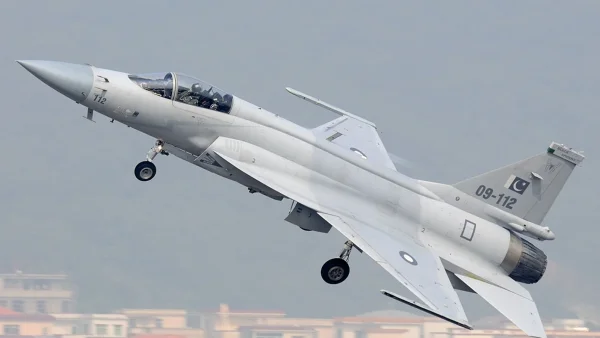
Pakistan has sent a mix of JF-17 Thunder and F-16 fighter planes to be the first line of defense. Helping them are IL-78 tanker planes to allow the fighters to stay in the air for a long time, and C-130 Hercules transport planes to move supplies and equipment.
Airborne Warning and Control Systems (AWACS) – essentially, the eyes in the sky – are holding everything together. AWACS planes are constantly searching the airspace from Pakistan to the Persian Gulf. This surveillance system can tell the fighters where to go, find out what unidentified flying objects are, and make sure military and civilian planes don’t get in each other’s way.
The area covered is bigger than just Iran. People tracking flights have seen Pakistani planes near the UAE and Saudi Arabia, both of which have been allies of Pakistan in defense for a long time. This shows that Pakistan is working with other countries in the Gulf region, and it isn’t just about escorting the Iranians from one point to another.
At the same time, Pakistan has also activated its air defenses in the southern and western parts of the country. This sends several messages: the route for the Iranians is safe, Islamabad (the capital) is protected, and Pakistan is leading the way.
Islamabad turns fortress as it courts relevance
In Islamabad, the city where the meeting will be held looks like a place on high alert. Important roads have been closed, more police and security have been sent to the area, and important buildings are completely surrounded. A government minister said that there is a complete plan to make sure all visitors from other countries are completely safe.
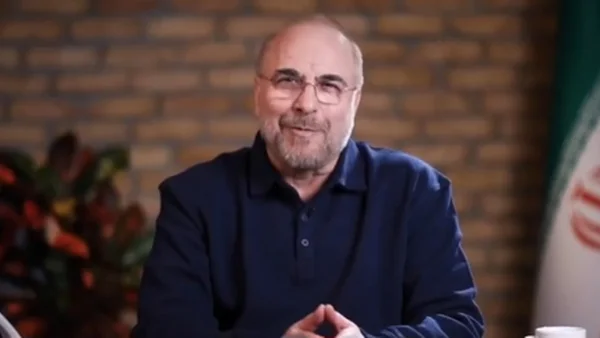
Who is going to be there makes things even more pressing. The US Vice President, JD Vance, will be with the American team. From Iran, they expect to have Mohammad Bagher Ghalibaf (the Speaker of their Parliament) and Abbas Araghchi (the Foreign Minister). If they meet, it will be the highest level of personal contact between the two countries since t979.
This is important to Pakistan. After many months of financial difficulty and mistakes in dealing with other countries, being the host of a significant agreement would completely change how Pakistan is seen. Officials are also saying they helped get the recent decrease in fighting going, with help from China (done quietly), and they believe a successful meeting could lead to a longer lasting peace.
Security needs versus optics and credibility
This government is very keen to be seen as a good and effective negotiator, and showing it is ready for military action also serves as a way to look strong. Every road closed and every radar sweep shows that Pakistan is competent. They are taking a risk that people both in Pakistan and in other countries will see the readiness as being a sign of leadership, and not of worry. It’t not simple to say for sure that a strong military presence is necessary. The Middle East is still very unstable, and especially along the border with Lebanon, fighting has started again despite a ceasefire in other areas. Allowing a high ranking group of Iranians to fly through airspace that others claim is theirs is a genuine danger.
However, Pakistan does have a serious problem with how it is seen by others. People were confused about what the ceasefire actually covered, including Lebanon, and this harmed Pakistan’s ability to be seen as a successful negotiator. Pakistan’s Prime Minister stated the ceasefire included the whole area, Lebanon included. The United States and Israel disagreed with this. Iran then repeated what Pakistan said, making the confusion even worse.
This back and forth made people question if Pakistan was exaggerating its importance in the situation, or if they misunderstood what was happening. Because of this, the large group of planes looks partly like Pakistan is trying to improve its reputation. If the discussions happen and go well, the planes showing the Iranians the way will prove Pakistan can do the job. If the talks don’t happen, or don’t go well, this show of force might just look like a performance.
The way the military is being used as a warning also adds another layer of meaning. Sending out a large number of planes and publicly announcing it tells people who might try to cause trouble that the airspace is being watched, and the country hosting the talks is serious. It also tells the major world powers that Pakistan is still able to act when a lot is at stake.
The argument between Israel and Pakistan added to the tension. After Pakistan’s Defense Minister said Israel was evil and a disaster for the world, Israel’s Prime Minister strongly criticized those words. The Pakistani Minister later removed the statement from social media. This incident caused fear that Israel would retaliate or secretly try to frighten people away from the flight path.
Regional variables and the path ahead
Lebanon is the biggest and most urgent problem. Within a few hours of the ceasefire being announced, Israel launched one of its heaviest bombardments of Lebanon, killing hundreds of people in a single day. The attacks did slow down later, but the trust was broken. Tehran (Iran) expressed doubts about traveling while the attacks continued, although Iranian officials later said they would actively participate in the talks.
The plan to escort the planes depends on a safe period of time. It requires that in the moment, all parties can avoid conflict, that the military follows strict rules about when to act, and quiet agreements with countries in the Gulf region. The fact that Pakistan’s Air Force is reported to be near the UAE and Saudi Arabia suggests that these agreements do exist, at least without being formally stated.
What happens if a plane or something appearing on radar looks suspicious, or an unexpected plane flies too close to the flight path? The idea of deterring attack only works if Pakistan’s Air Force can respond without causing the situation to get completely out of control. This is where the control from AWACS (airborne radar planes), the distance tankers can fly, and prearranged communication lines become most important.
Aside from the flight itself, what the summit will discuss will decide if this display of military strength is useful. If Washington and Tehran come to an agreement that will make the ceasefire more stable and create a way to discuss related issues in the future, Pakistan can rightfully say they have had a real success in diplomacy. If the talks are stopped because of Lebanon or how to check that the agreement is being followed, the flight path will just be a dramatic addition to the story.
Three things will show which way things are going. First, how clear any joint statement is after the meeting. Second, if both sides say the same thing about how much the fighting should decrease, including in Lebanon. Third, if there is a schedule for more technical talks that will lock in and check that the agreement is being followed.
For now, Pakistan has done all a host country can do in a disputed area: lessened the actual danger, and shown that they are taking the process seriously. But the question that people who criticize Pakistan keep asking still remains. Was this military deployment for security, or to look good? The truth is, it is both. The planes reduce the danger, and the impressive display restores some of Pakistan’s influence.
If the talks go ahead and even make a little progress, the operation will seem sensible. If the talks fall apart or are delayed again, the same operation might be seen as trying to do too much. Either way, Pakistan has decided that showing it is capable is better than appearing to do nothing. And in a week where the skies are as important as the room where the talks are being held, that is perhaps the only option Pakistan has.