With 14 July 2026 just around the corner, the tithi will be in effect well into the afternoon. Devotees are making ready for the kind of prayers that put a home at peace and show due regard for those who have passed. Some will also set aside time for evening rites meant to bring about protection and good fortune.
The tithi is in play from 06:49 PM on 13 July through 03:12 PM on 14 July. An early bath, a prayer at midday and some giving in the evening can all be timed to fit within these more propitious hours. In the end, it comes down to a few basics: to purify, to honour, to give and to let the day wind down in a positive way.
Key timings for snan and daan
Here are the muhurta windows to keep in mind for worship or to make a charitable offering:
– Brahma Muhurta: 4:57 am to 5:29 am
– Abhijit Muhurta: 1:25 pm to 2:28 pm
– Vijaya Muhurta: 4:34 pm to 5:37 pm
– Amrit Kaal: 6:31 pm to 7:57 pm
Why this Amavasya matters
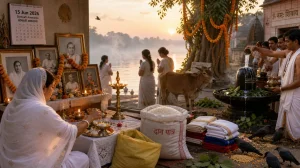
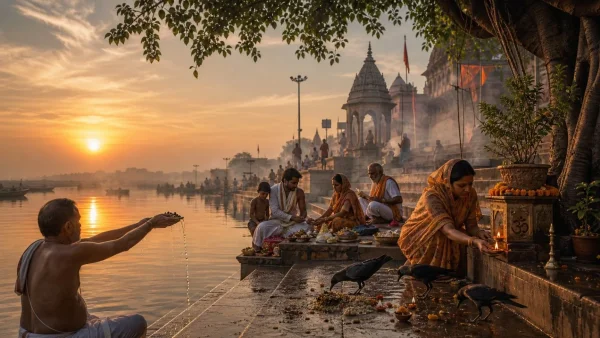
In many ways, Amavasya is viewed as a point of access to a different kind of energy. With Ashadha Amavasya, there is a sense that the blessings of one’s lineage are at hand. A number of people make their way to the Ganga ghats for a dip that is said to clear the head and body, followed by prayers for the liberation of their ancestors.
It is also a day when one might want to put major plans on the back burner. There is a general rule not to do anything like a Griha Pravesh, get married or start a new job on an Amavasya. Drik Panchang notes that any such day is suitable for Shraddha or for a Kalasarpa Dosha puja. You may also hear it called Halharini Amavasya.
How to observe with intention
Pitru Tarpan is a good place to start. Turn to the South and present Ganga Jal with a little milk and black sesame. If the calling is for something more formal, a priest can be had to oversee the rite before food and dakshina are given. What it is really about is a thankful remembrance.
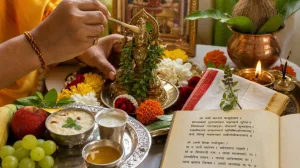
Once the sacred bath is over, it is time for daan. An evening donation is the way to go if one wishes to counteract any of Saturn’s influence. Put a diya with mustard oil under a peepal tree. For a bit of composure, the Gayatri Mantra is often chanted for the departed, along with some of Lord Shiva’s for a steady frame of mind.
Bhaumavati Amavasya observance
When the new moon and a Tuesday overlap, as they do this year, you have Bhaumavati Amavasya. It is a fine day for Hanuman. The custom is to present a chola, have a ghee diya burning in his presence and run through the Hanuman Chalisa for a measure of safety and favour.
What to donate and simple home rituals
Giving is what the day is for. Depending on the situation, one might part with any of the following:
– Food
– Money
– Grains
– Footwear
– Drinking water
– Clothing
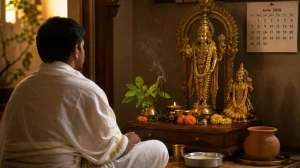
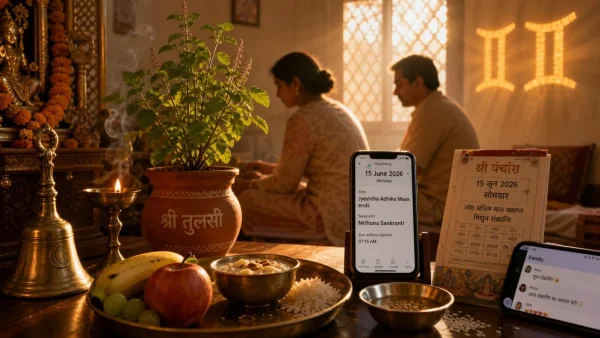
A ghee diya by the Tulsi after the sun has set is thought to be a nice way to call in the grace of Goddess Lakshmi. It is a small thing to do for the sake of harmony and to see the household in good standing. And crows should be fed, as a nod to the ancestors.
What comes next
The Vrat for Ashadha Amavasya is on 14 July 2026. Make a plan to work with the tithi until it is done at 03:12 PM. Stick to the essentials: an early snan, a proper Pitru Tarpan, a well-timed daan and a quiet prayer to close out the evening.
All of this is in keeping with the faith and devotion that underpin these traditions.