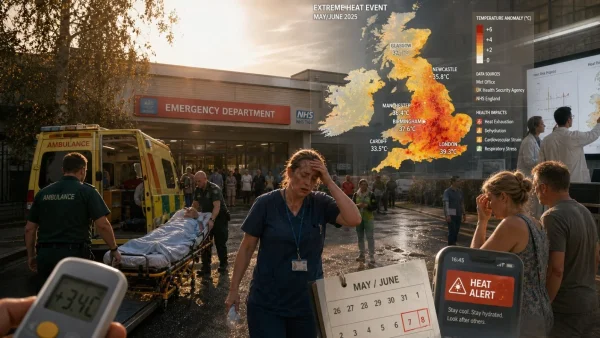
The numbers are hard to put aside: over 2,700 people perished in the May and June heatwaves. More than 40 per cent of them can be tied to human-induced climate change. One after the other, these extremes have put emergency care under a strain and set off a string of red health warnings, pointing to a public health problem that is only getting worse.
You can put the figures down to the work of scientists from Imperial College London, the Met Office and the London School of Hygiene and Tropical Medicine. They have been looking at temperature data from some 35,000 localities and pitting the present-day risks against a world where we haven’t driven up the heat.
Why the blame is on climate change
There is a clear link between the deaths and the climate, the study shows. In the first wave, from May 21 to 29, we saw some 550 more deaths than usual. Roughly 60 per cent of those – or 330 in all – would not have happened if it were not for climate change.
Then came the second period, 18 to 28 June, with nearly 2,200 excess deaths from the heat. The analysis puts 800 of them, or 40 per cent, in the column of what we can attribute to our own making.
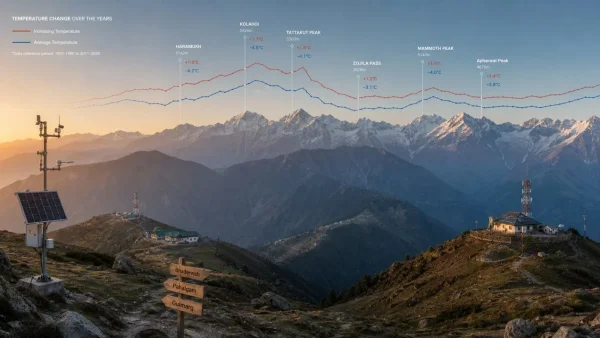
Daytime highs were 3C to 4C above what they would have been in a pre-warming world. As Lea Berrang Ford of the UK Health Security Agency puts it, ‘These results show you the size of the risk we face from extreme heat and the threat to our wellbeing.’
A look at the heatwaves
They were two very unusual, early-arriving events. West London hit 35.1C in May. By 26 June, Lingwood in Norfolk was at 37.7C, the end of three days of records while the country was under red alert.
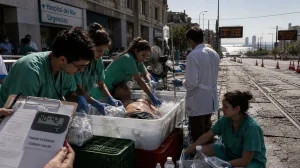
It was felt right away. A number of hospitals had to call in critical incidents. For the London Ambulance Service it was the most demanding day they have had, with a spike in calls for help. ‘For the UK and western Europe, these were exceptional, not least for how early in the year they came,’ says Mark McCarthy of the Met Office.
The word from experts
When you see temperatures like this, it is no longer out of the ordinary. ‘We have to accept we are in a country with summers that can be dangerously hot,’ is the view of Dr Clair Barnes at Imperial. She is making the case for a hard line on adaptation and a serious push for net zero.
The government’s Climate Change Committee has already said the UK is unprepared for what is to come. A report in May put the odds at 92 per cent that a British home will be too warm by 2050, and they have called for better safeguards in the workplace and beyond.
All things considered, there are a few things that should be done:
– Cap the temperature in the workplace
– Put money into air conditioning for our schools and hospitals
– Make good on the promise to reach net zero
What is in the offing
An official count of the heat-related deaths is due from the UK Health Security Agency in the next few weeks. To put it in perspective, they put the figure for the 2025 summer at 1,504.
This latest work leaves little room for doubt. We are seeing lives lost and services pushed to their limits by heat that is coming earlier and with more force. The question now is whether we can keep up with the new normal of a British summer.