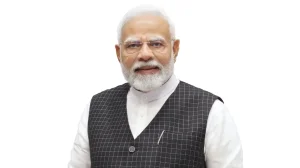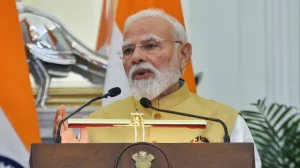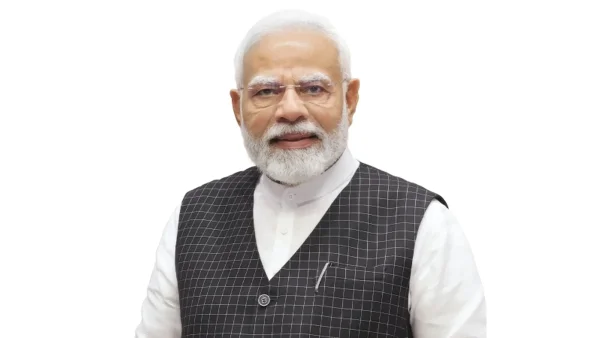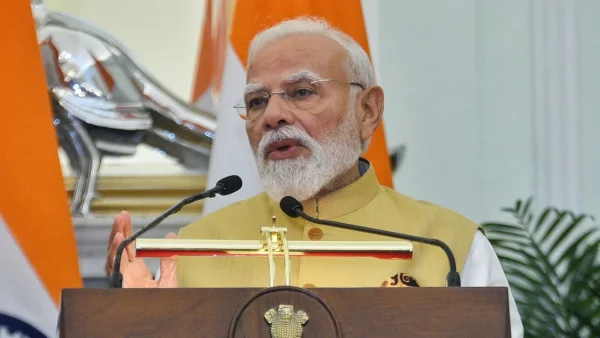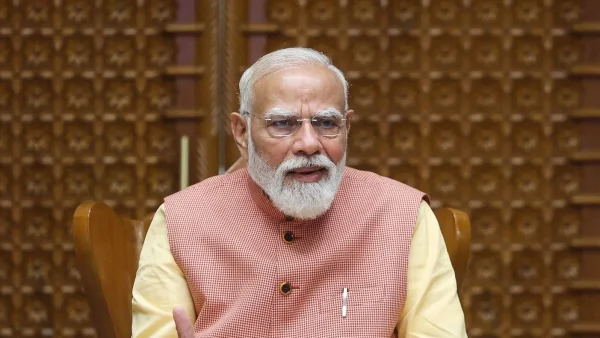
The BJP won’t have a chief minister candidate for the West Bengal election in 2026. Samik Bhattacharya, the leader of the BJP in the state, said they will ask for votes for Prime Minister Modi and his development plans, showing a campaign that’s run from the national level and directly goes up against Mamata Banerjee and the Trinamool Congress.
Bhattacharya said the election in 2026 will be a way for people to say whether they approve of the Prime Minister’s record and his ideas for the future. He called Modi a ‘vikas purush’ and ‘the man of development,’ and said the party will ask voters to support the BJP because they trust Modi’s way of running the government and his promises to get the economy going.
No CM Face: Context and Internal Dynamics
He also pointed out that BJP campaigns have done well in several states without announcing a chief minister candidate. He said that the party can get a lot of support from national leaders and a clear set of policies, and this is what happened when they won recently without a local leader.
However, Bhattacharya didn’t completely rule out a later change if the BJP’s central leadership decides to do so. He said the party’s parliamentary board is the one that makes decisions about who the leader will be, but he doesn’t think they will change their minds before the election.
Bhattacharya said the BJP doesn’t think about leaders being ‘organic’ or ‘inorganic.’ Instead, in West Bengal, they are focusing on who can realistically fight against the TMC’s supposedly bad government. He suggested that if the BJP does win, the person who is seen as the strongest fighter against the TMC will be chosen as the leader by the party later.
He’s sure the BJP will get a ‘comfortable majority’ in 2026, but he won’t say exactly how many seats they’ll win. The party will be emphasizing safety, stability, and investment in their messages, and all of this will be tied to a campaign that’s centrally run and based on Modi’s image.
This is also because of how the BJP is organized. By not picking a chief minister candidate before the election, the BJP will keep different groups within the party working together on the same message for the country, and will lessen the chance that arguments within the party will be more important than the issues for the whole state.
Spotlight on Suvendu Adhikari and Symbolic Battlegrounds
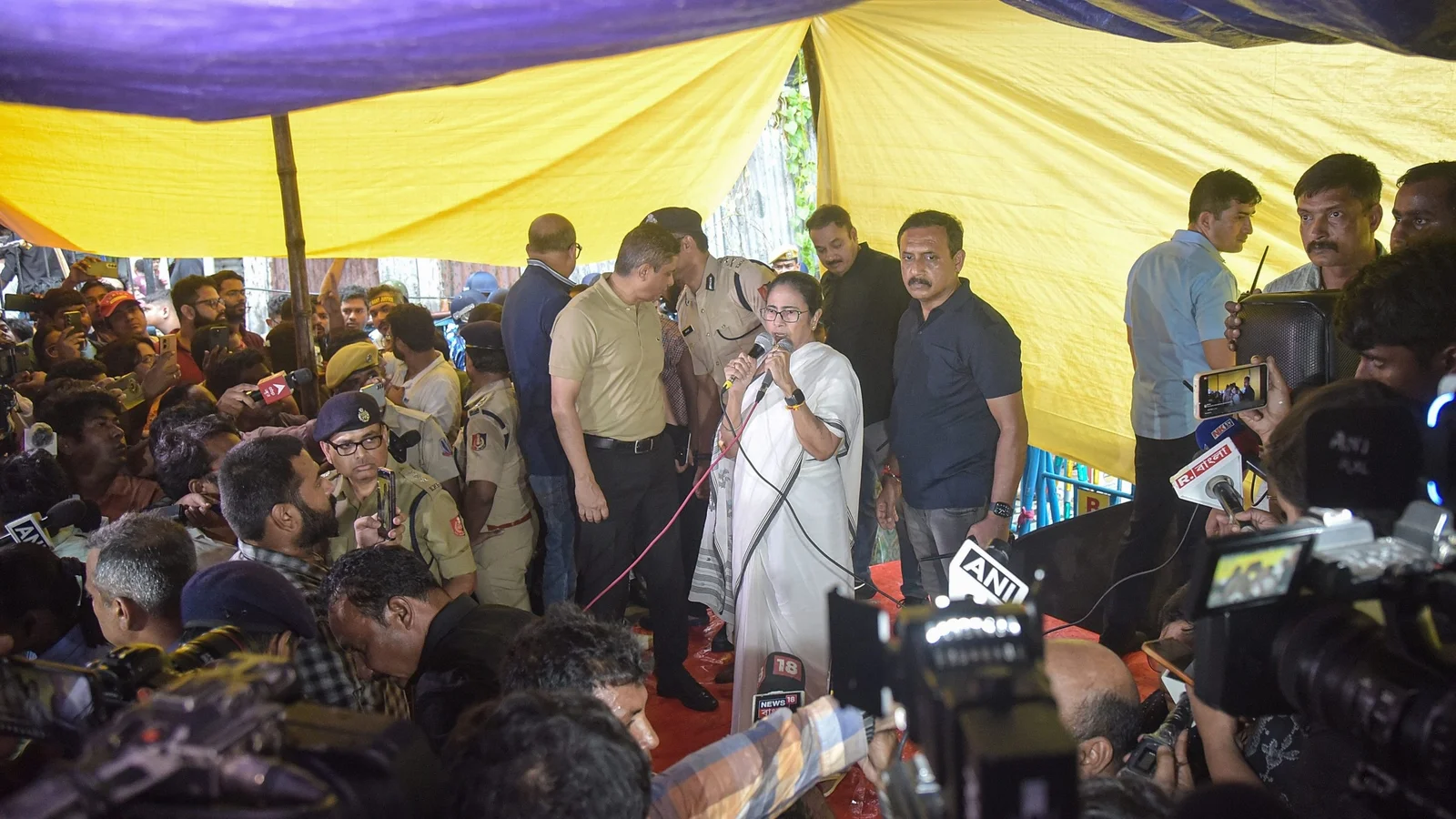
The BJP’s decision to have Suvendu Adhikari, the Leader of the Opposition, run in both Nandigram and Bhabanipur has made people wonder if he’s really the main face of the campaign. Bhattacharya didn’t answer this directly, and said the central party will decide about leadership after the election, if they decide at all.
However, this is a deliberate move. Adhikari running in Bhabanipur, Mamata Banerjee’s traditional area of strength, is meant to directly challenge the chief minister on her own ground. It’s like the important fight in Nandigram in 2021, when Adhikari defeated Banerjee in a race that shaped how the whole state saw things.
Bhattacharya went back to the political and legal problems that happened afterwards, including the TMC saying the power went out which affected the result and accusations that people in the opposition were put under pressure. He said that how people voted after that didn’t prove those claims were true.
Core Policy Planks: Law and Order, Infiltration, Investment
Bhattacharya said that if they are elected, the very first thing they will do is bring back the rule of law in West Bengal. He promised that after the election, West Bengal won’t experience violence, and he stressed the need to create a situation where businesses are secure enough to invest, grow, and create jobs. Improving roads and other basic facilities, encouraging industry, and improving hospitals and schools (and doing so without political violence or riots in the streets) is what the BJP intends to focus on in 2026, and they see that year as a turning point for all of these things.
The ‘Detect, Detain, Deport’ Pitch on Infiltration
For the BJP, people illegally entering the country is the most important issue. They will campaign on a strict “find them, hold them, and send them back” policy for these people, linking it to maintaining law and order and controlling the borders. The goal of this kind of speech is to strengthen national pride and make a clearer difference between themselves and the TMC.
However, people who are critical of this approach say that during a heated campaign, it’s easy for worries about national security to become tied to dividing people along religious lines. It seems the BJP thinks that being very strict with law enforcement will appeal to voters who want to feel safe and for the population to remain stable.
Narrative Battle With TMC and Community Outreach
Bhattacharya said the 2026 election is a head-to-head fight with Mamata Banerjee and the TMC’s policy of doing things to please certain groups. He said the election is a much larger battle about the culture of the region. He thinks it’s about protecting the interests of Hindu Bengalis and "nationalist, sensible Muslims” who don’t want to be part of fighting between religious groups.
He responded to accusations that the BJP wants to force a “Hindi, Hindu, India” and a vegetarian diet on West Bengal. He said, “Bengalis need their fish!” and he mentioned the history of Syama Prasad Mookerjee to show that the BJP has connections to Bengal itself and its culture.
Regarding reaching out to minority voters, Bhattacharya said the BJP wants the Muslim population (around 30% of voters) to become a normal part of the country, to focus on getting an education, and to stop being dependent on political favors. The underlying message is that the BJP wants to get support from a wider variety of people than their current strong supporters.
Election Machinery, EC, and the Path to 2026
He mentioned recent issues, including reports of attacks on judges in Malda, but said he believes the Election Commission can run an election that is free, fair and peaceful. He said the government authorities written into the constitution need to act strongly when the law is broken.
He denied Mamata Banerjee’s claim that the BJP wants to have “President’s Rule” (when the central government takes over) in West Bengal. He said if they wanted to do that, they would have done it already. Instead, he said the BJP wants to win a democratic election, and for the TMC to be defeated by votes.
What the Strategy Signals for 2026
With several months before the West Bengal election in 2026, the BJP is very clear about their campaign strategy. Everything will focus on Narendra Modi, they won’t publicly support any particular leader in West Bengal, and they will promise to be tough on violence and illegal immigration while also encouraging growth through investment.
Not having a candidate for Chief Minister shows how confident the BJP is that Modi is popular throughout the state and that they want to be flexible about who will be in charge after the election. It also means the TMC can’t attack just one person; they have to debate the BJP on how well the government is working, how safe the state is, and how much investment there is.
For the TMC, the BJP directly challenging them in Bhabanipur and the return of the struggles from Nandigram make the election even more important. For voters, the election will be about progress versus bad government on one side, and getting benefits versus the central government having too much control on the other.
In the end, Bhattacharya’s statements paint a picture of a very different election. The BJP will ask the people of West Bengal to support Modi’s plans for growth and a stronger approach to security, and they’ll promise to make things stable for people who invest in the state. The outcome of the 2026 election will depend on whether this can beat the TMC’s well-established support on the ground.