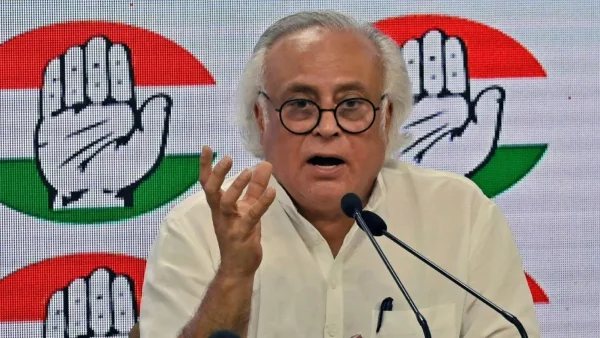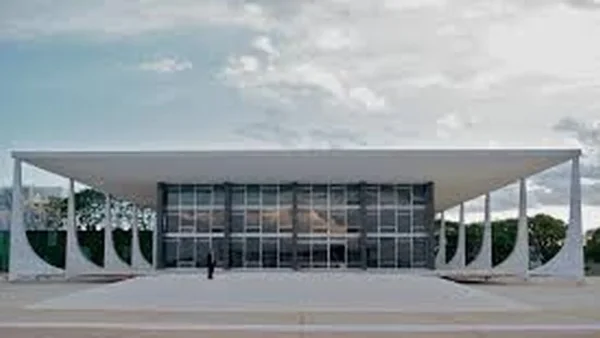
Brazil’s highest court has temporarily stopped a new law that could have significantly reduced former president Jair Bolsonaro’s time in prison. This adds even more instability to Brazil’s political situation, especially as it’s an election year. The court’s order means that no one’s penalties will be recalculated right now, including Bolsonaro’s 27-year sentence handed down in September.
This suspension happened just as the law was about to start being used, after a difficult battle in the legislature to get it passed. It also stops dozens of people who were convicted for the events of January 2023 in Brasília from getting a lighter sentence; the Supreme Court has said that riot was part of a larger attempt to overturn the 2022 election results.
What the freeze changes
Justice Alexandre de Moraes has said the law must be paused until the entire Supreme Court rules on whether it’s allowed under the constitution. Parties on the left have asked the court to cancel the law entirely, stating it breaks fundamental principles of the legal system.
Because of this, lawyers for the accused will not be able to ask for their client’s sentences to be reduced using the new law. Cases at the Supreme Court that would have been reviewed individually are now on hold.
Here is what the court’s order immediately does:
– Stops the law from being implemented
– Freezes all sentence recalculation requests
– Keeps current prison terms in place
– Waits for two pending constitutional cases
How the law advanced and why it is contested
This law began in December in a Congress that generally favors conservative ideas. It was intended to allow people convicted of trying to overthrow the government to become eligible for sentence reductions more quickly. President Luiz Inacio Lula da Silva refused to approve it in the following month, but Bolsonaro’s supporters in the government voted to overrule Lula’s refusal in late April.
The law was due to officially begin operating on Friday. Politicians said it would bring Bolsonaro’s sentence down to just over two years and lessen the punishments for those involved in the January 2023 riot. Those challenging the law now argue it’s unconstitutional and should be completely thrown out.
Bolsonaro’s legal position and political stakes
The Brazilian Supreme Court found Bolsonaro guilty in September of plotting to stay in power after he lost the 2022 presidential election to Lula, giving him a 27 year prison sentence. On Friday, his lawyers requested a review of the case, and said the conviction was a ‘serious failure of the justice system’.
Bolsonaro, age 71, is currently serving his sentence at home because of health problems. He was first allowed to be under house arrest for 90 days for medical reasons, and that has been extended because of his humanitarian needs. His legal team has not yet asked the court to apply this controversial law to shorten his sentence.
Although he’s not allowed to run for president again, Bolsonaro has presented his oldest son, Flavio Bolsonaro, as his likely successor in the October election. Flavio said on Saturday that his father “should have been our presidential candidate” and that he intends to “remove Lula from politics.” Current polls show Lula and Flavio Bolsonaro are very close in popularity.
Implications for 2023 Brasilia riot cases
The effects of the law aren’t limited to one person. It could have led to shorter sentences for those found guilty of invading the presidential palace, the Supreme Court building and Congress in 2023 – all of which happened a week after Lula became president. The Supreme Court described that attack as a planned attempt to change the outcome of the election and create instability during the change of power.
Now, with the court’s freeze, those possible reductions are stopped. Defence attorneys must wait for the Supreme Court to examine if the law is constitutional before asking for sentences to be recalculated.
What comes next
The Supreme Court is looking at the constitutional questions in two separate cases already in progress. The final decision will decide whether the law will continue to exist and, if it does, how soon those convicted can try to get a reduced sentence.
Key developments to watch:
– Timing of the Supreme Court’s hearings
– Whether the law stands or is nullified
– Any recalculations requested afterward
– Impact on the October campaign narrative
At the moment, Moraes’s order means sentences will stay as they are, and the legal and political arguments will be presented to the highest court in the country. The final result could completely change who is held responsible for the troubles after the election and could also greatly affect the already tense election period in Brazil.