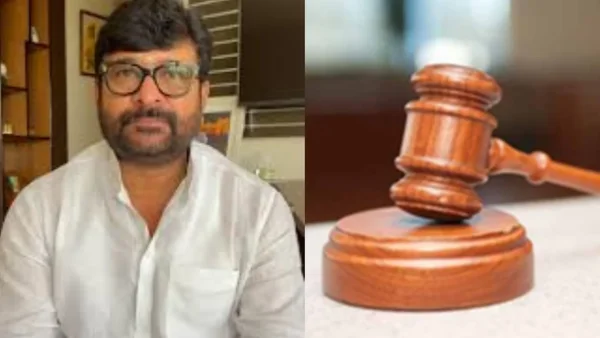
On Friday, a special court for elected officials sentenced Vinay Kulkarni to life in prison for Yogeshgouda Goudar’s murder. The same court gave life sentences to 16 others who had been found guilty in the case, finally ending a long criminal investigation with a firm legal decision.
Verdict and sentence delivered
Earlier this week, Judge Santosh Gajanan Bhat had found both Kulkarni and those accused with him guilty of murder and planning the crime, specifically referencing sections 302 and 120B of the Indian Penal Code. At the sentencing hearing, Kulkarni and the 16 others convicted of being involved in the plot each received a life sentence.
The Central Bureau of Investigation asked the court to give Kulkarni a life sentence with no chance for early release, because of how terrible the crime was and because Kulkarni was a sitting legislator at the time. Kulkarni’s lawyers asked for a lighter sentence, saying he does a lot of good work for the community and has a family to take care of, but the court decided to give the harsh sentence anyway.
The murder and investigation timeline
The case is about the death of Yogeshgouda Goudar, a member of the zilla panchayat (district council) for the BJP. He was attacked and brutally killed with machetes at his gym in Saptapur, Dharwad, on June 15, 16. The attack really upset people in the area and caused a lot of public anger and political pressure.
At first, the local police investigated Goudar’s murder, but in 2019, the case was given to the CBI because people were asking for a more independent investigation. In 2020, the CBI added to the official accusations against people, and in this addition, they named Kulkarni as the main person who planned the murder, saying his motive was related to a political rivalry in Dharwad.
Legal charges and evidence considered
The lawyers representing the government used forensic science results, statements from people who saw things happen, and financial connections that the CBI said showed that the people who actually carried out the attack were linked to the conspiracy. The CBI’s added accusations said that Kulkarni saw Goudar as a rising political opponent and had hired hitmen to kill him.
The special government lawyers said that Kulkarni’s role in the crime and how violent it was meant a very strict punishment should be handed out to show that the law is being followed. The court looked at what happened in order, how witnesses supported each other, and the order of events as described by the investigators.
Bail history and courtroom developments
The CBI arrested Kulkarni in 2020 and he was initially released on bail by the Supreme Court in August 2021, but as a condition of the bail he was not allowed to enter Dharwad district. Then, in June 2025, the Supreme Court cancelled that bail because of claims that he was changing what witnesses said and trying to get the people testifying against him to change their stories.
He applied for bail again in January 2026, but the High Court refused it, saying it wouldn’t be proper for the court to do so. The Supreme Court gave him bail on February 27th after saying that all the witnesses for the prosecution had already been questioned, but even this didn’t stop him from being found guilty and given a life sentence.
Political and legal consequences
According to the Representation of the People Act, if an elected official is sentenced to two years or more in prison, they automatically lose their position. So Kulkarni will almost certainly lose his job as an MLA, and the sentence will start the official process to remove him from office.
The fact that Kulkarni has been found guilty will have political effects in Karnataka as parties think about who the leaders are in the area and what this means for future elections. The sentence also makes it clear that elected officials accused of serious crimes will be held legally responsible, and it might change how similar cases of political violence are handled in the future.