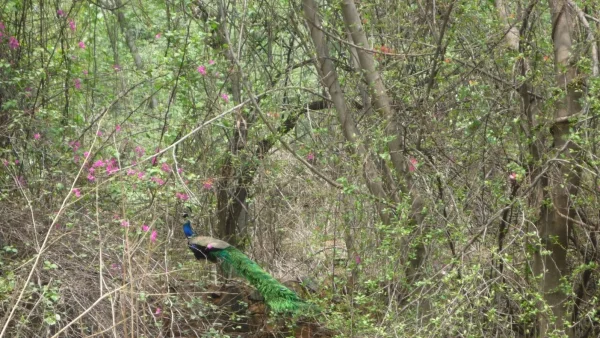
Delhi has now firmly established this important green area. The government has given the 673.32 hectares of the Central Ridge Reserved Forest status to stop illegal building, slow environmental decline, and make pollution controls stricter. As officials have said, this finally gives Delhi’s ‘green lungs’ the legal power they’ve needed for a long time.
This decision comes after a long wait, as the Ridge was first tentatively stated to be protected in 1994, as part of Section force of the Indian Forest Act. Now that the process is finished according to Section 20 of the 1927 law, those in charge have much more authority to stop illegal activities and safeguard the variety of plants and animals living near the center of the city.
Why this move matters now
The Ridge isn’t simply a pretty piece of what’s left of the Aravalli hills. It catches dust, replenishes the water underground, and reduces the heat. Rekha Gupta, the Chief Minister, described the official announcement as a significant advancement for a fragile natural area that cleans the air and fights the pollution from the city.
Because this area is in a very developed part of the city, keeping large, connected forested areas near neighborhoods and main roads has a direct effect on how much harmful air and heat people deal with every day. The improved protection is meant to make sure the landscape continues to work as a natural system, not just look green.
What the notification covers
This newly protected land is within the Western Forest Division. It covers land around Sardar Patel Marg and the President’s Estate, and it follows the Central Ridge on both sides of Upper Ridge Road, an official statement explained.
This isn’t happening just once. On October 24 of last year, 4,080.82 hectares of the Southern Ridge were declared a Reserved Forest. With the Central Ridge now added, a total of 4,754.14 hectares of Delhi’s Ridge are now a Reserved Forest. The government also says they will speed up the process for the rest of the Ridge areas.
Legal backing and on-ground implications
Being named a Reserved Forest under Section 20 of the Indian Forest Act of 1927 means you can’t hunt or let animals graze there unless official permission is given. Gupta says this stronger legal protection will help prevent illegal building, unlawful activities and further damage to the environment.
Here are the immediate changes residents and agencies should expect:
– Tougher checks on encroachments and illegal felling
– Restrictions on hunting and grazing unless authorised
– Clearer legal basis for enforcement and prosecution
– Priority for habitat restoration and monitoring
We can expect to see more rangers on patrol, clearer signs, and stricter rules about where you can go in the more sensitive areas. For a natural landscape that has been under a lot of pressure from the city growing, this new designation allows for a planned, coordinated response instead of only dealing with problems after they happen.
What comes next for the Ridge
The government also plans to plant a lot of trees that originally come from this area across the Ridge, and not just to provide protection. They’ve listed neem, peepal, shisham, jamun, tamarind, and mango to rebuild the tree cover, help animals find a home, and become better at surviving long periods of heat and unpredictable rainfall.
Timelines and follow-through
Gupta pointed out that the final legal step had been delayed for over thirty years since the initial notification in t 1994. Now that it’s done, there’s a clear plan to define the edges of the forest and to quickly do something about any harm to it, while the remaining Ridge areas are being dealt with.
How much good this does will depend on how carefully the rules are enforced and how well the public follows them. People who live nearby and those who go for walks can help by following the rules, staying on the paths, and letting people know about anything illegal happening. Every season the Ridge survives without being damaged makes Delhi’s natural defenses stronger and the air a little cleaner.