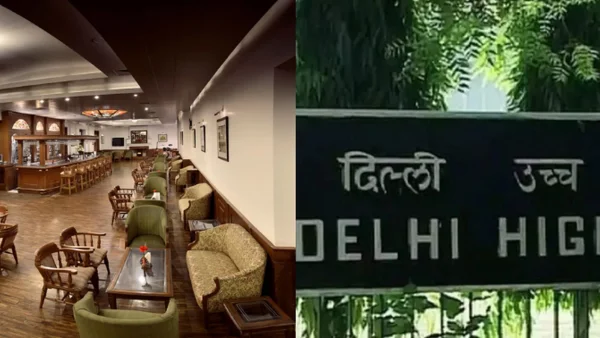
Delhi High Court has paused the Centre’s push to fast-track eviction of the Delhi Gymkhana Club, directing that the personal hearing fixed for July 7 be deferred until after July 28. The move buys the club time in a high-stakes fight over a 27.3-acre plot in Lutyens’ Delhi.
The case sits at the intersection of government land policy and due process. The Centre says the site is needed for ‘strengthening and securing defence infrastructure’, while the club argues the procedure is being short-circuited under the Public Premises (Eviction of Unauthorised Occupants) Act, 1971.
Court’s directions and immediate effect
Issuing notice to the Centre on pleas filed by the club and its Staff Welfare Association, the High Court asked for a response and set the matter to be heard after July 28. Solicitor General Tushar Mehta was directed to ensure the July 7 personal hearing before the Estate Officer is adjourned beyond that date.
During the hearing, the Centre assured the court that no action would be taken pursuant to the eviction notice until the next date of hearing. It also informed the court the personal hearing scheduled for Tuesday would be adjourned. The court adjourned the matter to July 28.
How the row reached this point
The dispute centres on the club’s premises at 2, Safdarjung Road. On May 22, the Land and Development Office, which functions under the Union Ministry of Housing and Urban Affairs, terminated the club’s perpetual lease and ordered a handover by June 5.
On May 26, the Centre told the High Court it would not take forceful possession by the June 5 deadline. The process then shifted to statutory eviction: on June 29, a show-cause notice under the 1971 Act required a response and appearance for a personal hearing on July 7 at 2.30 pm before Estate Officer Bipin Kumar Singh.
Arguments from the club’s side
Member Vijay Khurana, supported by more than 500 club members, and the Staff Welfare Association moved the High Court seeking relief. Khurana has alleged the defence rationale is ‘vague and generalised’ and a ‘sham’, calling it an ‘attempt to effect forced eviction’ without due process.
In their latest applications, the petitioners say the June 29 show-cause notice assumes the lease termination is valid even though that issue is under challenge. They seek a stay on the notice, status quo on possession and functioning, or protection against any final eviction order or coercive action during pendency.
Earlier, the court had declined interim relief at a stage when no formal eviction proceedings had begun. With the show-cause now issued, the court has stepped in to sequence the process and ensure both sides are heard before any precipitate action.
Strategic implications for both sides
For the Centre, the case tests how quickly it can repurpose legacy leases for public objectives in the capital’s most coveted zone. For clubs on government land, it signals tighter scrutiny and a shift towards statutory enforcement rather than negotiated extensions.
The pause until after July 28 resets timelines and reduces immediate pressure on the club. It also gives the government space to file a comprehensive reply and reinforce its position under the Public Premises framework.
Here are the confirmed next steps as indicated in court and filings:
– Personal hearing will be deferred beyond July 28
– Centre will file its reply to the pleas
– No action under the notice until the next hearing
– Case will be taken up after July 28
What to watch next
The key question is whether the High Court finds the lease termination and subsequent show-cause procedurally sound. The outcome will shape how the Estate Officer proceeds and whether any final eviction order can be sustained under the 1971 Act.
Until then, the club continues on its 27.3-acre campus, and the government’s defence-infrastructure imperative remains under judicial scrutiny. The balance, for now, favours process over speed.