
For many professionals weighing a job change, the bigger risk may not be moving but staying. That is the thrust of Ashish Jain’s widely shared reflection on multiple job switches, which argues that career stability is less about tenure and more about leaving the wrong environment at the right time.
What sparked the conversation
Jain’s post on X framed the issue bluntly: ‘Staying in a place which doesn’t let you be yourself for long can cause some serious permanent damage.’ His account triggered a wave of responses about toxic workplaces, fear of resume gaps, and what stability should mean today.
He began after engineering at a small distributor and worked there for around two years before joining a multinational. After nearly two years in that role, he said he raised ‘a lot of red flags’ with leadership. When nothing changed, he chose to move.

When short stints make sense
His next stop, another MNC, lasted six months. Jain said a manager’s insecurity disrupted sales negotiations, so he exited quickly. He recalled peers warning that frequent changes would ‘look bad on my resume,’ but he prioritised his health and integrity over appearances.
The pushback did not stop him. Over subsequent roles, he described distinct learning curves that strengthened his resolve to choose fit over fear. Each switch, he said, was deliberate and context-driven rather than impulsive.
Growth when the environment fits
One organisation, Jain noted, backed both his professional and personal development. He earned a promotion, relocated to another city, started living independently and bought a house. He credited supportive seniors for that phase of acceleration.
After four years, he left again, citing a growth ceiling because his manager was unlikely to move. The next company nudged him towards running and fitness, and during COVID he said he grew professionally and physically as health became central to his routine.

Leadership highs and a hard reset
Seeking proximity to family, Jain returned to Mumbai and joined the organisation of his mentor and close friend. There, he collected awards, hosted award nights, overcame stage fear and was promoted to manage a team of five people.
Then came a misstep. He accepted another promotion that he later called ‘a disastrous move,’ adding that he felt he was ‘losing a part of myself every day.’ He eventually switched industries and is now building a new vertical from scratch.
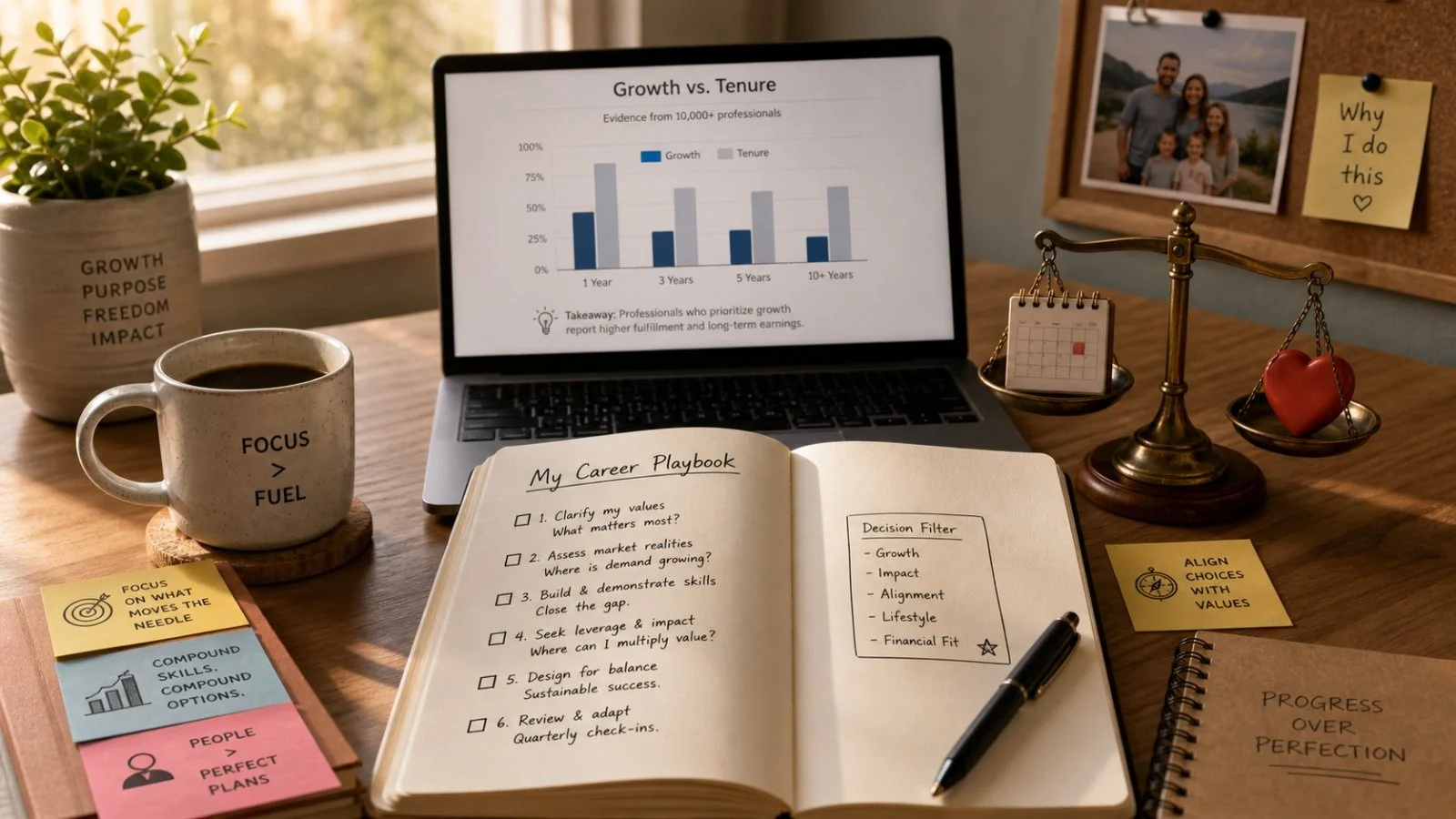
How to use Jain’s playbook
Jain’s account offers practical checkpoints for anyone second-guessing a move. Use these prompts to stress-test your next decision:
– Raise issues early and track responses
– Watch for managers blocking outcomes
– Favour environments that lift both skills and life
– Leave when growth ceilings harden
– Treat health as a performance lever
– Choose proximity to what matters
This is not an argument for serial hopping. It is a case for aligning decisions with evidence: action on red flags, visible support, honest progression paths, and personal sustainability.
Why it matters now
Two reader reactions captured the shift in mindset. One commenter wrote, ‘The opportunity cost of staying in the wrong environment is often invisible. We tend to measure careers by tenure, but the real metric is whether an environment expands or contracts your potential.’
Another added, ‘The real career hack isn’t padding your resume with tenure, it’s knowing when a place is taking more from you than you’re gaining from it.’ The sentiment mirrors Jain’s stance that reputation anxiety should not outweigh everyday harm.
Jain summed up his journey with perspective: ‘Each and every decision I took has helped me reach where I am right now. I am not sure what would have happened if I had taken some different decisions, but I know I would have lost myself along the way if I didn’t take them.’
His closing line is the takeaway for anyone stuck between comfort and cost: ‘Sometimes, it’s never about staying longer, it’s always about knowing when to move out.’