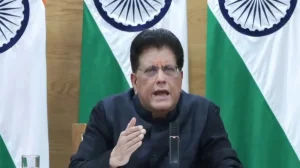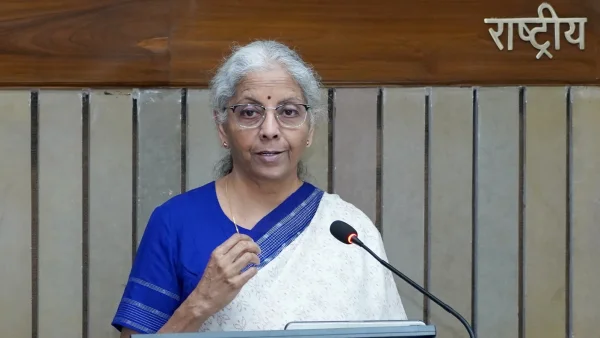
India’s toy makers have been asked to think far bigger than the projected $5-billion domestic market. Finance Minister Nirmala Sitharaman on Tuesday urged the industry to chase a much larger slice of the global opportunity, citing a $179 billion market by 2032 and calling for ambitions that reach at least a quarter of it.
Global ambition versus domestic projection
Sitharaman framed the choice starkly: settle for the current $5 billion by 2034 forecast or position India as a scale player in a $179 billion world market by 2032. She said India’s manufacturing capabilities have advanced enough to justify a larger global bet.
Addressing stakeholders in New Delhi, she argued that the target should not be constrained by past performance. The message was clear: growth will be defined by design, technology-led manufacturing and consistent quality, not by incremental gains within the home market.
Policy resets tilt the field
The minister linked the industry’s confidence to deliberate policy shifts. Basic customs duty on toys was raised from 20% to 60% in 2020, while the Bureau of Indian Standards tightened enforcement to block unsafe, low-quality imports. Between 2019 and 2026, toy imports declined by 71%, she said.
She illustrated the drop in simple terms: if imports were 100 earlier, they are about 29 today. According to her, this reset has not only protected domestic producers but also pushed firms to prioritise quality as a strategic differentiator in export markets.
Sitharaman also highlighted the National Action Plan for Toys, which unites 14 central ministries and departments. The plan aims to develop clusters, build skills and create globally competitive production ecosystems that can withstand price and quality pressure from global competitors.
Exports expand and new markets open
India’s export footprint, she noted, has widened meaningfully. Toy exports reached $186 million in FY2025-26, with Indian-made products now shipped to 153 countries. For an industry once reliant on imports, the shift signals improving acceptance of India’s quality and compliance.
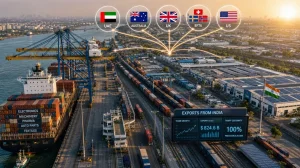
Trade access has helped. Free trade agreements with the United Arab Emirates and Australia have opened duty-free pathways for Indian toy exports. On the financing side, schemes such as RoDTEP, PM Mudra and MSME credit guarantee programmes are enabling manufacturers to scale capacity and modernise operations.
Innovation and digital rails
Sitharaman stressed that policy support must be matched by innovation, infrastructure and entrepreneurship. She cited the E-Toycathon, which is encouraging electronic toys, augmented reality-based games and coding kits, as a way to seed technology-forward products that can compete globally.
Digital Public Infrastructure is also being positioned as a growth lever. Platforms such as UPI, ONDC, TReDS and the Account Aggregator framework are improving access to markets, working capital and digital commerce for toy makers and artisans. She added that women entrepreneurs, PM Vishwakarma beneficiaries and Skill India-trained artisans are increasingly central to the sector’s competitiveness.
What to watch next
Sitharaman’s call effectively reframes India’s toy industry from a protected domestic play to an export-first challenger. The next phase will test whether policy, design capability and supply chain discipline can translate into global shelf space and brand equity.
Key priorities she outlined for the industry were clear:
– Aim beyond the $5-billion domestic projection
– Pursue a larger share of the $179 billion market
– Leverage FTAs with the UAE and Australia
– Invest in design and technology-led manufacturing
– Use UPI, ONDC, TReDS and Account Aggregator
– Maintain strict quality and safety compliance
The stakes are high. A 71% import decline shows that policy can reset incentives, but sustained export momentum will hinge on innovation and reliability at scale. If firms can deliver on both, India’s toy makers could move from capacity catch-up to genuine category leadership.