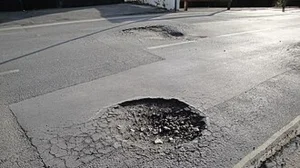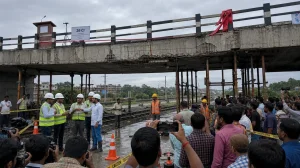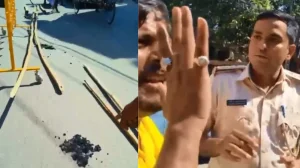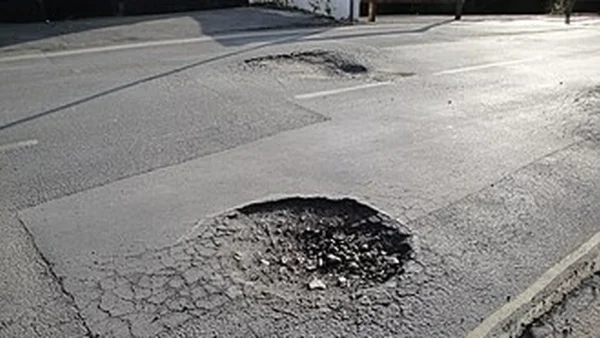
That single statement from a contractor has exploded across social media, reigniting one of India’s oldest public debates: Are taxpayers paying for roads—or for corruption?
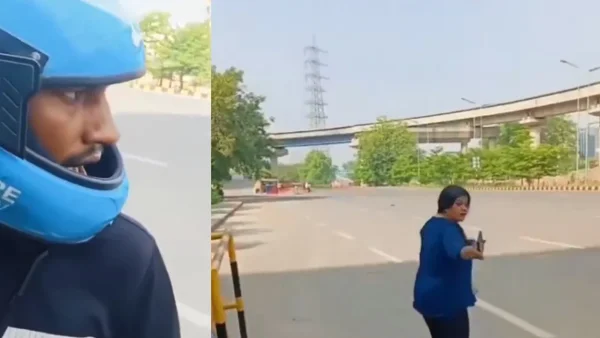
The viral video features a contractor claiming that a road project allegedly costing ₹9 crore could have been completed for just ₹50 lakh, while also promising it would remain pothole-free for five years. The clip has been widely shared, but there is currently no publicly verified evidence confirming the specific project’s actual cost, technical specifications, or whether corruption occurred in that case.
The Math That Has Everyone Talking
If the contractor’s claim were taken at face value:
Government project cost: ₹9 crore
Contractor’s claimed cost: ₹50 lakh
Difference: ₹8.5 crore
That’s nearly 18 times higher than the contractor’s claimed construction cost.
Naturally, such a dramatic gap has triggered public questions about tender pricing, project management, contractor margins, quality standards, and whether public money is being spent efficiently.
The Bigger Controversy
India has witnessed numerous cases over the years involving allegations of inflated public works, poor-quality roads, delayed projects, and corruption investigations. However, a viral claim alone does not prove corruption in any particular project.
Infrastructure costs can vary significantly depending on factors such as:
Land preparation
Drainage systems
Utility shifting
Material specifications
Road width and thickness
Bridges or culverts
Taxes and compliance costs
Maintenance obligations
Without official project documents, bills of quantities, or audit findings, it is not possible to conclude that the quoted ₹9 crore figure was unjustified solely based on the contractor’s statement.
Public Reaction: Sarcasm Writes Itself
Social media, however, has been far less restrained.
Many users joked:
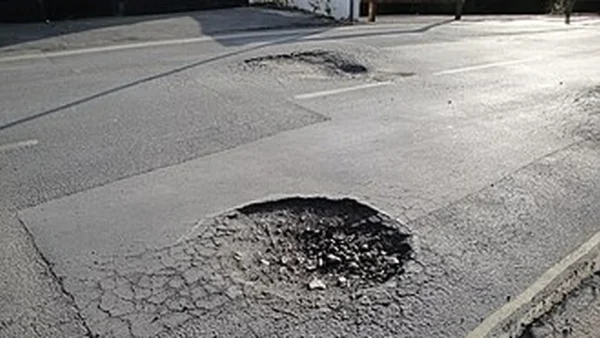
“The potholes have a bigger budget than the road.”
Others quipped:
“Roads in India seem to have shorter careers than election promises.”
Another sarcastic remark making the rounds:
“The road disappears after the monsoon, but the budget never does.”
Why This Video Resonated
The contractor’s confidence—claiming he could not only build the road for a fraction of the reported cost but also guarantee five years without potholes—struck a chord with citizens frustrated by recurring road damage after every rainy season.
Whether his estimate is realistic or exaggerated remains unknown. What is undeniable is that the video has reignited demands for greater transparency in government contracting, public disclosure of project costs, and stricter quality audits.
The Bottom Line
The viral contractor’s statement has fueled a nationwide conversation about infrastructure spending and accountability. But the claim should be treated as an allegation, not proof of corruption. Establishing wrongdoing requires documentary evidence, engineering evaluation, audits, or official investigations—not just a viral video.
Until such evidence emerges, the controversy remains a powerful reminder that public trust is built not only with concrete and asphalt—but also with transparency.