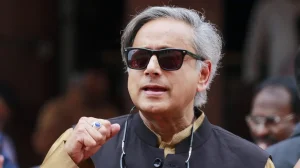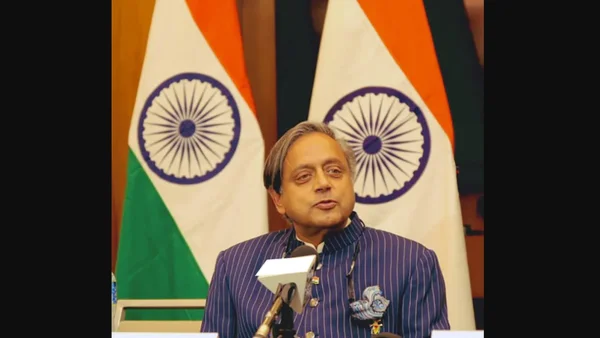
Last Friday, the Delhi High Court took steps to protect Tharoor from these spreading deepfakes that seem to show him supporting Pakistan. This suggests a quick, temporary order will be made relating to his personal rights. His lawyers say this has been happening for weeks and has changed what people think of him at a critical time in politics.
Justice Mini Pushkarna said she would make rulings covering “several requests” after issuing a notice for Tharoor’s urgent request and telling the people being sued to appear in court. The court’s plan is to stop more of these videos being shared and to allow for quick removal when the same videos come back online with new links.
What triggered the court’s move
Tharoor told the court he found out around March the computer programs using Artificial Intelligence and machine learning were supposedly making perfect copies of his face, voice, how he looks and moves, and the way he speaks. These fakes have him saying things about politics, specifically praising how Pakistan handles its diplomatic relations.
He says the spread of this false information happened while he was campaigning for a seat in the Kerala Legislative Assembly in March and early April 2026, which made the problem even worse. Even after the videos were removed, they kept reappearing at different web addresses; his lawyers told the court three deepfakes were repeatedly put on the internet with new links.
Personality rights at the core
Amit Sibal, a senior lawyer representing Tharoor, said this isn’t about a company protecting its brand, it’s about a person. He said, ‘This is an individual, not a business protecting a trademark’ and argued that a person’s identity and reputation deserve strong legal protection.
Sibal said that fact-checking organizations and news outlets had said the videos were fake, but they continued to be seen and to affect people. He also said he’d made official complaints to the Ministry of Electronics and Information Technology (using the Information Technology Rules), the Delhi Police, and the social media companies themselves.
He also said the damage isn’t just to Tharoor himself. He claims the deepfakes are improperly using Tharoor’s public image to say good things about another country (to his own disadvantage), damaging his position as a former Foreign Minister and harming how India is seen in the world.
What the court is considering
During the court hearing, the court said it would create a temporary set of rules that recognises how often this type of thing happens. They said a typical order would allow Tharoor to contact the social media platforms if the same fake videos show up again. This is a kind of “dynamic injunction” – a quick solution for problems that move around rapidly online.
The court told everyone involved to respond within four weeks and officially registered the complaint as a lawsuit, and told the people being sued to appear in court. This sets things up for immediate protection while the bigger legal issues are decided.
Key directions and timelines discussed in court included:
– Notice issued to X, Meta and the Centre.
– Interim order to protect personality rights.
– Liberty to act against identical reuploads.
– Replies to be filed within four weeks.
Platforms and government response so far
A lawyer for Meta (who own Instagram) told the court that the Instagram links listed in Part 1 of the court papers were blocked on Friday morning. Sibal responded by saying those links were working until the night before, showing how quickly this type of thing can reappear with a slightly different web address.
The court documents say complaints were also made to MeitY (Ministry of Electronics and Information Technology), the Delhi Police and the social media companies under the Information Technology Rules. But because the same videos kept reappearing with new links, Tharoor wants a system that doesn’t just rely on taking down each one individually.
Reliefs and legal basis sought by Tharoor
Tharoor wants a permanent legal order to stop Defendant No. 1 (and anyone working for them) from using, copying, showing, displaying or sharing his name, who he is, his picture, how he looks, his voice, photos, expressions and other things that make him him using AI, deepfakes, changing images or copying his voice.
He also wants the fake content removed immediately – the deepfake videos, changed pictures, AI-created sound and video, fake accounts and made-up posts. He is asking for Rs 2,00,05,000 to make up for the damage to his reputation and the trust people have in him.
He also wants orders to be sent to X Corp and Meta Platforms Inc. to stop people getting to the fake content, to reveal who made and shared it and their registration details, and to permanently close fake accounts that use his identity. The Ministry of Electronics and Information Technology and the Department of Telecommunications are also involved, and he’s asked them to block and prevent further spreading of the videos.
He says this violates his rights to be himself and to be shown to the public as he is (rights in Articles 19 and 21 of the Constitution), and that it is ‘passing off’ (making people think something is genuine when it isn’t), wrongly using his image, and damaging it. He is also using parts of the Information Technology Act of 2000 and the Bharatiya Nyaya Sanhita of 2023 relating to stealing someone’s identity and forgery.
Why this case matters beyond one leader
What’s happening in court shows that the courts more generally are trying to protect public figures from being pretended to be by AI. In the last few months, the High Court has given temporary protection to Aishwarya Rai Bachchan and Salman Khan (actors), Sri Sri Ravi Shankar (a spiritual leader) and Gautam Gambhir (a cricketer).
For the social media companies, this case shows they may have to use solutions that work repeatedly against videos being uploaded again and again. For voters, it shows how quickly deepfakes can change how political discussions go, and why the courts are trying to create protections before the next round of manipulated videos are released.