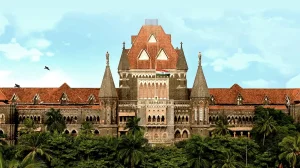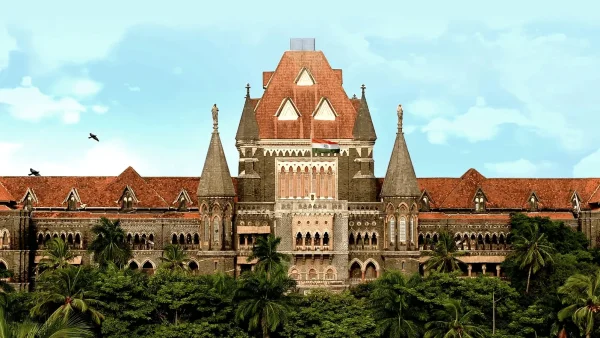
On May 7th, 2026 the Bombay High Court upheld the acquittal of all 22 accused in the alleged fake encounter of Sohrabuddin Shaikh, officially ending a case that began in 2005 and continued to 2026. This is a significant ruling regarding policing that crosses state lines and holding people responsible for their actions, and it means the accused will not face charges as the 2018 trial court decided.
What the Bombay HC decided
Justices Shree Chandrashekhar and Gautam Ankhad on the court panel rejected appeals made by Sohrabuddin’s brothers. They said there was no reason to change the trial court’s decision to clear the accused.
The court has said a more detailed explanation of the judgement will be available at a later date. Essentially, the High Court has agreed with what the special CBI court found, and isn’t adding any new rules or orders.
Why the case drew sustained scrutiny
The Central Bureau of Investigation (CBI) says Sohrabuddin Shaikh, a criminal who was wanted by the police, his wife Kausar Bi, and his accomplice Tulsiram Prajapati were kidnapped in November 2005. The CBI says Shaikh was killed by police in a staged encounter between the night of November 25th and the morning of November 26th, 2005.
The CBI also says Kausar Bi was killed and her body burned on November 28th, 2005. Later, on December 28th, 2006, Prajapati was also killed in what the CBI says was a fake situation. The CBI argued the police officers accused of the killings wanted Prajapati eliminated because he had seen the kidnapping.
The police officers who are accused said Shaikh was a member of Lashkar-e-Toiba (a terrorist group) and had gone to Gujarat to kill an important politician. They insist he died in a real encounter on November 26th, 2005. The different stories about what happened were the main point of argument in court.
Inside the long trial and appeals
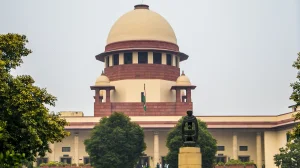
The Supreme Court gave the investigation to the CBI in January 2010. Then, on September 27th, 2012, the trial was moved from Gujarat to Mumbai to make sure it was fair. In October 2017, the CBI special court began hearing evidence, and in November 2017, they formally charged the suspects.
During the trial, the prosecutors called 210 witnesses, but 92 of them changed their stories and didn’t support the prosecution. On December 21st, 2018 the CBI special court said there wasn’t enough proof and let all 22 accused go free. The family of Sohrabuddin then asked for the case to be reviewed and contacted the CBI about it in January 2019.
Rubabuddin and Nayabuddin Shaikh (Sohrabuddin’s brothers) officially appealed the decision in April 2019 and the appeals were accepted in June 2019. In October 2025 the CBI told the High Court they now agreed with the special court’s judgement and wouldn’t appeal. The High Court said it would announce its decision later, and then did so on May 7th, 2026.
What investigators and family argued
The CBI described a planned operation by police in Gujarat, Rajasthan, and Hyderabad. It started with the three people being stopped at Zahirabad in Telangana. Shaikh and Kausar Bi were taken to Gujarat, while Prajapati was sent to Udaipur and then brought to Ahmedabad (in Gujarat) for a separate case.
The CBI also said Prajapati told people in jail, his lawyer, and the National Human Rights Commission that he was afraid of being killed. Records from the court show that letters and official complaints (including from Sohrabuddin’s brother and Prajapati’s mother) led to the courts becoming involved.
Key moments in the record
For readers tracking the long arc of this case, these flashpoints shaped the outcome:
– November 22, 2005: Trio intercepted at Zahirabad in Telangana.
– November 26, 2005: Shaikh killed, CBI terms it a fake encounter.
– November 28, 2005: Kausar Bi’s body allegedly burnt.
– December 28, 2006: Prajapati killed in an encounter, disputed by CBI.
– December 21, 2018: All 22 acquitted for lack of evidence.
How the narrative moved from inquiry to closure
The case really got going in 2006, when a first investigation looked at Prajapati as a witness to the kidnapping. At that time, a police officer in Gujarat, V.L. Solanki, asked for permission to question Prajapati on December 18th, 2006. But ten days later, on December 28th, 2006, Prajapati was killed.
The Supreme Court’s involvement set things in motion: the first investigation by the CID in Gujarat, the report from April 30th, 2007 about Kausar Bi’s death, the CBI taking over in January 2010, and combining the three “encounter” cases on April 8th, 2012. The trial in Mumbai ended with the acquittals in 2018.
What happens next
Because the Bombay High Court has turned down the appeals, the acquittals from 2018 remain. The High Court’s decision is in line with the CBI saying in 2025 they would not try to overturn the trial court’s ruling.
We are still waiting for the detailed judgement which will give the full reasoning of the court. For now, the case goes into the files as a very unusual case involving police in multiple states, that ultimately didn’t have enough evidence to convict anyone.