The argument over air pollution in India got sharper this weekend as Congress asked for an immediate look at and improvement of the National Ambient Air Quality Standards from 2009. The party said that the standards had to be put into effect and watched over more strongly all over the country, with a clear change toward handling PM2.5 – the fine soot most connected to sickness and dying too soon.
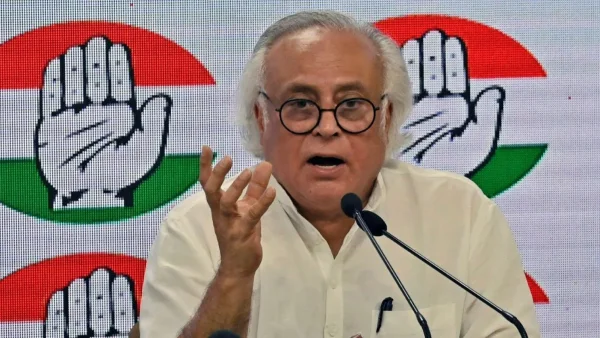
Congress leader Jairam Ramesh stated the National Clean Air Programme really has to concentrate on PM2.5. He showed rising amounts as a really bad problem for the environment and public health, and named the growing number of studies in epidemiology that link being exposed to it to more deaths.
A study from 2024 that had been checked by experts and covered 655 districts from 2009 to 2019 showed that for every 10 micrograms per cubic meter rise in PM2.5, there was an 8.6 percent increase in deaths. A worldwide health study from 2025 guessed about 1.72 million Indians die each year from being exposed to PM2.5, which is about 38 percent more than in 2010.
Ramesh made a comparison of these results to the official view that deaths from air pollution can’t be clearly proven. He said the Indian Council of Medical Research had put about 1.24 million deaths in 2017 down to air pollution – or 12.5 percent of all deaths that year – showing a large agreement among scientists on the dangers.
An analysis that was new, by the Centre for Research on Energy and Clean Air, and that looked at continuous checking data from the Central Pollution Control Board for 238 cities from October 1, 2025 to February 2026, added to the need for quick action. The results were strong and all over the country.
No city met the World Health Organization’s safe guideline for PM2.5 in the time that was looked at. In 204 of the 238 cities, PM2.5 levels also went over India’s own NAAQS, which go back to November 2009. India’s current yearly PM2.5 standard is now eight times weaker than the WHO guideline which was updated in 2021.
The problem isn’t only in the National Capital Region around Delhi. Cities in Punjab, West Bengal, Gujarat, Maharashtra, Bihar, Odisha, and Madhya Pradesh also showed many times when the levels went over what was allowed, making clear how sources of emissions and winter inversions push pollution far past one large city area.
The criticism also went to how the program was designed and how well the money was spent. Since NCAP started in 2019, about Rs 13,400 crore has been given out through program money given and finance commission grants, with about 68 percent of it reportedly spent on managing road dust.
Ramesh said that NCAP uses PM10 – a coarser and less deadly pollutant – as the standard to measure against, rather than PM2.5, making its effect on the most deadly exposures weaker. Only 12 of 96 NCAP cities followed the 2009 PM2.5 standard in the time that was looked at, showing the gaps between spending and what was achieved. Missing data also gets in the way of holding people responsible and of putting the right help in place. Fewer than eighty percent of the cities had complete data from the machines that constantly check air quality, and some places didn’t have useful information for a whole day sometimes. If the readings aren’t good and don’t cover a lot of area, it’s hard to see what’s happening and to make sure the rules are followed.
What a better NAAQS should have in it
Those who know about this usually say that the rules must be based on health, have dates for when things should be done, and be rules that can be enforced. A new NAAQS could make the yearly and 24-hour limits for PM2.5 closer to what the World Health Organization says is good, give clear dates for when things must be in line with the rules, and say what the limits are for how much pollution is too much in a short time – which would make certain things happen.
New rules could also need cities with pollution to find out exactly where the pollution is coming from, so the plans to fix it deal with the biggest causes – like smoke stacks from factories, buses and trucks using diesel, fires from burning plants, and dust from building. Making the quality of fuel, what factories let out, and the rules for cars better would turn goals into real cuts in pollution.
Making checking, openness, and enforcing better
Letting the public know what’s going on would help. A better NAAQS could need cities to figure out the health risks to people, and to make yearly report cards showing how well things are going – so it’s clear if the things being done are really cutting down on how much pollution people are breathing where they live, go to work, and travel.
Really making sure rules are followed starts with really good measurements. Putting in more machines that constantly check the air, making the quality of the checks better, and putting out real-time, checked data would make people trust the system more and help people make better choices. Having people not connected to the government check the machines and do independent tests of how well they work can cut down on mistakes and when the machines don’t work.
Ways to enforce the rules should include punishments that get worse for people who break the rules over and over, dates by which people who make a lot of pollution must fix things, and machines that constantly check what big industries are putting into the air. Cities can speed up using fuel with less sulfur, put filters on diesel buses to catch particles, make clean public transport better, and use ways to keep dust down that are based on what the science says, not just what looks good.
Plans for certain times of the year should deal with burning in the open – including what’s left after harvests and garbage – with other choices and rewards for doing the right thing. Programs to get people to use clean ways to cook and heat in areas around cities cut down on pollution inside and outside, especially for women and children.
How important public health and the economy are, and what to do next
The health risks are very big. PM2.5 goes deep into the lungs and blood, increasing the chances of heart trouble, strokes, long-lasting lung disease, diabetes, and bad results in pregnancy. Children, older people, and people who already have health problems are hurt the worst – with costs that show up in how much people work, how often kids go to school, and how much hospitals cost.
In terms of the economy, cleaner air pays for itself through fewer sick days, less money spent on health care, and better thinking and physical ability. Cities that really make progress on PM2.5 also make themselves more able to compete, make tourism better, and improve people’s lives.
In the future, Congress has said this is a national job that needs the national government and state and local governments to work together. The national government can change the NAAQS, set aside money for things that have been shown to work on PM2.5, and tie getting money to getting results that can be proven. States and city governments can carry out plans that deal with where the pollution is coming from, keep the data going almost all the time, and put out the results in easy-to-understand charts.
India has solved big public health problems before. With new rules, sharper goals for PM2.5, data people can believe, and steady enforcing, the country can make the pollution go down. Asking to look at and improve the rules from 2009 isn’t just a debate about policy. It’s something we must do for public health.