This plan is a central part of how the government will operate and is built on the 2026-27 Green Budget. It’s a big step from just saying they’ll do something to really making it happen. Gupta described it as a campaign where enforcement is most important, with clear who is responsible for what, money available to do it, and very careful oversight.
The announcement came after an important meeting at the Mukhyamantri Janseva Sadan. Many important people were at the meeting: high-ranking ministers, the chief secretary, people in charge of transport and traffic, and people from the companies that run buses and trains. This shows the whole government is working together on this.
According to officials, the plan fits in with the overall national strategy for pollution and stresses that people will be held accountable and have to meet deadlines. It has identified 11 key areas to address and will use monitoring that happens in real-time to make sure the agencies are on schedule. There is no question about it: people must follow the rules.
The strategy for dealing with pollution involves many different areas and aims at vehicle exhaust, dust on the roads, building, factories, burning of organic matter, and garbage. The intention is to make monitoring for pollution happen all year round, and to be more prepared for the especially bad air we get in the winter when the Air Quality Index (AQI) often reaches very dangerous levels.
Tougher rules for vehicles and traffic
Reducing pollution from vehicles is the biggest thing this plan will do. The rule “No Pollution Under Control Certificate, No Fuel” will be strictly enforced, and they will use cameras that automatically read license plates and a digital system to make that happen. Gas stations are expected to refuse to sell gas to cars that don’t have a valid Pollution Under Control certificate.
From November 1, 2026, trucks coming into Delhi will only be allowed if they meet BS-VI standards or run on CNG or electricity. Traffic that isn’t necessary will be controlled to reduce traffic jams and exhaust fumes at the places where vehicles enter Delhi and on the busiest roads.
When the air is extremely polluted, authorities might change the times people go to work, tell people to work from home, and add more restrictions on cars that pollute a lot. These things are meant to quickly improve the AQI when the weather causes pollution to build up.
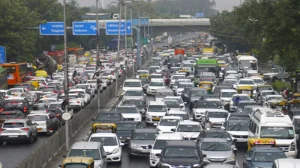
Managing traffic congestion is a key part of the plan. They will install a city-wide Intelligent Traffic Management System to make traffic lights work better, respond to accidents more quickly, and enforce traffic rules. Smarter parking systems and changes to parking prices are also included to cut down on the amount of time cars spend driving around looking for a place to park (and making exhaust) near busy shopping areas.
Expanding clean mobility and last-mile
Public transport is going to have to do more. The number of buses will increase to 13,760 by 2028-29, and electric buses will be used as much as possible for cleaner and cheaper operation. Officials say that buses need to be frequent and dependable to convince people to get out of their own cars.
Getting people to and from bus and train stops easily is also important. Combining the metro and the Regional Rapid Transit System with buses, small electric cars (e-autos), and ride-sharing will make traveling easier. A single way to pay, predictable schedules, and safe places to change from one way of traveling to another are expected to get more people to use these options.
The infrastructure for electric vehicles will grow a lot. The government plans to have 32,000 EV charging stations in the next four years to solve the problem of how far an electric vehicle can go on a charge and to help businesses switch to electric. The upcoming EV Policy 2026 will focus on electric motorcycles and scooters and electric vehicles used for work, and will also switch the government’s own vehicles to cleaner fuels.
All these things together should lower the total amount of pollution made by all vehicles. If they happen as planned, they will speed up the change to different ways of getting around, reduce traffic jams in places where they are known to happen, and make the city’s transportation system more able to handle problems. A lot of the particulate matter (PM10 and PM2.5) in the air comes from dust on roads. The government is going to use a large number of mechanical sweepers, water sprays, special “anti-smog” guns and mist sprays. They will use GPS to follow where these are working and a central computer display to make sure everything is being done as it should be.
Cutting dust and construction emissions at the source
Almost 3,500 kilometers of roads are going to be rebuilt with hard surfaces along the sides, strips of greenery, and underground spaces for pipes and wires. This is to stop dust where it starts, lessen damage to the road surface, and have a planned, scientific way to manage the roads.
Emissions from building will be more closely watched. A new, AI-powered version of the C and D Portal sytem will track construction and demolition sites in real time, mark their location on a map, and automatically make sure they follow the rules. This is meant to fix gaps in monitoring that have allowed dust violations to happen in the past.
The ability to process waste from building and demolition will be increased so it can be scientifically disposed of and reused. Because of this, the government thinks there will be a lasting decrease in airborne particles in areas where the city is growing, by reducing illegal dumping and materials being left in the open.
Waste, landfills, and industrial compliance
Old landfill sites will be cleared by specific dates: Okhla by July 2026, Bhalswa by December 2026 and Ghazipur by December 2027. They will speed up the process of getting organic material out of the landfill and turning waste into valuable things, to reduce methane gas and the risk of toxic liquids leaking out.
The city will work harder to prevent the burning of plant matter, which causes a quick worsening of pollution during the cold months and when there isn’t much wind. Authorities are planning harsh fines, providing cleaner heating options (like electric heaters where possible), and continuing to inform the public to change their habits.
Factories will be required to meet higher standards. They will need to have systems that constantly monitor their emissions online, and those that don’t meet the standards will be shut down and punished. The intention is to make sure they continue to comply with the rules, rather than just fixing problems as they happen.
Programs based on a “circular economy” (like an e-waste park) should lower pollution from waste. By making the collection and processing of waste official, the city hopes to reduce the open burning and unofficial disposal of materials that make air pollution worse in neighborhoods.
Data, governance, and public participation
Decisions and enforcement will be based on information. Delhi will add more air quality monitors to more areas and smaller locations. Detailed information will help the city respond to conditions as they are happening and focus on very local solutions when pollution is very high.
A central “Green War Room” and “Integrated Command and Control Centre” will work with all departments. This central point will combine information from monitors, satellites and people in the field to send help to where it’s needed most and to show how well enforcement is working.
People being involved is a key part of the plan. Teams called Vayu Rakshak will be formed at the neighborhood level to help with a quick response and to keep an eye on things locally. The 311 phone system will be improved to make it easier to report problems, follow up on complaints and make sure people know when and how the issues are being taken care of.
The plan also has ambitious goals for planting trees and other plants. In 2026-27 the city aims to plant 7 million trees, bushes and bamboo, and eventually over 10 million. Protecting and increasing the natural “ridge” areas will help absorb carbon, and block dust and heat.
Working with research groups, experts and new companies will be encouraged. The city wants to use new technologies-from looking at pollution data, to cheap sensors, to predicting what will happen-to get more from its money and have a faster effect.
As the Air Pollution Mitigation Action Plan tackles the problem in 2026, the important thing will be to keep making progress. If enforcement is coordinated, money is available as promised, and how well things are going is public, the levels of PM2.5 and PM10 will go down. Delhi has set specific deadlines for improvements to vehicles, dust, landfills and industry, which the public can follow. As Gupta said, the goal is simple: clean air is a right, and will be provided through being held responsible and taking action.