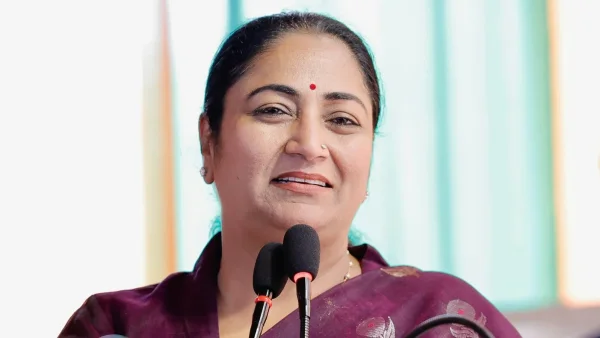
Speaking at the Rising Bharat Summit in New Delhi, Gupta showed a scientific plan to tackle vehicle emissions, grow public transport, and increase green areas, to lift the city’s Air Quality Index.
What the Government Should Do and Be Held Responsible For
Gupta made it clear that controlling pollution is a long-term problem for those in government, and not just something to fix when it gets bad for a season. She said that her government had done more in one year than the last ten years, and that a plan led by data was now being used. The government wants to make sure people are held to account, and cut down on waste through digital methods.
The chief minister said it wasn’t reasonable to think quick wins were possible, but that changes that could be measured were possible. She said the aim was to change things completely across transport, forestry in cities, and watching emissions, not to have short-term fixes.
Cutting Vehicle Emissions and Making Public Transport Better
A major part of Gupta’s plan is to cut down on pollution from vehicles, which is a large cause of Delhi’s poor AQI. The government has taken on a ‘No PUC, No Fuel’ rule – meaning that vehicles must meet emission standards before getting fuel – to get cars that pollute a lot off the road each day.
Gupta also pointed to 4,000 electric buses coming into use, and said this was the biggest fleet of this type for the city. The plan has rewards under a soon-to-be-released EV policy to get people to buy electric vehicles and use cleaner fuels, to cut down on depending on vehicles that use fossil fuels.
Automatic Fitness Centres and Rules to Follow
To make it easier to make sure rules are being followed, the government is putting up automatic vehicle fitness centres. Two should be ready by June, with five more planned. These centres will make emission testing easier, and cut down on chances for corruption.
Automatic testing, with online sites to check for rewards and who is allowed to get them, is also meant to make things more open. Gupta said these changes would cut down on waste in the government, and make controlling pollution work better.
Making Green Areas Bigger and Protecting the Ridge
As well as vehicles, Gupta stressed the importance of getting green areas back and making them bigger, as a lasting solution. The government has officially said that 4,200 hectares of the ridge area is now forest – to protect an important natural area that acts as a buffer.
A big tree-planting campaign aims to plant 3.5 million trees grown in the area over four years. Gupta asked for people to work with the government to look after the young trees, and to get ‘wall-to-wall carpeting’ of green space – which can help take in particulate matter, and make the local climate better.
What People Can Do, Last-Mile Links, and When Things Will Happen
Gupta often said that people taking part was essential. She asked people to use public transport, and to follow emission rules, to speed up improvements to air quality. The government is putting money into last-mile links to make public transport more useful, and to cut down on people depending on their own vehicles.
As for when things will happen, Gupta did not give firm dates, but did promise one thing: a better AQI this October than last year. She said the drive to cut pollution was going on, with targets that would be changed as things went on, rather than a single end-point.
Watching, What is Measured, and Policies Working Together
The plan includes constantly watching where pollution comes from, and how things are going against what can be measured. By putting together electric transport, emission testing, forestry in cities, and digital government, the government aims to have a plan that works together to manage air quality.
If these steps are put into place as described, they could lead to visible improvements in the AQI by the start of the post-monsoon season. Success will depend on how well rules are put into place, how well the public is told about things, and how quickly electric transport and green steps are put into place.
Conclusion: Gupta said that air quality was a key way to measure how well the government was doing, and promised that people would work together to make Delhi cleaner. With EV buses coming into use, better emission testing, and bigger green areas, the government has set October as an early time to show how things are going towards cleaner air.