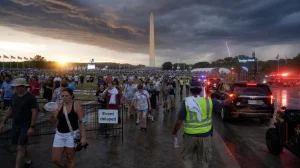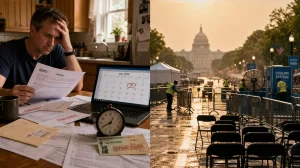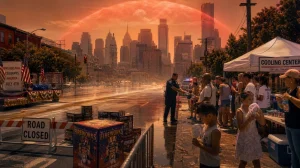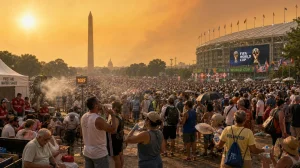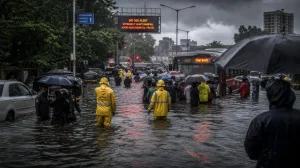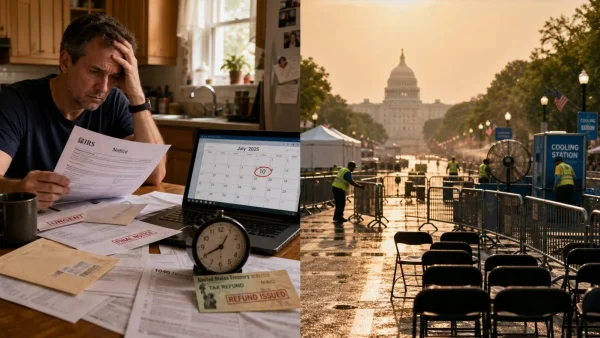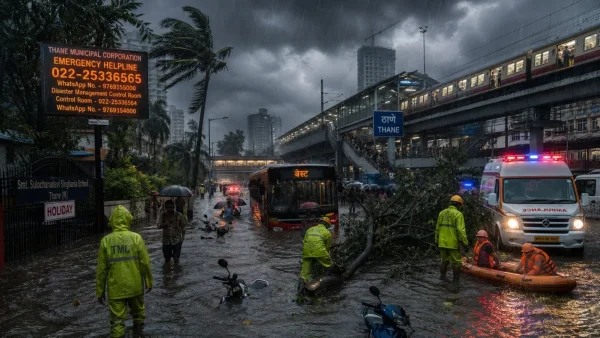
The kind of conditions you see with fast-moving storms and sweltering temperatures made it impossible to go with the original plan for America 250 and the Fourth of July. The most dramatic moment came on the National Mall, where an evacuation after hours put more than 10,000 under one roof. Whether it was no-shows for fireworks or a hasty move to an indoor venue, the holiday was a live demonstration of how to put on a show without putting anyone in danger.
Why the celebrations changed course
There was a heat wave that didn’t let up over much of the country, with some areas seeing well over 100. The Northeast and Mid-Atlantic were put on notice for dangerous levels of heat by forecasters. Then a cold front came in and brought with it the kind of thunderstorms that make an outdoor gathering unviable for the rest of the day.
Then there is the risk to power lines and the potential for wildfires – all of which are trouble for a big public event. Federal numbers put more than 160 million of us under some form of extreme weather alert, which says a lot about the kind of headwinds communities were up against as they put together their plans for the America 250 observances.
Out in the West, the dryness and the heat made officials nervous that a stray spark from a firework could be the start of something worse. Down in the central and southern Plains, you had to factor in lightning and hard winds, which made for a complicated evening when it came to timing and moving crowds around.
Washington, D.C.: parade scrapped, Mall cleared
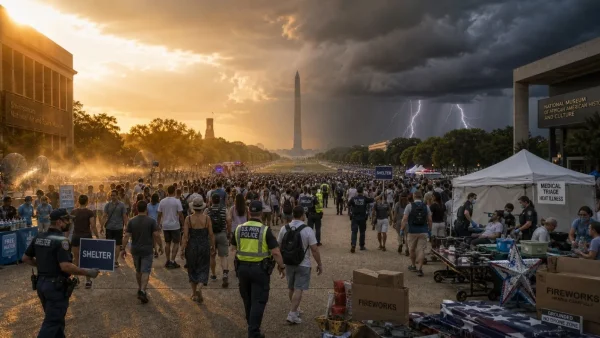
Nowhere was the shift more pronounced than in the capital. They put an end to the Independence Day Parade in D.C., with the reasoning being to look after the people involved. The Great American State Fair on the National Mall had to shut its doors at the height of the day before coming back later; not before emergency personnel had to deal with a number of heat cases.
You could see the effort to de-escalate the risk: free water, misting stations, tents with A/C and the like. But as the storm system inched closer, things took a turn. By 7 pm ET or so, the Mall was being cleared out and everyone was pointed toward the nearest building while the ‘Salute to America’ was put on hold.
“We have to put our guests, the performers and our staff first,” said Danielle Alvarez, a spokesperson for Freedom 250. The message from city hall was to be orderly as a bad storm was bearing down on the area. Shelters were set up in a few places, from the Department of Commerce to the African American History and Culture museum and the IRS.
Word on the street was that the President was in the running to make an appearance, with a big fireworks display to follow. For now, though, no one has put a date on when the Mall will be open for business again or if the lineup will be any different once the weather passes.
Cities scale back and move indoors
It wasn’t just D.C. In Philadelphia, the Salute to Independence Semiquincentennial Parade was a no-go because of the mercury. The All-American Block Party was off the table, too. Some of the fan fest stuff and even the drone shows were put off or retooled for an indoor setting.
Gettysburg National Military Park did the same, bringing in their anniversary doings as the heat index climbed. Organisers in these towns made it clear they would be on top of any warnings, with shorter, cooler versions of the day’s events.
It was a practical approach: rather than a blanket cancellation, a lot of places found a way to keep the tradition alive with some modifications, dealing with the situation as it came.
Fire risks reshape fireworks tradition
In the west, the threat of a wildfire has made some communities second-guess the whole idea of a fireworks show. You can see it in Colorado, where eight or so have nixed their displays. When the ground is this dry and the wind is fickle, caution is the order of the day.
Elsewhere, it comes down to a choice between two kinds of trouble: the kind of heat you get in a midday parade and the kind of storm you don’t want to be in for in the evening. To keep things in balance, the people running the show made some hard calls: they cut back on the schedule, brought some of the action indoors and were on standby to put a halt to proceedings at the first sign of lightning.
States with event disruptions
You can put it down to official word from local authorities: there was no shortage of cancellations and put-offs. The kind of disruption seen in one part of the country was not isolated. A number of states put in for affected events, among them:
– Alabama
– Delaware
– District of Columbia
– New Jersey
– New York
– Pennsylvania
– Virginia
– Colorado
– Maryland
– Massachusetts
It was a mix of everything from parades and concerts to community fairs and America 250 events. Every town handled it a little differently, but you could see the common thread: when in doubt, be flexible.
Inside the Washington response
In the District, the reaction was methodical. It started with making sure there was enough water and shade for the heat. But once the clouds rolled in, the tone changed. The focus became getting everyone under cover and out of the open, with well-marked paths to the indoor spots near the Mall.
Carrying out the evacuation required a lot of moving parts to work in unison-Freedom 250, the Secret Service, the Park Police, FEMA and others all had to be on the same page. The goal was to get people off the streets, leave the way clear for any emergency crews and let the public know what was up through the proper channels.
It is a problem that has become national in scope: an open-air holiday event is now as much at the mercy of a storm as it is of the sun. You have to be ready for both.
What the authorities are saying
With the weather turning in some parts of the East, the message from officials was to stick to the basics. Put your own well-being before the itinerary. Public safety teams put out a list of no-nonsense advice:
– Stay on top of your water intake
– Don’t be outside in the thick of the afternoon
– Dress in something light
– Make use of the cooling stations
– Do as the staff and police say
– Keep an eye on the alerts
Producers of the events got the memo too. Some put in more water and shade, some made the programme shorter and had a back-up venue in mind so the party could go on without anyone coming to harm.
The road ahead for America 250
For the most part, the big events went on where they could, with some on-the-fly changes as the forecast dictated. Organisers have been plain about it: safety is what matters over this weekend, and they will make the call in real time as the weather does.
Washington, D.C. hit 101 F (38 C) at one point. The US President put in a post to that effect: “Despite the heat, which isn’t as bad as predicted, the crowds in DC are INCREDIBLE!” There was plenty of good feeling in the air, but the planners still had their contingency plans in hand for any spike in temperature or a return of the storms.
If there is a lesson to be drawn from it, it is a practical one. The programming for America 250 will happen, but it is built on a new foundation of safeguards and clear communication. In these times of extreme weather, that is how you run a mass event.
The bigger picture
June was the heads-up; the holiday was the reality check. Back on 28 June, federal types put out a warning about a heatwave with teeth that would cover the East, the Midwest, the Great Lakes and the South. Sure enough, it came to pass, and the plan of record was put aside for something more adaptive.
Whether it was a drill, a move to an indoor space or a drone show in place of fireworks, the communities made it work. For the next time around, the formula is simple: expect the heat and the rain, and be prepared to change course in a hurry.