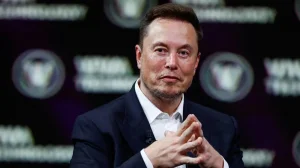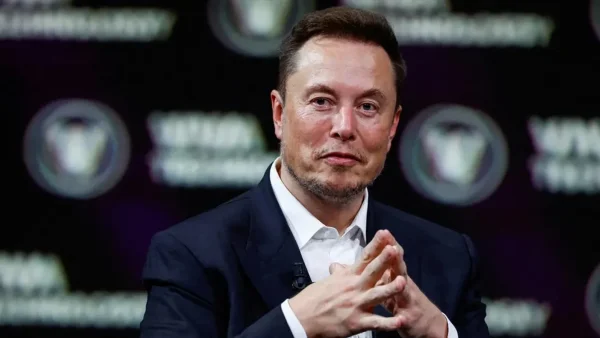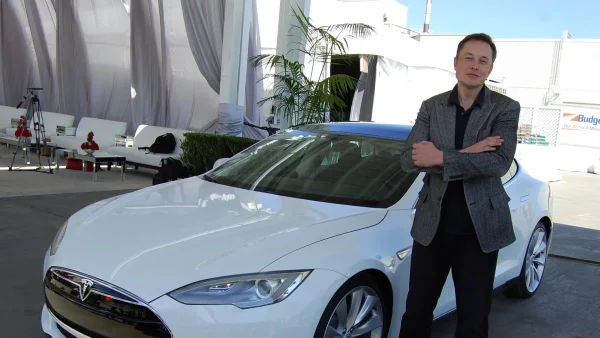
Musk is the first to cross that $1 trillion mark, and the figure is enough to make you recalibrate your ideas on power and policy. A fortune of this size is not merely an increment; it is something else entirely. It puts in plain view the reach of money, and just as much, its lack thereof.
The milestone that stretches imagination
You can’t really put $1 trillion in context with a day in the life. A million seconds is 12 days or so. A billion gets you back to 1994. But a trillion? That is 29,000 years in the rear-view mirror, before the pyramids were even a thought.
And you wouldn’t put a dent in it by spending like there was no tomorrow. Go for $1 million a day, rain or shine, and you’re set for 2,740 years. Put it in perspective: in 700 BC we were in the Bronze Age. An individual could be at it for eons and never run out.
Here is some way to put it in scale:
– 12 zeroes in a row
– Some 8,880 Boeing 737s
– A pile of $100 bills over 1,000 km high
– If you put it in the hands of 8.2 billion people, you’re looking at $120 to $135 a head
What a trillion still cannot buy
Private capital has its boundaries, and in some cases they are put there on purpose. The Moon is a case in point. Let’s say a Starship launch comes in at ten million. A trillion would put you in the air 100,000 times. One a day for 273 years. And you still can’t put a deed on an acre of it.
That’s the 1967 Outer Space Treaty for you. No one is allowed to lay claim to any part of the heavens. No exceptions. It’s a hard stop, which is notable given what’s up there. We’re talking 600 million metric tons of water for rocket propellant, or Helium-3 at $640,000 a pop. Some figures have the value at four quadrillion.
So in a way, Musk’s entire net worth is 0.025 percent of what is 238,000 miles out of his reach. He can put up the cash for a mission, but he can’t change the rules of the road without everyone on board.
Earthbound limits: Antarctica and rebuilding
Then you have the most costly asset with no price tag, and it’s right here. The geology in Antarctica is as good as it gets for minerals. But the Antarctic Treaty’s Protocol on Environmental Protection is a flat-out no on commercial mining. You need the 54 signatories to be in accord to do anything about it.
There is a review in 2048, but you can’t put a premium on time. In the strictest sense, Antarctica is not on the market. There is no one to sell it to, no title to be had. You can put a price on just about anything and a trillion will buy it, but there are some things for which no amount of money is enough.
Take the kind of rebuilding that has to happen after a war. The figures in the Middle East put the tab at around $1.5 trillion. In Gaza, you’re looking at $70 billion to move 61 million tons of debris. Lebanon is in for $40 billion. Then you have Syria, where the cost of a long war is running to $400 billion. Toss in Yemen, Iraq, Libya and Sudan and you add hundreds of billions to the ledger. Iran has even put in a formal claim for $270 billion in damages to its petrochemicals. Musk’s trillion doesn’t come close. And in any case, cash isn’t the issue. You can’t put a check down for a political accord or a security guarantee. You can’t buy a ceasefire that sticks or a government that can get things done. Those have to be put in place.
Private fortunes vs public debt
The numbers look even more lopsided when you put them up against public finance. The U.S. is sitting on a national debt of $39.2 trillion. A trillion from Musk is 2.5 percent of that. Put it all on the table and you’ve covered a year’s worth of interest. At the rate we’re racking up $8.19 billion a day, it would be gone in forty days.
This year the feds will run up an interest bill of over a trillion for the first time-more than they put into Medicare or defence. No one man’s fortune, no matter how you slice it, is going to make a dent in the kind of liabilities you get from years of policy made by millions of voters and a few hundred in Congress.
It puts things in perspective. The debt is what the logic of money has made; it isn’t something you fix with a big payout. We’ve been borrowing and putting off the bill for so long that we have a machine in motion that no individual can put a brake on. You bring your private wealth to the public balance sheet and it is swallowed by the math.
What comes next: value, consensus, and the limits of money
There’s a catch to the trillion, too. Most of it is in illiquid equity. For Musk to have a trillion in hard cash, he’d have to offload huge positions, which would likely tank the prices and whittle down the very sum he’s after. It’s a real fortune, but it is a creature of the market.
Put simply, his wealth is a form of social agreement. It’s data in a system and a valuation that people are willing to go along with. But that can change. One ill-advised tweet and you see tens of billions evaporate in a day. It is a record number, but it is still at the mercy of the market.
The thing is, the sturdiest of walls are ones we put up ourselves. The Outer Space Treaty can be reworked. If everyone is on board, the ban on mining in Antarctica could be up for review in 2048. Debt ceilings go up when the legislature says so. A ceasefire holds when the sides involved think it’s better to build than to bomb. What is out of reach now may not be later.
None of this makes the trillion unimportant. It is a litmus test. It shows us where our priorities lie and the rules we have in place to keep the commons in order and a country solvent. It tells you where capital can do its work and where it has to stop at the line of a treaty.
We are entering the age of the first trillionaire and the question is no longer just what one person can put on a credit card. It is whether we as a society are ready to renegotiate the terms on our resources, our debts and our rebuilds. The figure is mind-boggling. But the lines it runs into are of our own making.