You won’t find any talk of an imminent device from the company after Musk quashed a report that said SpaceX had put a prototype in front of investors ahead of its big IPO. His pushback only fuels the question: what is it they plan to be selling other than satellites and rocket launches?
What Musk denied and why it matters
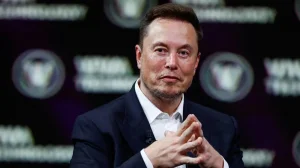
He didn’t mince words in a short post, though he left out the fine print. The point was to put a stop to any notion that you might see a handheld AI product from SpaceX, which would have been a hard turn for the company to make.
And when you say something like that on the cusp of going public, it can change how investors see you. A foray into a new kind of AI hardware would put them head to head with the rest of the pack trying to figure out what comes after the smartphone.
What the report alleged
The Wall Street Journal has it that, behind closed doors, SpaceX let some in on a handset of sorts, one built on its own OS. They were told it would be powered by xAI and run on Qualcomm’s Snapdragon silicon.
But if you were an investor, you were also made to understand this was all very early days. The design was a work in progress and there was no promise it would ever come to be. Neither side was available to comment right away.
To be clear, here is where the two sides stand:
– Musk says the whole thing is ‘Utterly false’
– The Journal is talking about a proprietary system with xAI in it
– There are references to Qualcomm’s chips in the mix
– And the project is being called off as far as we know
Strategic backdrop: SpaceX and the AI race
Put the noise aside and you see a company that has been throwing billions at more than just getting to orbit. From the Grok model to some ideas for computing in space, Musk is making sure SpaceX is in the middle of the AI conversation.
Then you have the manufacturing chops over at Tesla and you can see why people get excited. Add in the reach of Starlink and the mobile side of things and it makes for an interesting picture, even if a new piece of hardware isn’t in the cards for now.
The competitive landscape
It’s a crowded room when it comes to AI devices. OpenAI’s foray into hardware with Jony Ive is one to keep an eye on. Word is they’ve even brought on Paul Meade from Apple, the man behind Vision Pro, to their side of the house.
But don’t count on it being easy. You only have to look at the trouble Humane and Rabbit have had with their high-profile debuts to see how tough it is to make a case for an AI gadget when you have a phone in your pocket.
Why the denial still leaves questions
Musk may have been emphatic, but the details in the report ring true to some of the market’s current state of mind. Should they want to, SpaceX has the scale, the AI and the Starlink connection to make a go of it. Musk doesn’t seem to want to give that story any oxygen, though.
A few in the know have even put forward the idea of a buyout to get a foothold in telecom, name-dropping T-Mobile or AT&T. It’s all conjecture at this point and would be a heavy lift financially, as some have put it.
What to watch next
There’s nothing to say they are going to put an AI device on the shelf. If you want to read the room, look at the money being put into Grok and their plans for space-based computing rather than some unannounced contraption.
We’ll see if they put their AI capital to work in infrastructure or enterprise, or if, for all of Musk’s denials, we end up with some kind of connected hardware down the line. The search for the post-smartphone era is on, and investors will be watching.