It has come to pass, and not a moment too soon: Gambhir’s first real trial by fire. A 34-run drubbing in Belfast was made of a muddled plan with Sundar. You had an all-rounder go for 19 in his one over and put together a nine off 12 that did little for the side, and now the clamour for some role clarity is only louder.
The turning point that flipped momentum
Ireland were on the ropes before the tide turned. India put down three wickets in no time, but then they let up, and the home side put up 182.
Sundar was put on the shelf until the sixteenth over and when he did come on, he was hit for it. That 19 runs in his only set, and the timing of it, made for a long way to go. In the end, it was a 34-run loss to get the two-match series in Belfast under way.
A role without definition is hurting impact
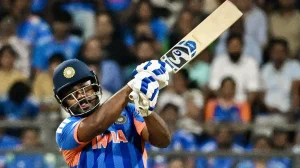
It is not his ability we are questioning, but the way he is being used. He batted at six and couldn’t get into a groove, hamstrung by an end-overs job he is not made for.
Look at the numbers and you see it. In 57 bowling innings, he has been given his full four overs just 25 times. With the bat, he has only seen 26 of 61 matches.
Ashwin’s blunt assessment and clear prescription
Ravichandran Ashwin has put the ball in the court of the think-tank with Gambhir and Shreyas Iyer. On his show, Ash Ki Baat, he made the case that you can’t back a player like Sundar and not have a plan for him on the field.
He was very clear: if you pick him in a T20I, he should be allowed to bowl his quota. Put him on right after the powerplay, don’t make him a finisher. A floater’s job is what he is for.
He even pointed to the T20 World Cup as proof. “You remember the World Cup? We left out Axar Patel for South Africa and put in Washington,” he said, before noting that what is happening now is the wrong call for him.
The management call under the spotlight
For Ashwin, this is more than a selection issue. “We had three wickets early and then you could see the pedal come off the gas,” he said. By capping Sundar at an over, you leave a resource on the table and part of the game unattended.
“If you are going to give him a long rope, let him bowl as soon as the powerplay is over. Four overs. If you don’t let him do his job, how are you to know if he is a reliable all-rounder or not?”
Why this matters beyond one defeat
There is an identity to be found in the shortest format for Gambhir’s side. When you are not sure of your tactics, it stunts a player and blurs the lines for the team, when you should be nailing down roles from the get-go.
Sundar has a certain set of tools: he can handle the new ball, put pressure on in the middle, and is a good matchup against lefties. Make him an afterthought for an over and a last-resort with the bat and you are not using what he has to offer.
What needs to be done ahead of the June 28 game:
– Get a handle on when he will be bowling post-powerplay
– See to it he gets his four overs if he is in the side
– Have him as a batting floater, not someone to close out an innings
– Make the roles fit the match-up and the moment
– Be consistent in what you put in place
What comes next for India in Ireland
Shreyas Iyer has had a rough start to his time as captain, but the series is not over. The final T20I on the 28th is a chance to put things right.
The requirement is plain. Put Sundar in and make him a bowler and a floating option. Or, if he is not in the XI, get a specialist to finish. But whatever you do, let a defined plan, not a hunch, be what moves you forward.
One call that could change the narrative
To sort out Sundar’s position is not a risk; it could well pay off. Let him have his four overs, get him in with the bat a bit earlier, be clear on the matchups. What was a night to forget in Belfast could become a pivot for Gambhir. They will have their say again on June 28.