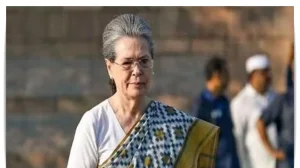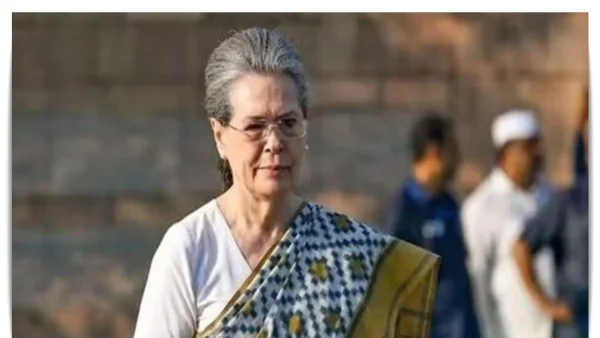
In so many words, Gandhi has put the onus on the Centre for its stony silence on Gaza, saying it has put a dent in India's standing. Her warning is that as the eyes of the world fixate on Israel’s war, New Delhi is only going to find itself more alone.
Political stakes and foreign-policy fallout
For Gandhi, there is no longer a line between what we value and what is in our interest. In her view, we have let old alliances with places like Palestine and Iran, and the broader Middle East, slip away, all while we put some distance between us and the rest of the world’s opinion.
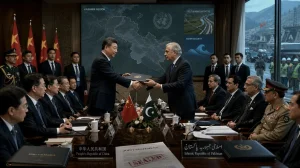
This has left an opening for Pakistan to make a name for itself as a go-between in the region, something she feels would have been ours for the taking, given how long we’ve had ties in West Asia.
You can put it down to the personal chemistry between PM Narendra Modi and his Israeli counterpart Benjamin Netanyahu, but otherwise, she says we have given up ground without any real diplomatic return on it.
Evidence Gandhi cites to build her case
She has some hard numbers to back up her point of view, from the UN Independent International Commission of Inquiry on the Occupied Palestinian Territory. Back in September 2025, the commission made its call: that what was being done to Palestinians in Gaza by the Israelis was genocide.
Then in June 2026, under the new head of the body, retired Justice S. Muralidhar, they put out a report to that effect again. The message was that the intent was to see the end of the population in Gaza, with children in the crosshairs.
The piece puts forward some of the commission’s figures: 20,000 children dead, 44,000 more with wounds that will be with them for life, and the kind of ruin you see in civilian areas when a place is raked over.
Gandhi also pointed to the rest of the report – 97 per cent of the schools in Gaza gone, paediatric hospitals and the like in shambles, and a three-fold rise in complications with childbirth and miscarriage.
And this isn’t just happenstance, in her telling. Some 27 per cent of the dead and injured are kids; there are reports of boys with bullets in their heads and necks.
A grim emblem of civilian harm
To put a face on it, she talked about Hind Rajab, the five-year-old whose death is, for her, what this is all about for the people of Palestine.
Her family car was hit with 335 rounds of fire, she wrote, and the little girl was left in the middle of her kin. In the end, Hind and two paramedics were killed.
Gandhi’s framing and the global response
Hamas’ dastardly attack on Israel in October 2023 was, in her words, horrific and out of the question. But the way Israel has answered with its military, she says, has been nothing short of wanton and barbaric.
You don’t have to look far for the genocidal mindset, she says, in the way top brass in Israel talk about a full siege of Gaza and the uprooting of its people as if it were fine.
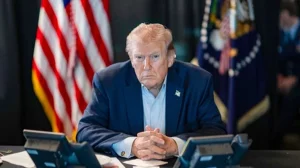
And with the backing of the Trump administration in the US, the campaign has been allowed to go on, even as Washington has put the brakes on the UN. Still, the UN has been on record with the alleged war crimes.
But the feeling in the room has changed. After years of not much of a reaction, you now have France, the UK, Canada and Australia coming around to the idea of a Palestinian state.
There is South Africa in the ICJ, a few European countries putting a stop to arms deals, moves from Latin America and the ICC putting out warrants for some of Israel’s leaders.
Critique of India’s choices and timing
So when the Prime Minister made his way to Israel right before a joint US-Israeli move on Iran, Gandhi found it a hard one to fathom. It was a decision that didn’t make sense for us at such a charged time.
We are being drawn into Israel’s orbit while the rest of the world is moving in the other direction, and it is costing us in terms of the friends we’ve had and the room to manoeuvre we once had.
Then there is the government’s failure to say anything about the commission’s report from June 2026, which she has taken to task for.
To put the quiet in perspective, she pointed to a case from home: the way Justice Muralidhar was moved on after he made some comments about the police’s inaction in the 2020 Delhi riots.
Then there is the matter of India’s past. Gandhi recalled when the country was a proponent of postcolonial solidarity, sovereignty and world peace. The way of things now, she says, is a clean break from that and a spurning of the rules-based order.
What she has in mind for the Centre
For Gandhi, it is only right that India should be heard on behalf of the Palestinians, with children being “brutally targeted.” She sees it as a national interest to side with the rest of the world in its censure of Israel’s military efforts.
She has no patience for the Centre’s line. In her view, the government’s ongoing hush is indefensible, in any rational or moral sense, and what is needed is an unvarnished public position.
Put simply, here is what Gandhi puts forward to make you think again:
– Our moral high ground is eroding
– We are weakening our hand in West Asia
– Old friends in the Middle East are drifting away
– Pakistan is making a play to be the middleman
– We have let the UN commission’s report go by the wayside
Why this comes down to more than rhetoric
When Gandhi put pen to paper on 27 June 2026, she made the Gaza file a part of the foreign-policy conversation in India, as much a question of ethics as of hard-nosed interest.
A lot of our partners are looking at what Israel is up to with a critical eye these days. To not say anything is to put our standing in a region we can’t afford to lose – be it for energy or our people there – in jeopardy.
With the kind of legal and quasi-sanction pressure we are seeing, there is less room to work. If India doesn’t put in its word, we may find we have little say in how things turn out.
Gandhi is at pains to point out this isn’t a partisan issue. Your clout overseas and your credibility here are one and the same; if you are too quiet for too long, it shows.
What’s happening on the other side of the world
In her piece, she laid out a number of moves abroad that point to a new mood and a lot of heat on Israel. It is a departure from the old way of letting things slide, and those who don’t speak up will be left on their own.
Some of the telltale signs she points to:
– Western powers coming around to the idea of a Palestinian state
– South Africa’s case at the ICJ
– Europe putting a lid on arms sales
– Some in Latin America dialling back on ties
– The ICC going after Israeli officials with warrants
Where realpolitik and principle meet
The Centre, in her eyes, is putting short-term convenience ahead of the image India has built up over the years as a voice for the Global South.
By not engaging with the commission’s findings, we have let the opportunity to set the tone on both principle and practicality slip by.
It’s a simple equation: if you’re not there, you cede the moral and policy ground to your competition. You end up with less leverage.
She was blunt in her summing up. India has given up on its strategic and moral interests for what? A few good relations between our top brass and the prime minister in Tel Aviv.
Her parting shot to the government was clear. This silence is costing us in two ways: it is wearing down our conscience and our influence, just when we need them most.