A difference of opinion within the Indian leadership was something pretty unusual in the lead up to the tournament. One side thought having experience and players who’d recently been leaders was most important, while the other focused on how players were currently performing and making sure the team was well-rounded. This argument really came down to Shubman Gill and whether Ishan Kishan should be in the squad.
The people selecting the team looked at lots of different ways to fill the opening spots and who should be the wicketkeeper-batter. Because many of the players could do similar things, it was a tough decision to narrow it down to the final fifteen.
Gautam Gambhir backed Shubman Gill
Gautam Gambhir apparently really wanted Shubman Gill in the World Cup team, even though Gill hadn’t been doing well in T20 Internationals. Gill had been the vice-captain from the Asia Cup in 2025 until shortly before the tournament, and that counted in his favor.
Gambhir believed in Gill’s skills over the long term, and also thought his leadership would be valuable. He felt Gill would be a steadying influence at the top of the batting order, and be able to perform under pressure in the important knockout games.
Ajit Agarkar pushed for Ishan Kishan and bold selection moves
Ajit Agarkar, who led the selection panel, felt differently. He said Gill should be left out so that others would get a chance, and because India had enough players and a balanced team meant some difficult choices had to be made.
Rationale behind Agarkar’s intervention
Agarkar also strongly supported Ishan Kishan getting back into the T20 team. Although Kishan had had problems before – he didn’t go on a tour of South Africa in volved in 2023 and had missed some domestic games, he’d recently been in good form for his domestic team, which made a good argument for picking him.
Agarkar said that how a player is doing and whether they are available to play are the most important things. He noted Kishan opens the batting in white ball cricket and has good stats in domestic matches. He thought this reliability was more important than his past issues.
He also wanted Suryakumar Yadav to continue as T20 captain after Rohit Sharma retired, because he believed having a captain who would almost certainly be in the team for every game would be good for the team. He was convinced of this, and he managed to convince the other selectors to agree.
In the end, the selectors chose Ishan Kishan and Rinku Singh, and Shubman Gill didn’t make the team. This decision then affected the batting order and the eleven players chosen to start each match during the tournament.
Impact on Sanju Samson and team batting order
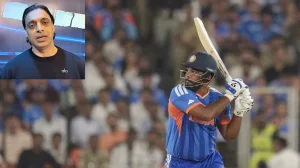
Sanju Samson really benefited from this on the field. Samson was moved up in the batting order and scored over 80 runs in three games in a row (the final group game, the semi-final and the final), and was named Player of the Tournament. If Gill had been playing, Samson might have been lower down the order or not played at all.
Legacy of the selection choices and the World Cup win
The win in the World Cup proved that most of the team selection and coaching decisions were right. Gambhir was praised for how he managed the team during the games, and Agarkar’s decisions behind the scenes were both criticized and praised for going against what is usually done.
After the tournament, Gambhir said how important Agarkar’s part in things had been and said some of the success was due to the selectors believing in their choices and being willing to take risks. Ultimately, the combination of brave selection decisions and good play on the day led to India successfully defending their title and winning the T20 World Cup for a third time.