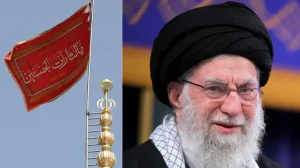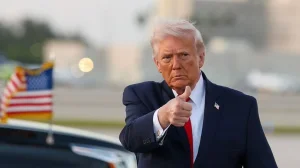
The US President, Donald Trump, gave a strong warning following Iran’s choice of Mojtaba Khamenei as its new supreme leader, and said he didn’t think the younger Khamenei was able to ‘live in peace’. The comment made an already tense situation even worse as Tehran was changing leaders while fighting was still going on in the region.
Trump’s warning and what he said publicly
Trump said the appointment wasn’t acceptable and indicated the US ought to have a say in who takes over in Iran. He labelled Mojtaba Khamenei a ‘lightweight’ and warned that, unless things changed, the US might be pulled back into war in a few years. He sounded as if he were threatening Iran, but also as if he’d consider talks, depending on what happened.
Trump also warned Tehran that it would suffer badly if it increased attacks. He said the recent attacks and responses were a limited, needed reaction and promised stronger action if the fighting started up again. This way of speaking shows he wants to stop conflict by threatening Iran – and using the possibility of force to help with talks.
Information about Mojtaba Khamenei and his appointment
Mojtaba Khamenei, aged 56, is the late Supreme Leader Ali Khamenei’s second son, who died in violence that also killed some family members. Government groups said the clerical Assembly of Experts had clearly voted to make Mojtaba the top religious official, and the most important security departments quickly promised to be loyal.
Mojtaba is known for holding firm religious beliefs and for his links to the Islamic Revolutionary Guard Corps. Though he didn’t have a major official job under his father, it was long thought he had an impact on decisions without being public about it. Because he didn’t appear much at public events, people wondered how he would act as leader during this time of great danger.
What the appointment means for politics and institutions in Iran
The Assembly of Experts asked for everyone to come together, and urged leaders, religious scholars and ordinary people to promise loyalty. This is an attempt to make the government look solid on the inside, and to stop groups forming which could weaken the government while there is a war on. Promises of loyalty from the army and courts are meant to show a united approach.
However, there are still questions about whether the new leader has the right to be in charge, and whether the people will accept him. A change in leadership at a time like this could make struggles for power within Iran worse, change what the government does, and affect the way Iran deals with those who want change and those who want to keep things as they are inside the religious establishment.
What this means for the relationship between the US and Iran and the possibility of talks
Trump said he might be ready to talk to Tehran, depending on the conditions, but he put a lot of stress on Iran giving things up and taking responsibility for what it has done. His statements tie any possible talks to very strict rules, and to punishing Iran if it doesn’t do what the US wants.
These comments show a strategy of threatening Iran and being ready to talk to it, if Iran does certain things. This plan might not calm things down right away, unless Tehran sees good reasons to, or is sure it won’t be attacked – making it harder to stop the conflict from getting bigger.
Regional safety and what happens to the economy
The change in leadership happened at the same time as new missile attacks and increased military activity which pushed up the price of oil. People and markets in the area are watching closely, as a lack of stability can stop shipping, energy supplies, and people’s belief in investments across the Middle East and further away.
If the security crisis continues, there will be economic and humanitarian problems. For people who make decisions about the world economy, the most important thing right now is to make the area safe, and to create a way for people to have ongoing talks which reduces the risk of further attacks.
To sum up, the appointment of Mojtaba Khamenei and the US reaction are a very dangerous moment in a relationship which was already difficult. How Tehran takes control, and how Washington uses both pressure and the possibility of conditional talks, will decide what happens in the area and what other countries do next.