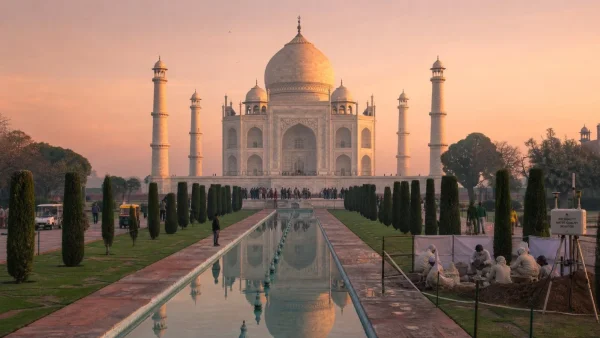
You can read the numbers in India’s top monuments and see how they drive the kind of hard-nosed decisions that matter in travel and business. The new Delhi Economic Survey has the figures: five heritage sites are out in front, headlined by the Taj Mahal with 62.64 lakh on its books. For a hotelier or a tour operator, that is where you will find the value.
It is not a matter of chance. The data from the survey shows that visitors are drawn to places with a good story, well-kept grounds, and an air of familiarity. When you have an icon that is also being put in order, you get repeat business and the kind of word-of-mouth that makes it cheaper for the rest of the industry to bring in a customer.
There is some variety in this upper echelon, too. You have your Mughal strongholds, your temples, your old royal fortresses. But they all have to be managed on their own terms, whether it is a question of fending off pollution or controlling dampness. That means you need site-specific deals and a steady line of funding to make it work.
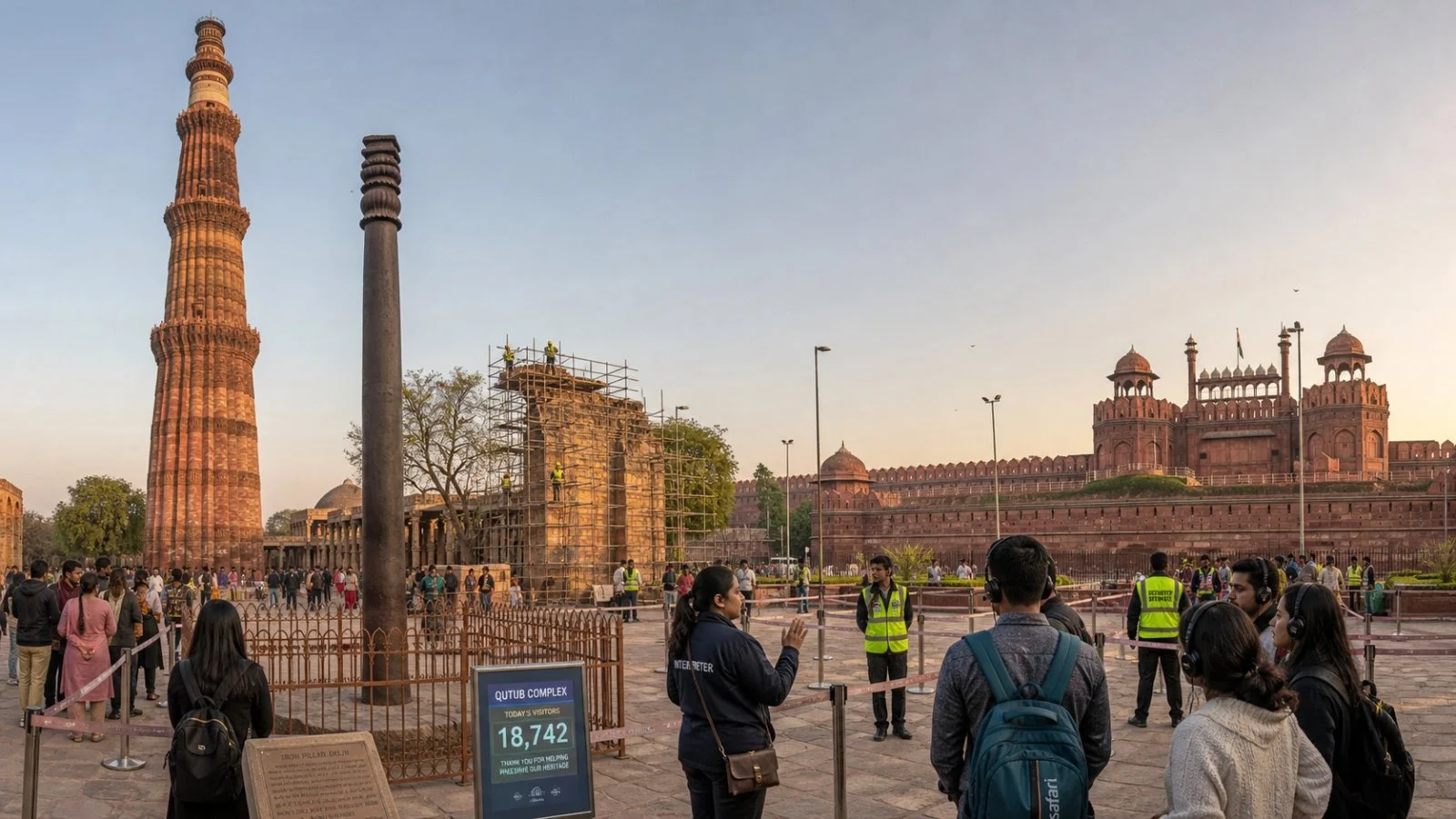
Delhi’s twin anchors: Qutub Minar and Red Fort
Take the two in Delhi. Qutub Minar, with 32.04 lakh people coming through, is one. You have the fluted sandstone and the carvings, and the whole complex with the Quwwat-ul-Islam Mosque and the Iron Pillar. With that much traffic, you have to be on top of regulation and upkeep so the story doesn’t get lost.
Not far off is the Red Fort, another 28.84 lakh visitors. It is still very much a part of state affairs. Put up in 1648, it was where the royals made their mark. Now, between the restoration of the water works and the need to control the crowds for national occasions, it is a UNESCO site that is very much alive in the city.
For a company, these two are a sure thing for year-round volume. If you can fit in with the rules and the headroom the authorities allow, there is room for everything from guided walks to the nitty-gritty of last-mile transport.
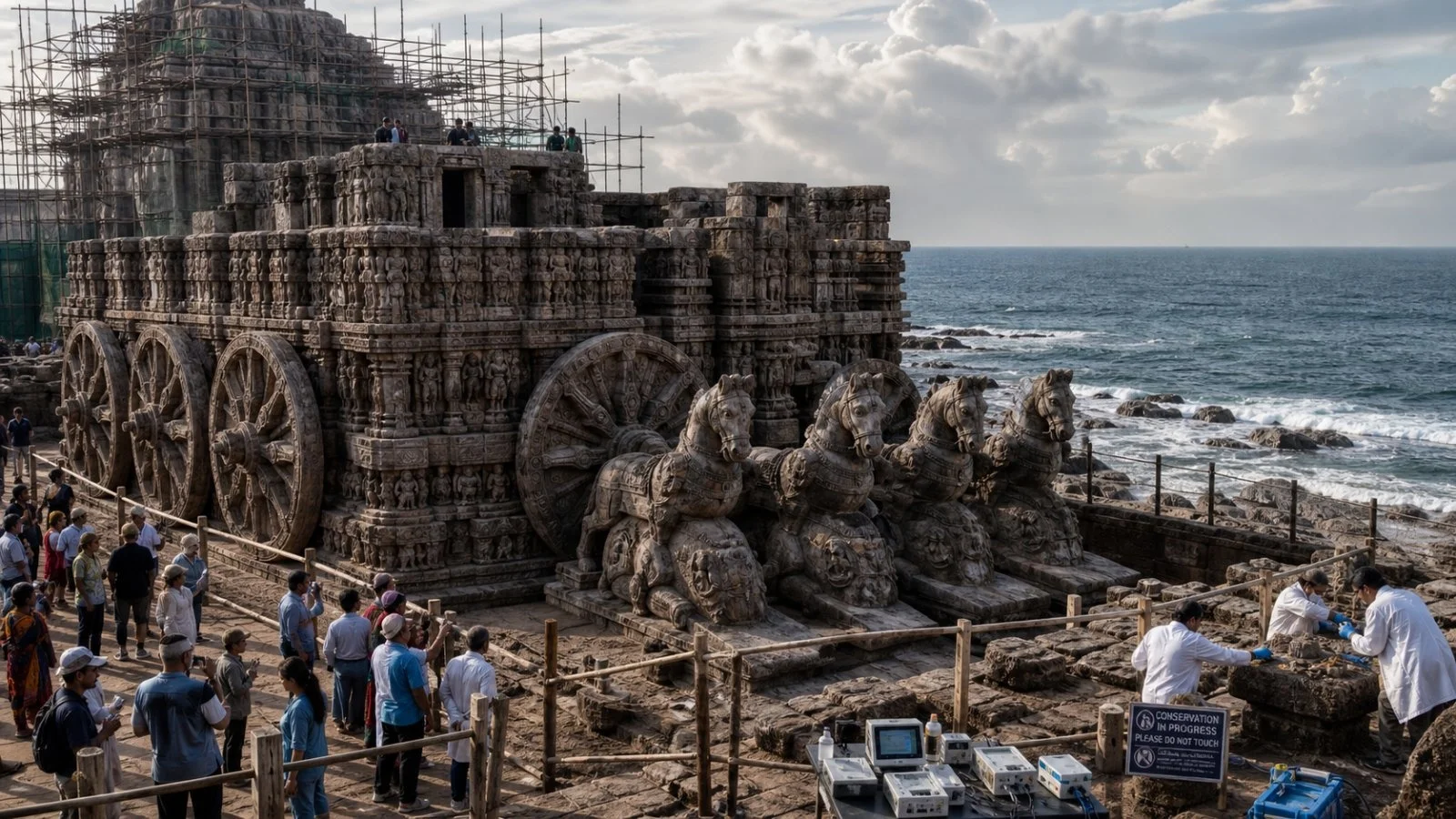
Coastal heritage in the east: Konark’s pull
Then you have Konark’s Sun Temple at 35.71 lakh. It is a massive stone chariot with 12 wheels and seven horses, a way of making ancient ideas tangible. The khondalite carvings give a tour guide plenty to work with. Being on the coast, though, is a headache. Salt and water are always at it, so conservation is something of a fight. You have to time your services to the preservation work; you can’t let demand run ahead of what is needed to hold the place together.
Iconic Agra and a quieter Deccan counterpart
The Taj is the no-brainer in Indian tourism. 62.64 lakh and counting. The Makrana marble has a way of it with the light, and the pietra dura is a fine mix of Persian and Indian hands. The ASI is on it with mud packs and watchful eyes to keep the elements and the smog at bay.
In Aurangabad, the Bibi Ka Maqbara is a different proposition, with 20.04 lakh. Some will tell you it is the Taj of the Deccan. It has the garden symmetry but is more restrained with the marble over a basalt and plaster base. Here, the work is in the plaster and the grounds that give it its composure.
A good planner will put Agra and Aurangabad in the same itinerary to mix up the pace and the price, and to take some of the load off one spot.
Why the rankings matter now
What you have with these five is heritage that is good for the bottom line. Tourists put their trust in a well-preserved masterwork, and that makes for less hassle in the planning and a longer chain of value, right down to the retail end.
Outlook: balancing access and preservation
But you have to be in step. One place has to deal with the air, another with the sea, or with structural issues. In the end, having the funds and a clear rulebook is worth more than any amount of marketing.
Here is what stakeholders should prioritise next, based on the survey’s signals:
– Align products with site-specific conservation needs
– Expand crowd flow solutions at high-footfall nodes
– Build itineraries that pair icons with calmer sites
– Invest in storytelling that deepens on-site time
– Coordinate with authorities on capacity windows
– Standardise service quality near gateways
The visitor tallies from the survey say it all: the symbols are what sell, but only if you look after them. Qutub and the Red Fort hold down the fort in the capital. Konark is standing firm at 35.71 lakh. Even the quieter Bibi Ka Maqbara has put in 20.04 lakh.
And the Taj is still the standard at 62.64 lakh. As long as we can pair the interest with some discipline in how we preserve and present these places, they will keep on giving, in every sense of the word.