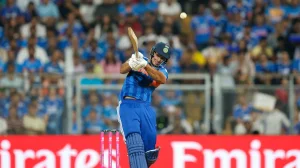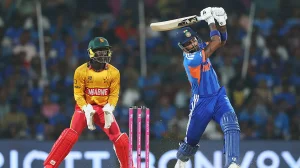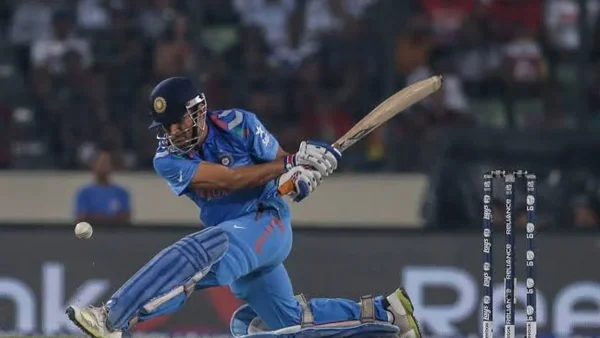
India took a really good seven-run win against England in a high-scoring 2026 T20 World Cup semifinal at the very loud Wankhede Stadium in Mumbai. The Indian team got to 253/7, and then kept calm in the final overs to get a place in the final on Sunday against New Zealand in Ahmedabad.
India win a run-filled game against England at Wankhede
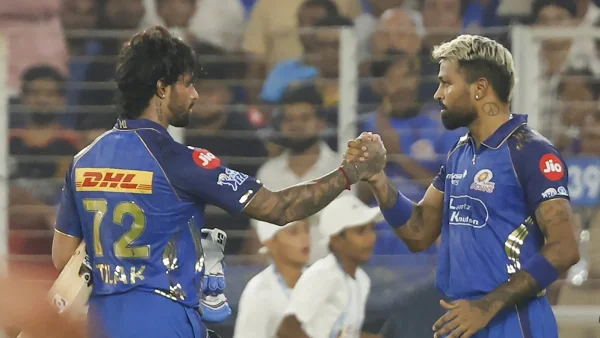
A fantastic batting performance started things off, with India making the most points in a T20 World Cup knockout game, reaching 253/7. Samson’s 89 from 42 balls got things going, and later on, Hardik Pandya and Tilak Varma increased the score to over 250.
England replied with a lot of determination and bravery, with Jacob Bethell making a wonderful 105 to keep them in the game until the very last over. But India’s control in the death overs was what decided it, as England were stopped at 246/7 and India won one of the best T20 World Cup semifinals ever.
Samson’s great performance sets a new standard for knockouts
After England decided to field, India began attacking from the first ball. Abhishek Sharma hit some early boundaries, but then was out for nine, and Samson took over the powerplay. Being dropped on 15 by Harry Brook, he quickly got to a 50 from 26 balls – India were 67/1 after six overs.
Ishan Kishan matched Samson’s speed, hitting 39 off 18 balls and making a 97-run partnership for the second wicket. When Kishan was caught out by Adil Rashid, Samson carried on, hitting eight fours and seven sixes in what was the best innings of his career so far, making 89.
Samson’s 89 was the same as the highest score by an Indian in a T20 World Cup knockout, the same as Virat Kohli’s 89 not out in the 2016 semifinal. When Will Jacks finally got Samson out with India at 160/3 in the 14th over, the chance for a record total was still very good.
The middle order did not slow down. Shivam Dube hit 43 off 25 balls, Suryakumar Yadav added a quick 11, and the end of the innings was very exciting, with Hardik Pandya hitting 27 from 12 balls and Tilak Varma making 21 off seven. India’s innings had 19 sixes and 18 fours.
England’s bold chase, led by Bethell
England, needing 254 to win, did not hold back. Hardik Pandya got a wicket with his first ball, removing Phil Salt, and Jasprit Bumrah’s cleverness got Harry Brook out with a slower ball, very well finished by an Axar Patel catch as he ran back from point.
At 64/3 inside the powerplay, England were in trouble. Tom Banton’s 17 off five balls gave them some hope, but Axar Patel ended that quickly with a quick, low ball. From then on, Jacob Bethell started a wonderful attack which turned things England’s way again.
Bethell got to a half-century from 19 balls and kept hitting sixes with clean, fearless hitting. Will Jacks gave important help with 35 off 20 in a 77-run partnership from 39 balls. When Jacks hit a wide full toss, Axar and Dube did well to work together on the boundary for a fantastic catch.
With five overs remaining, England required 69 runs and still had five wickets left. Bethell kept their hopes up in the last part of the innings, although when he was run out in the last over – after making a wonderful 105 from 48 balls – India’s chance of reaching the final got better. England finished on 246/7.
Good death bowling and fielding help India
Bumrah was the most important bowler in India’s defence. He ended with 1/33 from four overs and allowed only 14 runs from his final two, slowing the pace of the ball and bowling good yorkers. These overs put a lot of pressure on England towards the end of the game.
Axar Patel had a very good night in the field, first with a great run to catch Brook out, and then with a fine boundary catch to assist in getting Jacks out. Varun Chakravarthy’s important wicket of Jos Buttler also slowed England’s progress in the middle of the innings.
Hardik Pandya’s all-round play was valuable. He got Salt out early and then made some important runs later on which increased India’s total. Dube’s runs and his part in the boundary catch showed how sharp India were as a team, when the pressure was on.
What the result means for the final
This win takes India – captained by Suryakumar Yadav – to their fourth T20 World Cup final in ten tournaments. The home team are two-time champions, having won the trophy in 2007 and 2024, and were second in 2014. They are now looking for a third, record, title.
New Zealand are waiting for them in Ahmedabad, having got through after Finn Allen’s score of one hundred not out against South Africa. That innings is the highest individual score in a T20 World Cup knockout game, and shows the batting strength of both of the finalists.
The semi-final also went on with a very interesting contest between the two teams. It was the third T20 World Cup semi-final in a row between these two countries. England had been better in 2022, but India got their own back in 2024 and once more in 2026, this time in a match which changed a lot until the very end.
For the final, India will depend on being forceful in the powerplay, having strength in depth in the middle of the batting order, and Bumrah’s skill in the last overs. New Zealand’s organised bowling attack and Allen’s form make for a good comparison. We can expect a tactical battle on a large stage in front of a full stadium.
Important numbers from the IND vs ENG semi-final
– India 253/7 is the highest team score in a T20 World Cup knockout match.
– Sanju Samson 89 (42) is the same as the highest score by an Indian in a T20 World Cup knockout.
– India hit 19 sixes and 18 fours; England needed a record 254 to win.
– Jacob Bethell 105 (48) led England’s chase with a fifty from 19 balls.
– Will Jacks took 2/40, England’s most economical bowling spell; Jofra Archer got 1/61.
– A partnership of 97 between Samson and Ishan Kishan helped India’s progress.
– England needed 69 from the last five; Bumrah’s last two overs cost only 14.
– Final: India vs New Zealand, Narendra Modi Stadium, Ahmedabad, on Sunday.