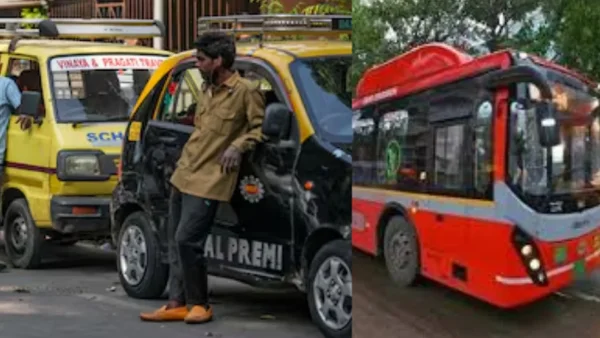
Commercial drivers and transport workers all over Maharashtra began a state strike today, stopping buses, taxis, and trucks. The Maharashtra Transporters Action Committee – M-TAC – says that discussions with the transport minister didn’t give certain guarantees, so the unions went ahead with demonstrations at places like Azad Maidan in Mumbai and offices of the RTO in different districts.
What is happening and who is involved
The strike includes almost all of the transport industry. Those taking part are taxi and auto-rickshaw drivers, people who run school and staff buses, buses which travel between cities and for tourists, small vans, and vehicles for carrying goods. Leaders of the unions are expecting a large number of lorry and van drivers to be involved, as they connect places where goods are stored to towns and cities.
The strike was announced after a meeting in Pune, with the organizers saying that repeated requests to officials had not led to any real answer to the problems. The committee has announced a one-day protest and an indefinite closure, depending on what the government does.
Central grievances: the e-challan system
The e-challan electronic system for enforcing rules is at the centre of the protest. Drivers and owners are saying that the automatic fines are not clear, difficult to argue against, and often given when there isn’t enough parking or the roads aren’t very good.
A recent change in the rules says that drivers have to pay half of the fine when they challenge it before they have a hearing, and another rule links unpaid fines to renewing permits and doing vehicle safety tests. Unions say these rules mean people have to pay before they can get justice, and can lead to vehicles being banned.
Other key demands: taxes, tolls and infrastructure
Those who transport goods point to the increasing cost of running their businesses – apart from the fines. High taxes from the state on commercial and staff transport, a lot of tolls on Build-Operate-Transfer roads, and the normal permit and registration costs all reduce profits. Some operators say that taxes on certain staff transport vehicles are the highest in the country.
Unions also want clear road policies. They don’t like sudden ‘no entry’ zones for goods vehicles, and the continuing use of unofficial check posts. They are asking for illegal checkpoints to be closed, tolls to be reduced, and an examination of taxes which overlap and increase transport costs.
Safety retrofits, apps and compliance burdens
The authorities have made safety improvements required, such as panic buttons, GPS trackers, systems to detect fire, and high-security number plates. Unions accept that there is a safety reason for these, but say that making older vehicles safe is expensive and hard to organise.
They also express worry about people reporting problems and automatic apps which cause fines to be given without enough checking. Getting more than one fine for the same thing, and fines being given when there is no parking, are regular complaints.
Potential impact on commuters and supply chains
If many people take part, the strike could stop people travelling every day and goods being moved, particularly in Mumbai and Pune. Last-mile services like taxis and auto-rickshaws may be limited, and the temporary stopping of lorry services may affect local supplies and when deliveries happen.
Leaders of the unions have said that emergency services will not be stopped, and school buses will run on the first day but may stop if the indefinite strike goes on. People travelling and businesses should make plans for other options until a solution is found.
What unions want from the government and next steps
The list of what is demanded wants practical changes: improvements to the e-challan system, stopping the rule about paying 50% before hearings, cancelling or looking at fines which are thought to be unfair, reduced taxes and tolls, and setting up a court for arguments about fines, permits and vehicles being taken.
Transport workers also want better roads and facilities: parking for only them, places for drivers to rest, areas to load goods, and help on motorways in emergencies. They want written guarantees or a government decision before they stop the protest.
Officials say that some steps are being considered, but the unions are not convinced. The next few days will show if formal promises and a clear timetable for improvements will end the strike, or if the strike will go on and make the effects on people travelling in towns and goods being moved worse.