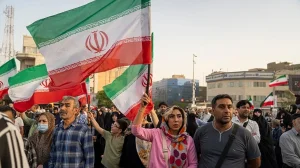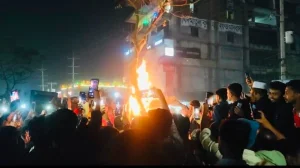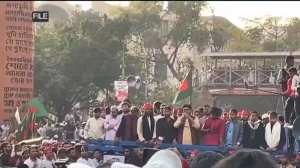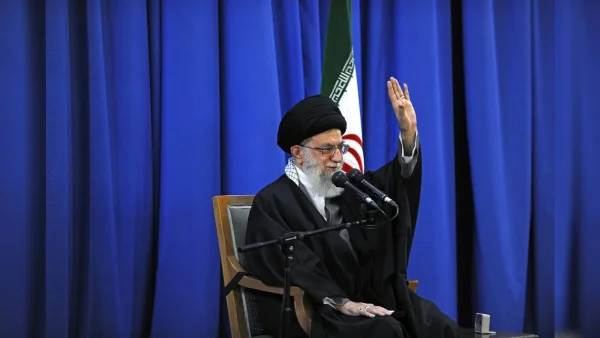
For the fifth day in a row, normal life in Kashmir was upset, as the authorities maintained limits on moving around and public meetings, following broad protests about the death of the leading cleric of Iran, Ayatollah Ali Khamenei. Authorities said the limits were a precaution, while the security forces worked to stop further meetings and put order back.
Security steps and public order work
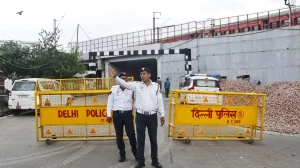
Police and paramilitary people were sent to Srinagar and other areas of the Valley to stop large groups getting together. Authorities put concertina wire and barriers at main crossings and near places thought to be at risk, to limit access and direct movement.
The well-known Ghanta Ghar in Lal Chowk stayed shut, as it had become the main place for large demonstrations. Armored vehicles and control points were still in place; authorities said the steps were needed to keep law and order with the raised tension.
Public transport was running in a limited way – private cars and two-wheelers were allowed, but many buses and shared services were not on the roads. Officials said the limited movement would continue in areas thought to be likely to have fresh shows of protest.
Effects on schooling, communication and normal life
The government ordered schools to close until March 7, putting off tests and changing plans for students across the area. School and college closures added to the upsetting of daily activities.
Mobile internet speeds were reduced and limits on connection stayed in parts of the Valley. Authorities said the slowing was to stop the spread of wrong information that could make tension worse; people against it argued about the effects on trade and communication.
Local markets had fewer customers, as many people stayed in their homes. The mix of transport limits, lower internet speeds and the obvious security presence changed the daily pattern of the city and nearby towns.
Political involvement and legal steps
Chief Minister Omar Abdullah had meetings with people from civil society and religious leaders, to try to reduce the scale of the problem. After talking, he asked people to show grief and anger in mosques, shrines and Imambaras, while keeping public peace.
Law enforcement took criminal action against at least two well-known local people, because of what they had put on the internet about the event. Officials said the steps were against what they said was sending out wrong information that could cause public disturbance; and investigations are still going on.
Authorities also said they had found and asked many social media names for questioning, and had held a number of protesters who had taken part in marches. Security was said to have been changed for some public people following their words on the death.
Controlling information and steps against wrong information
Officials started a strong effort to go against what they said was a network spreading false and exciting reports. A cyber police group started cases linked to made-up material and wrong stories which could start violence.
At the request of law enforcement, social media sites limited access to some local news sources and accounts, officials said. Authorities put these steps as part of a wider stopping of unrest caused by rumor, rather than stopping correct reporting.
Area background and longer-term results
The quick protests came after reports that Khamenei had been killed in joint attacks said to be by forces from the United States and Israel. This event caused strong reactions among parts of the local people and raised fears about effects spreading to the area.
People who watched noted that these shows of protest were the biggest public unrest in the Valley since August 2019, when changes to the constitution changed the area’s position. The size of the protests and the state’s reaction show the continuing changeability and the feeling of foreign policy shocks on local events.
Authorities say they are watching the situation closely and working with political and religious leaders to get things back to normal. For people who live there and local institutions, the coming days will test the balance between public safety steps and the need to go back to normal life.